

For Trump to Push Forward with Boulos’ Proposal for Rapprochement Also Would Insult Ethiopian and Eritrean Americans

The Country Stands as an Unapologetic and Reliable Ally of the Jewish State on Both Moral and Strategic Grounds

To Preserve the Alliance, Policymakers Must Demonstrate Its Importance and Counter Wildly False Accusations About Israel

A Silent Village Reflects the Lingering Costs of Afrin’s Upheaval

Anniversary Rhetoric Masks Economic Collapse and Strategic Drift

A Network of Citizens, Residents, and Cultivated Operatives Were Passing Targeting Intelligence to Tehran While Attacks on Bahrain Were Ongoing

The Choice Facing the U.S. Is to Intensify and Escalate the Pressure, or to Accept a Face-Saving Deal Likely to Leave the Regime’s Regional Project Intact

The U.S. May Be Signaling Dominance but Trying to Remain Flexible by Not Shutting Down Iran’s Oil Trade Entirely

Since 2018, No Prime Ministerial Candidate Has Moved Forward Without His Consultation, Approval, or Intervention

Two of Israel’s Most Serious Internal Problems Are Integrating the Haredi Population and Squelching Settler Violence in the West Bank

The Sudan Conflict Is a Humanitarian One, and It Risks Drawing Its Neighbors Into an Even Broader War

Every Month, Iran Needs to Import Around $1.3 Billion of Essential Commodities

Displays of Military Capability Project Control, Deter Challengers, and Signal Continuity

Dearborn and the Surrounding Communities Act as a Base of Support for the Decades-Long Propaganda War Against the Jewish Diaspora in America

When Saudi Forces Attacked Yemen’s Southern Forces, They Left a Vacuum Into Which Al Qaeda in the Arabian Peninsula Resurged
Spotlight on War with Iran
The ceasefire still technically exists but negotiations seem stalled if not dead in the water. Traffic through the Strait of Hormuz got its first bump as two US-flagged vessels transited on May 3, 2026. President Trump says more will follow.
But Iran has fired on several other civilian tankers and it does not appear likely the war will end without some reignition of hostilities. The blockade has taken a heavy toll on Iran’s economy. The lack of oil revenue paired with the dwindling storage space for oil they pump seems the most potent leverage for any deal. MEF fellows and experts weigh in on all of this.
But Iran has fired on several other civilian tankers and it does not appear likely the war will end without some reignition of hostilities. The blockade has taken a heavy toll on Iran’s economy. The lack of oil revenue paired with the dwindling storage space for oil they pump seems the most potent leverage for any deal. MEF fellows and experts weigh in on all of this.

As unrest spreads across Iran, the regime and the opposition both face narrowing choices.

The Strait’s Closure Disrupts the Flow of More than 20 Percent of the World’s Oil and Gas Supplies

The Choice Facing the U.S. Is to Intensify and Escalate the Pressure, or to Accept a Face-Saving Deal Likely to Leave the Regime’s Regional Project Intact

Iran’s Energy Weakness Could Become Its Strategic Breaking Point

The Lebanese Government Will Not Risk Pushing Hezbollah Into Using Violence Against It by Trying to Disarm It

Spotlight on Oil and Energy
The kinetic action has mostly stopped but the maneuvering for power, which means energy, in the region has gotten even more heated. The oil and natural gas from the Middle East constitutes 25% of the world’s energy supply.
The UAE has left OPEC and may be in a position to increase that percentage and also ease the current supply shortage. The Strait of Hormuz and the Bab al Mandeb Strait have historically been chokepoints. But pipelines are making threats to those less powerful. These issues and more are getting the attention of Middle East Forum authors.
The UAE has left OPEC and may be in a position to increase that percentage and also ease the current supply shortage. The Strait of Hormuz and the Bab al Mandeb Strait have historically been chokepoints. But pipelines are making threats to those less powerful. These issues and more are getting the attention of Middle East Forum authors.

Bitter About Being Caught off Guard by the U.S. Attack on Iran and the End of Its Mediator Role, Oman Now Chooses Iran’s Side

The Most Significant Implication May Be What It Reveals About the Broader Collapse of the Gulf Hedging Architecture

Iranian Authorities Continue to Project Defiance but the Economy Appears to Have Limited Remaining Resilience

The Pipeline Would Cost Billions of Dollars, Take Years to Build, and Would Cross Multiple Jurisdictions, Not All of Them Reliable

The Decision Sends a Signal That National Priorities Now Outweigh Collective Discipline

Recovery Will Not Be Simply a Return to the Old Model, Now That Gulf States Are Diversifying Their Energy and Economies
Middle East Quarterly - Current Issue
Founded in 1994 by Daniel Pipes, MEQ is the Middle East Forum’s journal intended for both scholars and the educated public. Policymakers, opinion-makers, academics, and journalists write for and read the Quarterly, which is known for exclusive interviews, in-depth historical articles, and book reviews on subjects ranging from archaeology to politics and on countries from Morocco to Iran.
Spring 2026 Volume 33: Number 2
Spring 2026 Volume 33: Number 2


-
 The Alwaleed Center for Muslim-Christian Understanding Is Ground Zero for Operatives from Qatar, Turkey, and Malaysia
 -
 The Hearing Presented a Bipartisan Display of the Growing Frustration of Turkish President Recep Tayyip Erdoğan’s Increasing Authoritarianism
 -
 Todd Bensman and Joseph Humire Bring Years of Experience to Their New White House Roles


-
 Because of a Lack of Natural Resources, Suwayda, Where the Majority of Syrian Druze Live, Is the Most Impoverished Region in the Country
 -
 Turkey Aims to Establish Itself as a Sub-Regional Power to Fill the Void Left by a Weakened Russia and a Diminished Iran
 -
 Although the Majority of Americans Do Not Hold Antisemitic Views, 60 Percent of the College-Age Demographic Do
 -
 Well Before the October 7 Attack in Israel, University Administrators Were Cowed by Vocal Campus Pro-Palestinian Activists


Middle East Forum Observer
Founded in 2024, the Observer provides rapid analysis on leading Middle East developments, from Marrakech to Mashhad and the Bab el-Mandeb to the Black Sea.


Launched in 2006, Islamist Watch is a project of the Middle East Forum. We work to combat the ideas and institutions of lawful Islamism in the United States and throughout the West. Arguing that “radical Islam is the problem, moderate Islam is the solution,” we seek to expose the Islamist organizations that currently dominate the debate, while identifying and promoting the work of moderate Muslims.

CAMPUS WATCH, a project of the Middle East Forum, reviews and critiques Middle East studies in North America with an aim to improving them. The project mainly addresses five problems: analytical failures, the mixing of politics with scholarship, intolerance of alternative views, apologetics, and the abuse of power over students. Campus Watch fully respects the freedom of speech of those it debates while insisting on its own freedom to comment on their words and deeds.
Antisemitism

-
 Australia Is the Canary in the Coal Mine, but the Real Explosion May Soon Come in Ireland, Norway, and Turkey
 -
 If Investigation Confirms Iranian Involvement in the Bondi Massacre, Canberra Must Sever Diplomatic Relations with Tehran
 -
 Canberra Once Aligned with the United States on Middle East Issues, Including Israel, but Prime Minister Albanese Has Hewn a Different Path
 -
 Where Are the U.N. Officials Who Argue They Cannot Be Part of an Organization That Increasingly Fuels Blood Libel and One of the World’s Oldest Hatreds?


Gaza

-
 Accounts Falsely Presented Themselves as Civilians in Gaza, Posting Emotive Casualty Claims and Siege Narratives
 -
 Arab Communities in the West Bank and Gaza Need to Be Decentralized Arab Emirates with Internal Autonomy, Under Overarching Israeli Control
 -
 Reports from the Hamas-Controlled Area Indicate That the Terror Group Has Fully Reimposed Its Will on the Population There
 -
 Today’s International Court of Justice Draws Judges from Legal, Cultural, and Political Traditions with No Common Philosophical Core


Islam

-
 Separating the Faith from the Faithful in Islam
 -
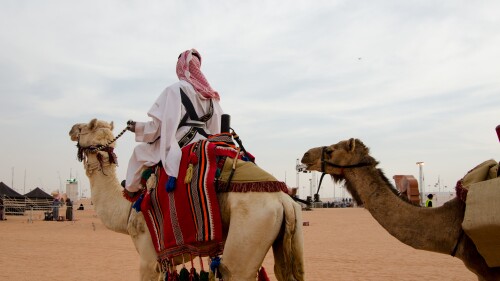 The Entire Appeal of Muhammad’s Call to the Arabs of His Time Lay in Its Perfect Compatibility with Their Tribal Mores
 -
 Muhammad Detested Dogs, to the Point of Calling for Their Arbitrary Extermination
 -
 [T]he Whole Complex Process of European Expansion and Empire … Has Its Roots in the Clash of Islam and Christendom


Muslims in the US

-
 They Despise Celebrations Not Sanctioned by Islam and See Christmas as a Crime Against Allah
 -
 The Lenny Zakim Fund gave $100,000 to an organization that later lionized a young man who immolated himself to protest American support for Israel
 -
 ‘We Must Have More Children than the Christians … to Destroy Them Here’
 -
 Americans Deserve a Full-Scale Investigation Into What Happened in Chicago and How to Prevent the Next Open-Borders-Enabled Attack on U.S. Soil


