

Dozens of Churches Are Destroyed by Fire Every Year, While Other Places of Worship Enjoy an Inexplicable Immunity

Even the Israeli Government Is Largely Silent, Avoiding Direct Threats Against Tehran and Refraining from Contradicting the U.S.

Ali Al-Zaidi’s Remarks Suggest That He Will Subordinate Iraqi Sovereignty to Iranian Interests

Restarting Production Requires More than Reopening Valves, Likely Taking Weeks Rather than Days

Three Planned Dams Would Give Ethiopia Total Control over the Blue Nile’s Flow to Downstream States

On the Ground in Syria, There Is Generally a Tangible Sense of Freedom That Did Not Exist Under the Assad Regime

A 20-Year Foreign-Income Tax Exemption Could Deepen Turkey’s Exposure to Money Laundering, Sanctions Evasion, and Organized Crime

Founder of Yaqeen Institute Follows in Footsteps of Radio Priest from 1930s

Ankara Often Links Identity, Religion, and Diaspora Communities to Foreign Policy, Presenting Itself as a Protector

Washington Is Again Being Sold an Illusion—That Iraq’s Future Can Be Entrusted to a Single ‘Indispensable’ Insider

Translation and Overview

Under President Recep Tayyip Erdoğan, Iranian Networks Exploit Turkish Corporate, Industrial, and Financial Sectors to Circumvent International Sanctions

The IDF Is Now Scrambling to Find Technological and Tactical Solutions to the Growing Hezbollah Unmanned Aerial Vehicle Threat

Restructuring the U.S.-Israel Defense Relationship for the Post-Aid Era

Real Authority in the Islamic Republic Lies with the Supreme Leader and Is Enforced Through Unelected Institutions
Spotlight on War with Iran
The ceasefire still technically exists but negotiations seem stalled if not dead in the water. Traffic through the Strait of Hormuz got its first bump as two US-flagged vessels transited on May 3, 2026. President Trump says more will follow.
But Iran has fired on several other civilian tankers and it does not appear likely the war will end without some reignition of hostilities. The blockade has taken a heavy toll on Iran’s economy. The lack of oil revenue paired with the dwindling storage space for oil they pump seems the most potent leverage for any deal. MEF fellows and experts weigh in on all of this.
But Iran has fired on several other civilian tankers and it does not appear likely the war will end without some reignition of hostilities. The blockade has taken a heavy toll on Iran’s economy. The lack of oil revenue paired with the dwindling storage space for oil they pump seems the most potent leverage for any deal. MEF fellows and experts weigh in on all of this.

As unrest spreads across Iran, the regime and the opposition both face narrowing choices.

The Strait’s Closure Disrupts the Flow of More than 20 Percent of the World’s Oil and Gas Supplies

The Choice Facing the U.S. Is to Intensify and Escalate the Pressure, or to Accept a Face-Saving Deal Likely to Leave the Regime’s Regional Project Intact

Iran’s Energy Weakness Could Become Its Strategic Breaking Point

The Lebanese Government Will Not Risk Pushing Hezbollah Into Using Violence Against It by Trying to Disarm It

Spotlight on Oil and Energy
The kinetic action has mostly stopped but the maneuvering for power, which means energy, in the region has gotten even more heated. The oil and natural gas from the Middle East constitutes 25% of the world’s energy supply.
The UAE has left OPEC and may be in a position to increase that percentage and also ease the current supply shortage. The Strait of Hormuz and the Bab al Mandeb Strait have historically been chokepoints. But pipelines are making threats to those less powerful. These issues and more are getting the attention of Middle East Forum authors.
The UAE has left OPEC and may be in a position to increase that percentage and also ease the current supply shortage. The Strait of Hormuz and the Bab al Mandeb Strait have historically been chokepoints. But pipelines are making threats to those less powerful. These issues and more are getting the attention of Middle East Forum authors.

Bitter About Being Caught off Guard by the U.S. Attack on Iran and the End of Its Mediator Role, Oman Now Chooses Iran’s Side

The Most Significant Implication May Be What It Reveals About the Broader Collapse of the Gulf Hedging Architecture

Iranian Authorities Continue to Project Defiance but the Economy Appears to Have Limited Remaining Resilience

The Pipeline Would Cost Billions of Dollars, Take Years to Build, and Would Cross Multiple Jurisdictions, Not All of Them Reliable

The Decision Sends a Signal That National Priorities Now Outweigh Collective Discipline

Recovery Will Not Be Simply a Return to the Old Model, Now That Gulf States Are Diversifying Their Energy and Economies
Middle East Quarterly - Current Issue
Founded in 1994 by Daniel Pipes, MEQ is the Middle East Forum’s journal intended for both scholars and the educated public. Policymakers, opinion-makers, academics, and journalists write for and read the Quarterly, which is known for exclusive interviews, in-depth historical articles, and book reviews on subjects ranging from archaeology to politics and on countries from Morocco to Iran.
Spring 2026 Volume 33: Number 2
Spring 2026 Volume 33: Number 2


-
 House Judiciary Committee cites MEF findings as Texas lawmakers move to investigate Islamist-linked institutions
 -
 Lawmakers from Israel, U.S., Greece, and Cyprus Launch Caucus to Strengthen Ties and Contain Ankara
 -
 Bipartisan Members of Congress Join Israeli Knesset Members for Virtual Strategy Session on the 3+1 Framework
 -
 Comprehensive Analysis Examines U.S. Military Buildup, Opposition Leadership, and the Case for American Action Following Regime’s Massacres


-
 Once the Regime Is Eliminated, Taking on 1.3 Million Members of the Iranian Regime’s Fighting Forces Is the Riskiest Part of the Endeavor
 -
 The Question Facing the Mullahs Is This: Would Trump Use Air Power to Bomb Iran and Bring About Regime Change If Negotiations Collapse
 -
 Iran’s Regime Has Schemed to Expand the Islamic Revolution Since the Ayatollahs Seized Power in November 1979
 -
 The India of 1949 Was ‘Postcolonial, Post-British, Post-Partition, Post-Traumatic’


Middle East Forum Observer
Founded in 2024, the Observer provides rapid analysis on leading Middle East developments, from Marrakech to Mashhad and the Bab el-Mandeb to the Black Sea.


Launched in 2006, Islamist Watch is a project of the Middle East Forum. We work to combat the ideas and institutions of lawful Islamism in the United States and throughout the West. Arguing that “radical Islam is the problem, moderate Islam is the solution,” we seek to expose the Islamist organizations that currently dominate the debate, while identifying and promoting the work of moderate Muslims.

CAMPUS WATCH, a project of the Middle East Forum, reviews and critiques Middle East studies in North America with an aim to improving them. The project mainly addresses five problems: analytical failures, the mixing of politics with scholarship, intolerance of alternative views, apologetics, and the abuse of power over students. Campus Watch fully respects the freedom of speech of those it debates while insisting on its own freedom to comment on their words and deeds.
Antisemitism

-
 As Iranian-Backed Proxies Stretch Israeli Forces Across Multiple Fronts, Jerusalem Has Lost Its Most Reliable Defender in Brussels
 -
 Conspiracy Theorists Ignore the Facts and Blame Jewish Tourists Rather than Drought or Funding Shortfalls to Fight Fires
 -
 The Death Toll of Christians Massacred on Palm Sunday in Nigeria Rises to 53: Just Background Noise in the Global Media Chaos
 -
 Only a Fool, an Ignoramus, or a Useful Idiot Could Suppose That the Current Wave of Hatred Against Israel and the West Will Stop with the Jews


Gaza

-
 Reconstruction Talk That Races Ahead of Security Realities Risks Freezing Conflict Rather than Resolving It
 -
 When a Centralized Ideological Regime Collapses, the Vacuum Is Never Filled by a Committee of Bureaucrats
 -
![“We see them test our troops. We see them carrying out attacks every week… [Hamas] injured and killed soldiers since the ceasefire began,” IDF Lt. Col. Nadav Shoshani told The Post at a military outpost in the central Gaza Strip on Thursday.](https://cdn-mef.meforum.org/dims4/default/126c66a/2147483647/strip/true/crop/2704x1520+0+140/resize/500x281!/brightness/16x0/quality/90/?url=https%3A%2F%2Fk2-prod-mef.s3.us-east-1.amazonaws.com%2Fbrightspot%2F3d%2F29%2Fd1c530464a578792da895f74a56f%2Fidf-soldier-silhouette-in-gaza.jpg) Israeli Forces Claim There Are Violations ‘Every Day’
Israeli Forces Claim There Are Violations ‘Every Day’ -
 For Nearly Eight Decades, the International Community Has Coddled a Unique and Dangerous Fiction: The Perpetual Palestinian Arab Refugee


![“We see them test our troops. We see them carrying out attacks every week… [Hamas] injured and killed soldiers since the ceasefire began,” IDF Lt. Col. Nadav Shoshani told The Post at a military outpost in the central Gaza Strip on Thursday.](https://cdn-mef.meforum.org/dims4/default/35930f0/2147483647/strip/true/crop/2704x1520+0+140/resize/500x281!/brightness/16x0/format/webp/quality/90/?url=https%3A%2F%2Fk2-prod-mef.s3.us-east-1.amazonaws.com%2Fbrightspot%2F3d%2F29%2Fd1c530464a578792da895f74a56f%2Fidf-soldier-silhouette-in-gaza.jpg)

Islam

-
 He Is Not an Islamist, but He Is a Muslim Tribalist Who Believes the White Race Has Exploited Middle Eastern Muslims
 -
 European Court Ruling Will Set Precedent on Muslim Nation Vying for European Union Membership
 -
 Pakistani Leaders and Clerics Present the Country’s Nuclear Program as an Issue of National and Islamic Pride
 -
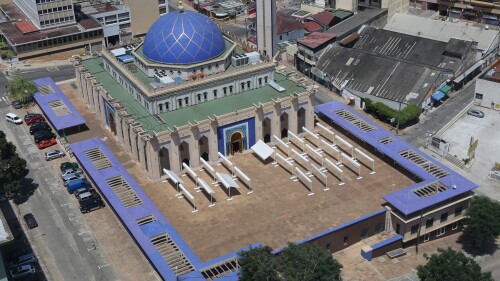 When Morocco Dominates the Religious Scene, Moderation Follows. When Turkey or Iran Does, Terrorism Is Often the Result.


