

Religious Labeling Does Not Change Destructive Capacity, but It Changes Perceived Authority

A Circulated Iraqi Justice Ministry Document Provides New Detail on the Scope and Nationalities of Transferred Detainees

New Delhi Has Effectively Shut Down the ‘Ship-to-Ship’ Transfer Networks Used to Mask the Origin of Iranian Crude

Some Analysts Warn That If the Regime Survives, It Could Emerge Strengthened and Suppress Internal Dissent

Ordinary Iranians Have Formed a Collective Resistance That Surpasses the State’s Capacity to Crack Down on It

The Visit Underscores the Transformation of India-Israel Ties Into a High-Trust Strategic Partnership

For Decades, the International Community Remained Stubbornly Wedded to a ‘Top-Down’ Fantasy

India’s Trade with the United States and European Union Reaches Roughly $400 Billion—More than 133 Times India-Iran Trade

In a Highly Anticipated Move, the Trump Administration Designated Factions of the Global Muslim Brotherhood as Terrorist Organizations Last Month

This Geopolitical and Economic Model Turns National Territory Into a Forward Operating Base

Iran Faces the Largest U.S. Naval and Air Deployment in the Region Since the 2003 Iraq War

Leadership Change May Disrupt Tempo, but It Does Not Dismantle Embedded Networks Built over Years

The Current Islamist Government of Turkey Has Never Taken Any Action to Curb This Illegal Funding for Hezbollah

While Saied’s Current Mandate Still Has Years to Run, the Architecture for Its Extension Is Already Being Built

Washington Has Misread the Houthis for Too Long
Spotlight on War with Iran
The ceasefire still technically exists but negotiations seem stalled if not dead in the water. Traffic through the Strait of Hormuz got its first bump as two US-flagged vessels transited on May 3, 2026. President Trump says more will follow.
But Iran has fired on several other civilian tankers and it does not appear likely the war will end without some reignition of hostilities. The blockade has taken a heavy toll on Iran’s economy. The lack of oil revenue paired with the dwindling storage space for oil they pump seems the most potent leverage for any deal. MEF fellows and experts weigh in on all of this.
But Iran has fired on several other civilian tankers and it does not appear likely the war will end without some reignition of hostilities. The blockade has taken a heavy toll on Iran’s economy. The lack of oil revenue paired with the dwindling storage space for oil they pump seems the most potent leverage for any deal. MEF fellows and experts weigh in on all of this.

As unrest spreads across Iran, the regime and the opposition both face narrowing choices.

The Strait’s Closure Disrupts the Flow of More than 20 Percent of the World’s Oil and Gas Supplies

The Choice Facing the U.S. Is to Intensify and Escalate the Pressure, or to Accept a Face-Saving Deal Likely to Leave the Regime’s Regional Project Intact

Iran’s Energy Weakness Could Become Its Strategic Breaking Point

The Lebanese Government Will Not Risk Pushing Hezbollah Into Using Violence Against It by Trying to Disarm It

Spotlight on Oil and Energy
The kinetic action has mostly stopped but the maneuvering for power, which means energy, in the region has gotten even more heated. The oil and natural gas from the Middle East constitutes 25% of the world’s energy supply.
The UAE has left OPEC and may be in a position to increase that percentage and also ease the current supply shortage. The Strait of Hormuz and the Bab al Mandeb Strait have historically been chokepoints. But pipelines are making threats to those less powerful. These issues and more are getting the attention of Middle East Forum authors.
The UAE has left OPEC and may be in a position to increase that percentage and also ease the current supply shortage. The Strait of Hormuz and the Bab al Mandeb Strait have historically been chokepoints. But pipelines are making threats to those less powerful. These issues and more are getting the attention of Middle East Forum authors.

Bitter About Being Caught off Guard by the U.S. Attack on Iran and the End of Its Mediator Role, Oman Now Chooses Iran’s Side

The Most Significant Implication May Be What It Reveals About the Broader Collapse of the Gulf Hedging Architecture

Iranian Authorities Continue to Project Defiance but the Economy Appears to Have Limited Remaining Resilience

The Pipeline Would Cost Billions of Dollars, Take Years to Build, and Would Cross Multiple Jurisdictions, Not All of Them Reliable

The Decision Sends a Signal That National Priorities Now Outweigh Collective Discipline

Recovery Will Not Be Simply a Return to the Old Model, Now That Gulf States Are Diversifying Their Energy and Economies
Middle East Quarterly - Current Issue
Founded in 1994 by Daniel Pipes, MEQ is the Middle East Forum’s journal intended for both scholars and the educated public. Policymakers, opinion-makers, academics, and journalists write for and read the Quarterly, which is known for exclusive interviews, in-depth historical articles, and book reviews on subjects ranging from archaeology to politics and on countries from Morocco to Iran.
Spring 2026 Volume 33: Number 2
Spring 2026 Volume 33: Number 2


Middle East Forum Observer
Founded in 2024, the Observer provides rapid analysis on leading Middle East developments, from Marrakech to Mashhad and the Bab el-Mandeb to the Black Sea.


Launched in 2006, Islamist Watch is a project of the Middle East Forum. We work to combat the ideas and institutions of lawful Islamism in the United States and throughout the West. Arguing that “radical Islam is the problem, moderate Islam is the solution,” we seek to expose the Islamist organizations that currently dominate the debate, while identifying and promoting the work of moderate Muslims.

CAMPUS WATCH, a project of the Middle East Forum, reviews and critiques Middle East studies in North America with an aim to improving them. The project mainly addresses five problems: analytical failures, the mixing of politics with scholarship, intolerance of alternative views, apologetics, and the abuse of power over students. Campus Watch fully respects the freedom of speech of those it debates while insisting on its own freedom to comment on their words and deeds.


Gaza

-
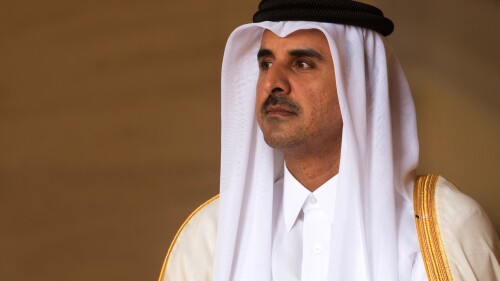 What Mechanisms Can Be Implemented to Stop Qatari Money from Being Poured Into Hamas’s Arsenal?
 -
 Fawzia Sido’s Decadelong Captivity Illustrates the Connections Between ISIS, Hamas and Other Jihadists
 -
 This War on the ‘Villa in the Jungle’ Was Launched to Test a Thesis; It Has Been Disproven at a Very High Cost
 -
 Israel and Its Sunni Arab Allies Must Take the Lead to Implement Programs to Contain Radicalism


