

Clearly, Spain Is Drifting Away from the Atlantic Camp and Toward the Moral Vanity of the Anti-Western Left

A Lebanese Sunni Perspective

Organized Crime Syndicates Ranging from Drug Trafficking Networks to Racketeering Groups Have Operate with Near-Total Impunity in Turkey

CAIR’s Seemingly Bulletproof Legal Standing May Soon Crumble

Imams in West Portray Khamenei as Victim, U.S. as Perpetrator

Iranian Operatives in Los Angeles Engage in Activities from Money Laundering to Harassment of Anti-Regime Protesters

Iraq’s Continued Subordination to Iran Is a Direct Threat to Gulf Cooperation Council Security and to U.S. Interests

Iran Is Turning the Continent Into a Lucrative Market and a Potential Forward Assembly Zone for Its Asymmetric Arsenal

It Is Hard to Think of an Image That Could Be More Damaging to Israel on the World Stage Right Now

Hardliners Normally Are the Last Men Standing, and Trump Should Grant Their Wish to Fight to the Death

Some Observers Say Trump’s Extended Ceasefire Reflects a Fragile Stalemate in Which neither Side Wants to Resume War nor Compromise

Military Pressure, Economic Contraction, and Industrial Disruption May Push Iran Toward Significant Concessions

The Strait’s Closure Reveals the Dangers of Politicizing Vital Maritime Chokepoints for the Global Trading System

Recovery Will Not Be Simply a Return to the Old Model, Now That Gulf States Are Diversifying Their Energy and Economies

As the Islamic Republic Faces Crisis at Home, It Seeks to Assert Tighter Control over an Increasingly Vocal Iranian Diaspora in the West
Spotlight on War with Iran
The ceasefire still technically exists but negotiations seem stalled if not dead in the water. Traffic through the Strait of Hormuz got its first bump as two US-flagged vessels transited on May 3, 2026. President Trump says more will follow.
But Iran has fired on several other civilian tankers and it does not appear likely the war will end without some reignition of hostilities. The blockade has taken a heavy toll on Iran’s economy. The lack of oil revenue paired with the dwindling storage space for oil they pump seems the most potent leverage for any deal. MEF fellows and experts weigh in on all of this.
But Iran has fired on several other civilian tankers and it does not appear likely the war will end without some reignition of hostilities. The blockade has taken a heavy toll on Iran’s economy. The lack of oil revenue paired with the dwindling storage space for oil they pump seems the most potent leverage for any deal. MEF fellows and experts weigh in on all of this.

As unrest spreads across Iran, the regime and the opposition both face narrowing choices.

The Strait’s Closure Disrupts the Flow of More than 20 Percent of the World’s Oil and Gas Supplies

The Choice Facing the U.S. Is to Intensify and Escalate the Pressure, or to Accept a Face-Saving Deal Likely to Leave the Regime’s Regional Project Intact

Iran’s Energy Weakness Could Become Its Strategic Breaking Point

The Lebanese Government Will Not Risk Pushing Hezbollah Into Using Violence Against It by Trying to Disarm It

Spotlight on Oil and Energy
The kinetic action has mostly stopped but the maneuvering for power, which means energy, in the region has gotten even more heated. The oil and natural gas from the Middle East constitutes 25% of the world’s energy supply.
The UAE has left OPEC and may be in a position to increase that percentage and also ease the current supply shortage. The Strait of Hormuz and the Bab al Mandeb Strait have historically been chokepoints. But pipelines are making threats to those less powerful. These issues and more are getting the attention of Middle East Forum authors.
The UAE has left OPEC and may be in a position to increase that percentage and also ease the current supply shortage. The Strait of Hormuz and the Bab al Mandeb Strait have historically been chokepoints. But pipelines are making threats to those less powerful. These issues and more are getting the attention of Middle East Forum authors.

Bitter About Being Caught off Guard by the U.S. Attack on Iran and the End of Its Mediator Role, Oman Now Chooses Iran’s Side

The Most Significant Implication May Be What It Reveals About the Broader Collapse of the Gulf Hedging Architecture

Iranian Authorities Continue to Project Defiance but the Economy Appears to Have Limited Remaining Resilience

The Pipeline Would Cost Billions of Dollars, Take Years to Build, and Would Cross Multiple Jurisdictions, Not All of Them Reliable

The Decision Sends a Signal That National Priorities Now Outweigh Collective Discipline

Recovery Will Not Be Simply a Return to the Old Model, Now That Gulf States Are Diversifying Their Energy and Economies
Middle East Quarterly - Current Issue
Founded in 1994 by Daniel Pipes, MEQ is the Middle East Forum’s journal intended for both scholars and the educated public. Policymakers, opinion-makers, academics, and journalists write for and read the Quarterly, which is known for exclusive interviews, in-depth historical articles, and book reviews on subjects ranging from archaeology to politics and on countries from Morocco to Iran.
Spring 2026 Volume 33: Number 2
Spring 2026 Volume 33: Number 2


-
 For Nearly a Decade, MEF Has Systematically Argued Against the ‘Doctrine of Managed Decline’
 -
 Members of the Senate Committee on Foreign Relations Are Expected to Reject Amer Ghalib’s Nomination as Ambassador to Kuwait Following a Contentious Confirmation Hearing
 -
 The U.S. State Department Has Designated Four Iran-Backed Shi’a Militias as Foreign Terrorist Organizations, Following Years of Advocacy by the Middle East Forum
 -
 Middle East Forum Report Exposes Terror Ties Among Faculty as University Reels from President’s Resignation and $790M Federal Funding Freeze


-
 The Fact That the Left Is in a Red-Green Alliance with Islamists Has Obviated the Need for Muslim Leaders to Moderate
 -
 Why Israel’s Military Victory Demands an Equal Response to Antisemitism at Home
 -
 The Dispute Currently Making News Across America’s Digital Landscape Has Been Fought Before
 -
 Over the Years, Erdoğan Hosted Hamas, Providing Diplomatic Cover for Its Leadership


Middle East Forum Observer
Founded in 2024, the Observer provides rapid analysis on leading Middle East developments, from Marrakech to Mashhad and the Bab el-Mandeb to the Black Sea.


Launched in 2006, Islamist Watch is a project of the Middle East Forum. We work to combat the ideas and institutions of lawful Islamism in the United States and throughout the West. Arguing that “radical Islam is the problem, moderate Islam is the solution,” we seek to expose the Islamist organizations that currently dominate the debate, while identifying and promoting the work of moderate Muslims.

CAMPUS WATCH, a project of the Middle East Forum, reviews and critiques Middle East studies in North America with an aim to improving them. The project mainly addresses five problems: analytical failures, the mixing of politics with scholarship, intolerance of alternative views, apologetics, and the abuse of power over students. Campus Watch fully respects the freedom of speech of those it debates while insisting on its own freedom to comment on their words and deeds.
Antisemitism

-
 Eighth-Graders Are Told That Moses and Jesus Are ‘Islamic Prophets’ and That Christians Will Be Punished for Believing in the Trinity
 -
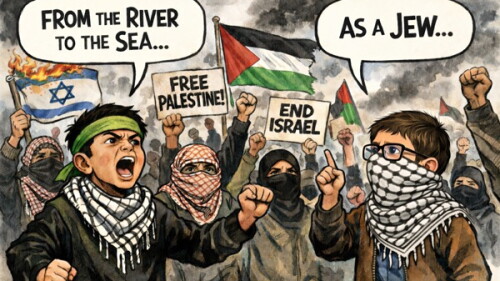 Jewish Voice for Peace and Students for Justice in Palestine Operate as Interchangeable Parts of the Same Network
 -
 Israeli Christians and Islamic Converts Blast Declaration for Adopting a Submissive Posture Toward Islam
 -
 Savagery and Hostage-Taking Has Been Used to Reframe the Palestinian Arab-Israeli Conflict and Unleash a Torrent of Antisemitism


Islam

-
 The Boulder Attack Is Part of a Long History of Antisemitic Violence by Immigrant Muslims
 -
 State Policies, Religious Decrees, and Social Hostility Make It Difficult for LGBTQ+ Muslims to Live Openly
 -
 Psychiatric Disorders in Islamic Societies Are Reflected in the Unique Societal, Cultural, and Religious Contexts That Influence Mental Health


Muslims in the US

-
 $164 Million of Taxpayer Funds Have Gone to Radical Islamist Groups, Including $122 Million to Organizations Aligned with Terrorist Organizations
 -
 Bothell’s Deputy Mayor Promotes Non-Profit with Troubling History
 -
 CAIR Encourages Illegal Immigrants to Evade Law Enforcement
 -
 The Executive Order’s Central Thrust Is to Restore, Repair, and Expand National Security Vetting Across Every Agency That Might Touch Immigration


