

Regional Governments Are Pushing Back by Designating the Revolutionary Guard, Hezbollah, and Hamas as Terrorist Organizations

Green Party Deputy Blames Rising Food Prices for Antisemitism

The Best Chapter of the U.S.-Israel Alliance Is Yet to Come

Despite Ceasefires Across Three Fronts, All Sides Are Preparing for Renewed Combat

The Alliance Is Resilient, but a Weakened One Would Reduce U.S. Influence and Create Opportunities for Competitors

Tehran Claims to Have Issued an Ultimatum and Suggests Washington Has Effectively Accepted Its Conditions for Negotiations

Did Washington Just Hand Iraq to Qais al-Khazali?

The Government of Kais Saied Is Systematically Eliminating Every Institution Capable of Documenting or Resisting Its Own Conduct

Bitter About Being Caught off Guard by the U.S. Attack on Iran and the End of Its Mediator Role, Oman Now Chooses Iran’s Side

The Most Significant Implication May Be What It Reveals About the Broader Collapse of the Gulf Hedging Architecture

Hamas Has Poured Financial Support Into Two Recent Flotillas Through Its European Networks

The Collapse of the Malian State Is a Direct Security Liability for North Africa

The Polisario Front May Deserve the Terrorist Label, but Securing the Sahara Still Requires Confronting Algeria’s Support.

Iranian Authorities Continue to Project Defiance but the Economy Appears to Have Limited Remaining Resilience

Jerusalem Sees Belgrade as Its Most Dependable Partner Among the Former Yugoslav Republics
Spotlight on War with Iran
The ceasefire still technically exists but negotiations seem stalled if not dead in the water. Traffic through the Strait of Hormuz got its first bump as two US-flagged vessels transited on May 3, 2026. President Trump says more will follow.
But Iran has fired on several other civilian tankers and it does not appear likely the war will end without some reignition of hostilities. The blockade has taken a heavy toll on Iran’s economy. The lack of oil revenue paired with the dwindling storage space for oil they pump seems the most potent leverage for any deal. MEF fellows and experts weigh in on all of this.
But Iran has fired on several other civilian tankers and it does not appear likely the war will end without some reignition of hostilities. The blockade has taken a heavy toll on Iran’s economy. The lack of oil revenue paired with the dwindling storage space for oil they pump seems the most potent leverage for any deal. MEF fellows and experts weigh in on all of this.

As unrest spreads across Iran, the regime and the opposition both face narrowing choices.

The Strait’s Closure Disrupts the Flow of More than 20 Percent of the World’s Oil and Gas Supplies

The Choice Facing the U.S. Is to Intensify and Escalate the Pressure, or to Accept a Face-Saving Deal Likely to Leave the Regime’s Regional Project Intact

Iran’s Energy Weakness Could Become Its Strategic Breaking Point

The Lebanese Government Will Not Risk Pushing Hezbollah Into Using Violence Against It by Trying to Disarm It

Spotlight on Oil and Energy
The kinetic action has mostly stopped but the maneuvering for power, which means energy, in the region has gotten even more heated. The oil and natural gas from the Middle East constitutes 25% of the world’s energy supply.
The UAE has left OPEC and may be in a position to increase that percentage and also ease the current supply shortage. The Strait of Hormuz and the Bab al Mandeb Strait have historically been chokepoints. But pipelines are making threats to those less powerful. These issues and more are getting the attention of Middle East Forum authors.
The UAE has left OPEC and may be in a position to increase that percentage and also ease the current supply shortage. The Strait of Hormuz and the Bab al Mandeb Strait have historically been chokepoints. But pipelines are making threats to those less powerful. These issues and more are getting the attention of Middle East Forum authors.

Bitter About Being Caught off Guard by the U.S. Attack on Iran and the End of Its Mediator Role, Oman Now Chooses Iran’s Side

The Most Significant Implication May Be What It Reveals About the Broader Collapse of the Gulf Hedging Architecture

Iranian Authorities Continue to Project Defiance but the Economy Appears to Have Limited Remaining Resilience

The Pipeline Would Cost Billions of Dollars, Take Years to Build, and Would Cross Multiple Jurisdictions, Not All of Them Reliable

The Decision Sends a Signal That National Priorities Now Outweigh Collective Discipline

Recovery Will Not Be Simply a Return to the Old Model, Now That Gulf States Are Diversifying Their Energy and Economies
Middle East Quarterly - Current Issue
Founded in 1994 by Daniel Pipes, MEQ is the Middle East Forum’s journal intended for both scholars and the educated public. Policymakers, opinion-makers, academics, and journalists write for and read the Quarterly, which is known for exclusive interviews, in-depth historical articles, and book reviews on subjects ranging from archaeology to politics and on countries from Morocco to Iran.
Spring 2026 Volume 33: Number 2
Spring 2026 Volume 33: Number 2


-
 A Federal Judge Has Dismissed All Claims Brought by the South Florida Muslim Federation Against the Middle East Forum and Its Allies for the Second Time
 -
 Qatar’s Tentacles Reach Deep into the University to Destroy the Foundations Upon Which It Was Founded
 -
 The Doctrine Would Guarantee Organizational Destruction for any Terror Group That Takes an Israeli Hostage
 -
 Shirin Saeidi Removed as Director of King Fahd Center for Middle East Studies at Univ. of Arkansas


-
 Savagery and Hostage-Taking Has Been Used to Reframe the Palestinian Arab-Israeli Conflict and Unleash a Torrent of Antisemitism
 -
 Policymakers May Consider Middle East Islamism in Decline, but They Ignore the Fact That in South Asia and the Far East, Islamism Is in Ascendance
 -
 Radical Islam Has Been Growing in Canada for over a Half Century
 -
 Somaliland Is a Successful Role Model for Democracy and a Free Market Economy in the Horn of Africa


Middle East Forum Observer
Founded in 2024, the Observer provides rapid analysis on leading Middle East developments, from Marrakech to Mashhad and the Bab el-Mandeb to the Black Sea.


Launched in 2006, Islamist Watch is a project of the Middle East Forum. We work to combat the ideas and institutions of lawful Islamism in the United States and throughout the West. Arguing that “radical Islam is the problem, moderate Islam is the solution,” we seek to expose the Islamist organizations that currently dominate the debate, while identifying and promoting the work of moderate Muslims.

CAMPUS WATCH, a project of the Middle East Forum, reviews and critiques Middle East studies in North America with an aim to improving them. The project mainly addresses five problems: analytical failures, the mixing of politics with scholarship, intolerance of alternative views, apologetics, and the abuse of power over students. Campus Watch fully respects the freedom of speech of those it debates while insisting on its own freedom to comment on their words and deeds.
Antisemitism

-
 Turkuvaz Media Group Promotes Conspiracy Theories Portraying Jews as Criminals, Intelligence Operatives, and Members of a Global Cabal
 -
 ‘Only One Rule‒No Zios in Flat’
 -
 The Sánchez Regime Has Made Hostility to Jerusalem Its Policy and Israel Should Impose Consequences
 -
 City’s Elites Channeling Henry Ford’s Hatred of Jews


Gaza

-
 Framed as Neutral Governance, Gaza’s New Technocratic Committee Masks Hamas’s Ongoing Military Rule
 -
 As the Hostage File Closes, Strategic Pressure on Israel Accelerates
 -
 The Authority No Longer Functions as a Governing Entity, Does Not Police Territory, and Struggles to Collect Revenue
 -
 As Washington Accelerates Phase Two in Gaza, Jerusalem Risks Losing Control Over the Endgame


Islam

-
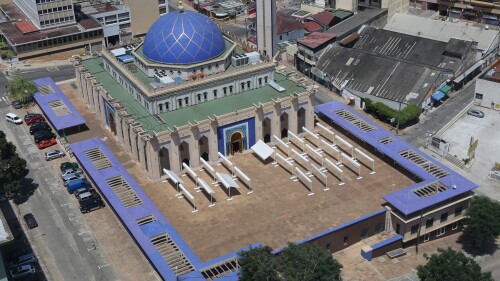 When Morocco Dominates the Religious Scene, Moderation Follows. When Turkey or Iran Does, Terrorism Is Often the Result.
 -
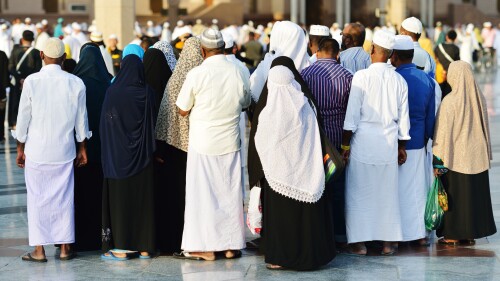 Sahwa Activists Have Decentralized and Are Strewn Across Universities, Charities and Cyberspace, Making the Movement Difficult to Uproot
 -
 Persian Gulf Countries in the Last Several Decades Have Built Mosques and Cultural Centers to Hold Sway in Europe and America
 -
 This Is What Happens When You Think “the West” Is Just the Direction Where the Sun Sets


Muslims in the US

-
 Husham Al-Husainy Was Headed to D.C. Until His Past Caught up with Him
 -
 Leader of Islamic Center Behind Project Has Promoted Hostility Toward Jews, Gays
 -
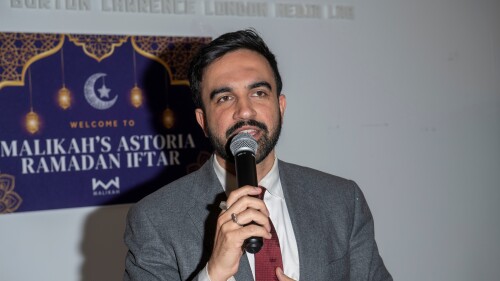 Some of America’s Most Controversial Extremist Organizations Are Backing Mamdani, Starting with the Islamic Circle of North America
 -
Dearborn Mayor Tries to Put Critic in His Place With ‘Islamophobia’ Accusation


