

Youseph Yazdi Uses the Johns Hopkins Affiliation to Voice Opinions Unrelated to His Academic Work

UBS Has Spent Two Decades Violating U.S. Sanctions, Obstructing Investigations, and Laundering Money for America’s Enemies

When Zohran Mamdani Defeated Andrew Cuomo, There Were More Muslims than Italian-Americans in New York

The Revised Law Grants the State Sweeping Powers to Strip Native-Born Algerians of Their Nationality

Suit Follows State’s Designation of Muslim Brotherhood as Terror Organization

Oman, like Qatar, Has a Strong Interest in the Islamic Republic’s Continued Survival, Serving as a Trade and Financial Conduit

He Must Make Himself Acceptable to Factions and Interested Parties, All with Distinct Values and Sometimes Conflicting Interests

Extremist Organizations Thrive in Environments Defined by State Rivalry, Political Fragmentation, and Security Vacuums

With the Rape Gang Crisis, the Social Death of Vulnerable Girls Was Tolerated to Manage Tensions in a Multicultural Democracy

The Islamic Republic of Iran Now Faces the Largest U.S. Military Deployment Since the 2003 Invasion of Iraq

Israel and India Need a Shared Vision and a Proactive Action Plan for the Day After the Ayatollahs in Iran

Europe Can No Longer Afford to Treat the Western Balkans Merely as a Stalled Enlargement Project

As the Islamic Republic Cracks, the Iran Freedom Congress in London Races to Build the Framework Tehran Prayed Would Never Exist

There Is No Longer Any Illusion About the Prospect of a Genuine Democratic Transition in Syria Under Its Islamist Leadership

Antisemitic Textbooks Assert the Bible is Distorted and Paint ‘Paul the Jew’ As the Corruptor of Christianity
Spotlight on War with Iran
The ceasefire still technically exists but negotiations seem stalled if not dead in the water. Traffic through the Strait of Hormuz got its first bump as two US-flagged vessels transited on May 3, 2026. President Trump says more will follow.
But Iran has fired on several other civilian tankers and it does not appear likely the war will end without some reignition of hostilities. The blockade has taken a heavy toll on Iran’s economy. The lack of oil revenue paired with the dwindling storage space for oil they pump seems the most potent leverage for any deal. MEF fellows and experts weigh in on all of this.
But Iran has fired on several other civilian tankers and it does not appear likely the war will end without some reignition of hostilities. The blockade has taken a heavy toll on Iran’s economy. The lack of oil revenue paired with the dwindling storage space for oil they pump seems the most potent leverage for any deal. MEF fellows and experts weigh in on all of this.

As unrest spreads across Iran, the regime and the opposition both face narrowing choices.

The Strait’s Closure Disrupts the Flow of More than 20 Percent of the World’s Oil and Gas Supplies

The Choice Facing the U.S. Is to Intensify and Escalate the Pressure, or to Accept a Face-Saving Deal Likely to Leave the Regime’s Regional Project Intact

Iran’s Energy Weakness Could Become Its Strategic Breaking Point

The Lebanese Government Will Not Risk Pushing Hezbollah Into Using Violence Against It by Trying to Disarm It

Spotlight on Oil and Energy
The kinetic action has mostly stopped but the maneuvering for power, which means energy, in the region has gotten even more heated. The oil and natural gas from the Middle East constitutes 25% of the world’s energy supply.
The UAE has left OPEC and may be in a position to increase that percentage and also ease the current supply shortage. The Strait of Hormuz and the Bab al Mandeb Strait have historically been chokepoints. But pipelines are making threats to those less powerful. These issues and more are getting the attention of Middle East Forum authors.
The UAE has left OPEC and may be in a position to increase that percentage and also ease the current supply shortage. The Strait of Hormuz and the Bab al Mandeb Strait have historically been chokepoints. But pipelines are making threats to those less powerful. These issues and more are getting the attention of Middle East Forum authors.

Bitter About Being Caught off Guard by the U.S. Attack on Iran and the End of Its Mediator Role, Oman Now Chooses Iran’s Side

The Most Significant Implication May Be What It Reveals About the Broader Collapse of the Gulf Hedging Architecture

Iranian Authorities Continue to Project Defiance but the Economy Appears to Have Limited Remaining Resilience

The Pipeline Would Cost Billions of Dollars, Take Years to Build, and Would Cross Multiple Jurisdictions, Not All of Them Reliable

The Decision Sends a Signal That National Priorities Now Outweigh Collective Discipline

Recovery Will Not Be Simply a Return to the Old Model, Now That Gulf States Are Diversifying Their Energy and Economies
Middle East Quarterly - Current Issue
Founded in 1994 by Daniel Pipes, MEQ is the Middle East Forum’s journal intended for both scholars and the educated public. Policymakers, opinion-makers, academics, and journalists write for and read the Quarterly, which is known for exclusive interviews, in-depth historical articles, and book reviews on subjects ranging from archaeology to politics and on countries from Morocco to Iran.
Spring 2026 Volume 33: Number 2
Spring 2026 Volume 33: Number 2


Middle East Forum Observer
Founded in 2024, the Observer provides rapid analysis on leading Middle East developments, from Marrakech to Mashhad and the Bab el-Mandeb to the Black Sea.


Launched in 2006, Islamist Watch is a project of the Middle East Forum. We work to combat the ideas and institutions of lawful Islamism in the United States and throughout the West. Arguing that “radical Islam is the problem, moderate Islam is the solution,” we seek to expose the Islamist organizations that currently dominate the debate, while identifying and promoting the work of moderate Muslims.

CAMPUS WATCH, a project of the Middle East Forum, reviews and critiques Middle East studies in North America with an aim to improving them. The project mainly addresses five problems: analytical failures, the mixing of politics with scholarship, intolerance of alternative views, apologetics, and the abuse of power over students. Campus Watch fully respects the freedom of speech of those it debates while insisting on its own freedom to comment on their words and deeds.


Gaza

-
 Trump Should Consider the Factors Involved Before Spontaneously Threatening Foreign Policy Changes
 -
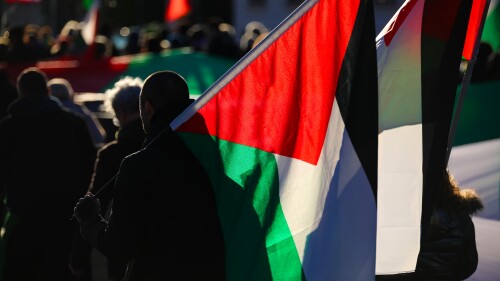 The Way Forward for Those Seeking Independence Is Accountability for Their Actions and Rule of Law
 -
 Hamas Now Stands to Rebuild Its Rule over Gaza, and to Reconstitute Its Hold on the Strip
 -
 Before and after October 7, Israeli authorities have permitted radical Hamas-aligned Western Islamist charities to enter Gaza and work openly with Hamas terror leaders, with some convoys even arriving from the Israeli side of the border.


