Disruptions in the Strait of Hormuz Have Caused Shortages and Surging Prices for Jet Fuel

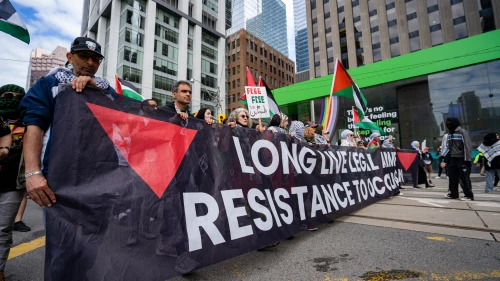
Veiled Women Shield Islamist Politics From Scrutiny, Recast Critics as Bigots and Misogynists

It Is No Coincidence That the Small Nations of Eastern Europe Are More Pro-Israel than the Large, Decadent Nations of the West

The Plan Shifts Away from State-Dispatched Clerics Toward Locally Trained Personnel While Simultaneously Expanding the Diyanet’s Vast Global Network

The Lebanese Government Will Not Risk Pushing Hezbollah Into Using Violence Against It by Trying to Disarm It

Interviews with Locals amid the Fighting Between Israel and Hezbollah

Ashamed of India’s Pre-Islamic Identity, Diplomats and Journalists Took Positions Favoring Iran to Prove Their Secular Credentials

Rather than Pursuing Large-Scale Infrastructure, States Increasingly Rely on Flexible Arrangements Built Around Existing Systems

The Problem Trump Will Face in Isolating Iran and Preventing Trade in Fuel and Weapons Will Not Be in the Persian Gulf, but Rather the Caspian Sea

Renowned Scholar Warns of ‘Impotence’ of Belgian Secret Services

Even When the Vulnerability of Personnel Is Not the Problem, Basing in the Middle East and Turkey Gives Host Countries a de Facto Veto over Missions

The Trump Administration’s Optimism About a ‘New Regime’ in Tehran Might Be a Rushed Judgment

Judicial Leniency and Political Priorities Collide in Istanbul Attack

Pontiff’s Homage at Martyrs Memorial Sparks Controversy over Ethnic Cleansing of Catholic Pieds-Noirs

Barzani’s Language of Refusal No Longer Carries the Coercive Weight It Once Did in Baghdad, or Even in Kurdistan
Spotlight on War with Iran
The ceasefire still technically exists but negotiations seem stalled if not dead in the water. Traffic through the Strait of Hormuz got its first bump as two US-flagged vessels transited on May 3, 2026. President Trump says more will follow.
But Iran has fired on several other civilian tankers and it does not appear likely the war will end without some reignition of hostilities. The blockade has taken a heavy toll on Iran’s economy. The lack of oil revenue paired with the dwindling storage space for oil they pump seems the most potent leverage for any deal. MEF fellows and experts weigh in on all of this.
But Iran has fired on several other civilian tankers and it does not appear likely the war will end without some reignition of hostilities. The blockade has taken a heavy toll on Iran’s economy. The lack of oil revenue paired with the dwindling storage space for oil they pump seems the most potent leverage for any deal. MEF fellows and experts weigh in on all of this.

As unrest spreads across Iran, the regime and the opposition both face narrowing choices.

The Strait’s Closure Disrupts the Flow of More than 20 Percent of the World’s Oil and Gas Supplies

The Choice Facing the U.S. Is to Intensify and Escalate the Pressure, or to Accept a Face-Saving Deal Likely to Leave the Regime’s Regional Project Intact

Iran’s Energy Weakness Could Become Its Strategic Breaking Point

The Lebanese Government Will Not Risk Pushing Hezbollah Into Using Violence Against It by Trying to Disarm It

Spotlight on Oil and Energy
The kinetic action has mostly stopped but the maneuvering for power, which means energy, in the region has gotten even more heated. The oil and natural gas from the Middle East constitutes 25% of the world’s energy supply.
The UAE has left OPEC and may be in a position to increase that percentage and also ease the current supply shortage. The Strait of Hormuz and the Bab al Mandeb Strait have historically been chokepoints. But pipelines are making threats to those less powerful. These issues and more are getting the attention of Middle East Forum authors.
The UAE has left OPEC and may be in a position to increase that percentage and also ease the current supply shortage. The Strait of Hormuz and the Bab al Mandeb Strait have historically been chokepoints. But pipelines are making threats to those less powerful. These issues and more are getting the attention of Middle East Forum authors.

Bitter About Being Caught off Guard by the U.S. Attack on Iran and the End of Its Mediator Role, Oman Now Chooses Iran’s Side

The Most Significant Implication May Be What It Reveals About the Broader Collapse of the Gulf Hedging Architecture

Iranian Authorities Continue to Project Defiance but the Economy Appears to Have Limited Remaining Resilience

The Pipeline Would Cost Billions of Dollars, Take Years to Build, and Would Cross Multiple Jurisdictions, Not All of Them Reliable

The Decision Sends a Signal That National Priorities Now Outweigh Collective Discipline

Recovery Will Not Be Simply a Return to the Old Model, Now That Gulf States Are Diversifying Their Energy and Economies
Middle East Quarterly - Current Issue
Founded in 1994 by Daniel Pipes, MEQ is the Middle East Forum’s journal intended for both scholars and the educated public. Policymakers, opinion-makers, academics, and journalists write for and read the Quarterly, which is known for exclusive interviews, in-depth historical articles, and book reviews on subjects ranging from archaeology to politics and on countries from Morocco to Iran.
Spring 2026 Volume 33: Number 2
Spring 2026 Volume 33: Number 2


-
 RSSI Aims to Mobilize U.S. Policymakers, Global Shipping Leaders, and International Stakeholders to Address This Vital Issue
 -
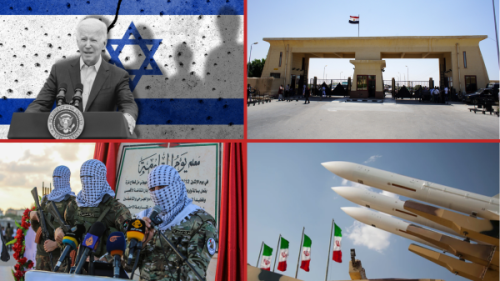 The Moment Has Come for the U.S. and Israel to Take Decisive Military Action Against Iran’s Nuclear Forces
 -
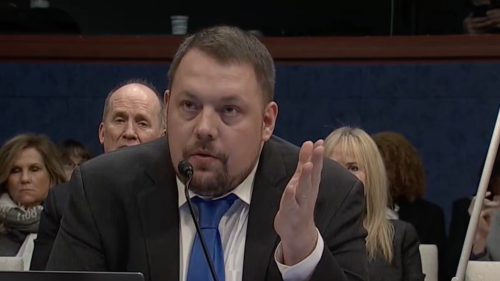 Testimony Uncovers $122 Million to Entities Tied to Hamas, Hezbollah, and Al-Qaeda Affiliates
 -
 Testimony to Uncover $122 Million Funneled to Radical and Terror-Tied Organizations


-
 After Israel Launched Its Attack Against the Mullahs, the ‘Resistance’ Remained Sidelined
 -
 By Marching in Tandem with Islamists and Yelling ‘Free Palestine,’ LGBT Activists Defend Terror Organizations and Demonize Zionists and Israel
 -
 A Concerted Policy Is Needed in Order to Ensure That Hezbollah Doesn’t Rise from the Ashes
 -
 The Isolationists Ignore the Cold Reality That Withdrawing from the World Does Not Keep Rogue, Aggressive Nations at Bay


Middle East Forum Observer
Founded in 2024, the Observer provides rapid analysis on leading Middle East developments, from Marrakech to Mashhad and the Bab el-Mandeb to the Black Sea.


Launched in 2006, Islamist Watch is a project of the Middle East Forum. We work to combat the ideas and institutions of lawful Islamism in the United States and throughout the West. Arguing that “radical Islam is the problem, moderate Islam is the solution,” we seek to expose the Islamist organizations that currently dominate the debate, while identifying and promoting the work of moderate Muslims.

CAMPUS WATCH, a project of the Middle East Forum, reviews and critiques Middle East studies in North America with an aim to improving them. The project mainly addresses five problems: analytical failures, the mixing of politics with scholarship, intolerance of alternative views, apologetics, and the abuse of power over students. Campus Watch fully respects the freedom of speech of those it debates while insisting on its own freedom to comment on their words and deeds.
Antisemitism

-
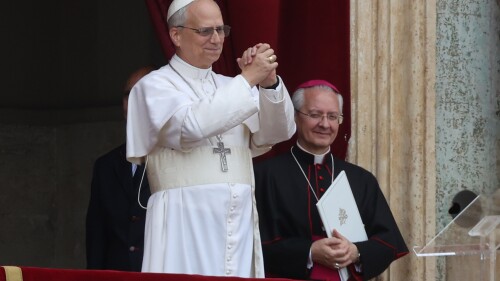 Neither the Vatican nor Any Other Diplomatic Entity Can Evaluate Excessiveness or Judge What Is Considered a Military Advantage
 -
 Be Worried Because They Start with the Jews, but They Never Stop There
 -
 Qatar Has Not Evicted Hamas Leaders from Its Territory, and It Continues to Incite Anti-Americanism and Islamist Terrorism Against Israel
 -
 With Trump’s Executive Order, America Has Allied Itself Not with a Partner for Peace, but an Agent for Instability


Gaza

-
 Across Israel’s Southern and Western Peripheries, a Slow-Motion Catastrophe Is Taking Shape
 -
 It Is the Only Rational Posture for a Country That Has Been Fighting an Existential Ideological War with Hamas for Decades
 -
 Over the Years, Erdoğan Hosted Hamas, Providing Diplomatic Cover for Its Leadership
 -
 Maintaining Its Arms Will Enable Hamas to Prevent Israel from Achieving the Aim of Keeping Hamas Away from Governance


Muslims in the US

-
 If Some Two Million ‘Got-Aways’ Crossed Since 2021, Suspected Terrorists on the FBI Watch List Are Almost Certainly Among Them
 -
 I recently witnessed something I haven’t seen in a long time. On Friday, August 16, 2024, a group of pro-Hamas activists packed up their signs and went home in the face of spirited and non-violent opposition from a coalition of pro-American Iranians and American Jews. The last time I saw anything like that happen was in 2006 or 2007, when I led a crowd of Israel supporters in chants in order to silence a heckler standing on the sidewalk near the town common in Amherst, Massachusetts. The ridicule was enough to prompt him and his fellow anti-Israel activists to walk away, as we cheered their departure. It was glorious.