

As War Accelerates Around Iran, Europe Answers With Delay, Doubt, And Strategic Paralysis

He Could Have Acknowledged the Danger of Rhetoric Glorifying Violence and Set an Example of Good Governance for Others. Instead, He Doubled Down

U.S. Prosecutors Described Mirsad Kandic as a Trusted Facilitator Within ISIS’s International Support Network

Reports in Recent Days Have Suggested That Direct Negotiations Between Israel and the Government May Soon Begin

Muslim Charity Suspends Fundraising in Face of Investigation

Tehran’s Rapid Retaliation Suggests That the Regime’s Decision-Making Structures Remain Functional

Israeli Policymakers View the Current Moment as a ‘Window of Opportunity’ with Lebanon, Albeit a Constrained One

Nuclear Infrastructure Would Depend Less on Contested Offshore Resources and Be Less Exposed to Geopolitical Friction at Sea

Disputes Between Baghdad and the Kurdistan Region May Limit Demand for Northern Iraqi Crude

A New Damascus Decree Restricts Alcohol Sales to Historic Christian Districts and Signals Islamist Administrative Priorities.

Israel’s Ability to Locate the Most Important Figure in the Regime Evinces How Deeply Its Intelligence Has Penetrated the Islamic Republic

The Destruction of the Country Is neither Decisive nor Important to the Regime

Well Before the Current Conflict with Iran, the Gulf Capitals Drew the Rational Conclusion That the Relevant Competition Is Now Among the Gulf States Themselves

Charity Complains of Unfair Coverage

The Media Is Obsessing over Price Volatility in the Oil Markets as Iran Fans the Flames of Panic
Spotlight on War with Iran
The ceasefire still technically exists but negotiations seem stalled if not dead in the water. Traffic through the Strait of Hormuz got its first bump as two US-flagged vessels transited on May 3, 2026. President Trump says more will follow.
But Iran has fired on several other civilian tankers and it does not appear likely the war will end without some reignition of hostilities. The blockade has taken a heavy toll on Iran’s economy. The lack of oil revenue paired with the dwindling storage space for oil they pump seems the most potent leverage for any deal. MEF fellows and experts weigh in on all of this.
But Iran has fired on several other civilian tankers and it does not appear likely the war will end without some reignition of hostilities. The blockade has taken a heavy toll on Iran’s economy. The lack of oil revenue paired with the dwindling storage space for oil they pump seems the most potent leverage for any deal. MEF fellows and experts weigh in on all of this.

As unrest spreads across Iran, the regime and the opposition both face narrowing choices.

The Strait’s Closure Disrupts the Flow of More than 20 Percent of the World’s Oil and Gas Supplies

The Choice Facing the U.S. Is to Intensify and Escalate the Pressure, or to Accept a Face-Saving Deal Likely to Leave the Regime’s Regional Project Intact

Iran’s Energy Weakness Could Become Its Strategic Breaking Point

The Lebanese Government Will Not Risk Pushing Hezbollah Into Using Violence Against It by Trying to Disarm It

Spotlight on Oil and Energy
The kinetic action has mostly stopped but the maneuvering for power, which means energy, in the region has gotten even more heated. The oil and natural gas from the Middle East constitutes 25% of the world’s energy supply.
The UAE has left OPEC and may be in a position to increase that percentage and also ease the current supply shortage. The Strait of Hormuz and the Bab al Mandeb Strait have historically been chokepoints. But pipelines are making threats to those less powerful. These issues and more are getting the attention of Middle East Forum authors.
The UAE has left OPEC and may be in a position to increase that percentage and also ease the current supply shortage. The Strait of Hormuz and the Bab al Mandeb Strait have historically been chokepoints. But pipelines are making threats to those less powerful. These issues and more are getting the attention of Middle East Forum authors.

Bitter About Being Caught off Guard by the U.S. Attack on Iran and the End of Its Mediator Role, Oman Now Chooses Iran’s Side

The Most Significant Implication May Be What It Reveals About the Broader Collapse of the Gulf Hedging Architecture

Iranian Authorities Continue to Project Defiance but the Economy Appears to Have Limited Remaining Resilience

The Pipeline Would Cost Billions of Dollars, Take Years to Build, and Would Cross Multiple Jurisdictions, Not All of Them Reliable

The Decision Sends a Signal That National Priorities Now Outweigh Collective Discipline

Recovery Will Not Be Simply a Return to the Old Model, Now That Gulf States Are Diversifying Their Energy and Economies
Middle East Quarterly - Current Issue
Founded in 1994 by Daniel Pipes, MEQ is the Middle East Forum’s journal intended for both scholars and the educated public. Policymakers, opinion-makers, academics, and journalists write for and read the Quarterly, which is known for exclusive interviews, in-depth historical articles, and book reviews on subjects ranging from archaeology to politics and on countries from Morocco to Iran.
Spring 2026 Volume 33: Number 2
Spring 2026 Volume 33: Number 2


Middle East Forum Observer
Founded in 2024, the Observer provides rapid analysis on leading Middle East developments, from Marrakech to Mashhad and the Bab el-Mandeb to the Black Sea.


Launched in 2006, Islamist Watch is a project of the Middle East Forum. We work to combat the ideas and institutions of lawful Islamism in the United States and throughout the West. Arguing that “radical Islam is the problem, moderate Islam is the solution,” we seek to expose the Islamist organizations that currently dominate the debate, while identifying and promoting the work of moderate Muslims.

CAMPUS WATCH, a project of the Middle East Forum, reviews and critiques Middle East studies in North America with an aim to improving them. The project mainly addresses five problems: analytical failures, the mixing of politics with scholarship, intolerance of alternative views, apologetics, and the abuse of power over students. Campus Watch fully respects the freedom of speech of those it debates while insisting on its own freedom to comment on their words and deeds.
Antisemitism

-
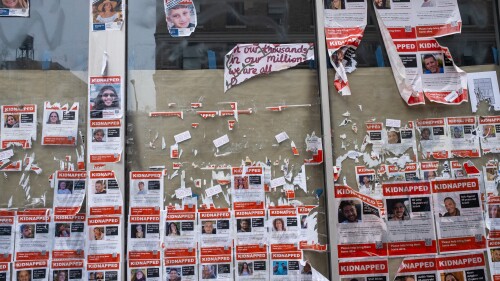 From Medieval Scapegoating to Modern “Social Justice” Narratives, Antisemitism Evolves but Endures, Targeting Jews as Universal Villains in Shifting Ideological Frameworks
 -
 The Physical Hunt for Jews Has Begun in Amsterdam
 -
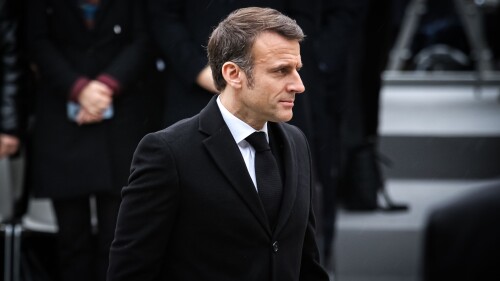 Does the President’s Resolve That a Soccer Game with an Israeli Team Go On Represent His Definitive Stance on the Issue or Just Another Political Pivot?
 -
 Antisemitic Propaganda in the Arab World Continues to Brainwash Tens of Millions of Arabs Who Believe Whatever They Are Told About Jews


Gaza

-
 Contrary to What Some Academics and Journalists Claim, the Root of the Conflict Is Explained by Long-Standing Israeli Concerns
 -
 Turkey’s Refusal to Normalize Relations with Cyprus and Its Military Control in the North Contradict Erdoğan’s Criticisms of Israel
 -
 As Israel’s War in Gaza Continues, Some Have Claiming That Israel Is Supporting ‘Isis-Affiliated Gangs’ in Gaza as a Counterweight to Hamas
 -
 How Western Intellectuals Construct Deadly Fantasies


