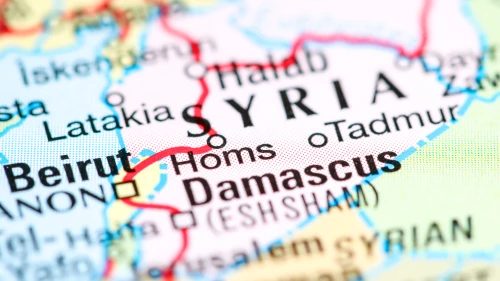
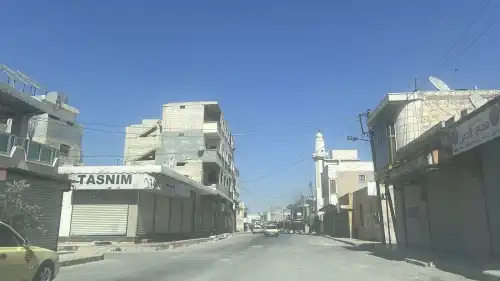
Since the fall of the Assad regime, observers have wondered what type of government would emerge in Syria. From an early stage, it was clear to me that those leading the government- in particular, the former Hay’at Tahrir al-Sham leaders, including Ahmad al-Sharaa, and senior figures in the Hay’at Tahrir al-Sham-backed Salvation Government that was based out of Idlib and its environs- are Islamist in orientation, by which I mean that they strive for a society whose main source of legislation is deemed to be Islamic law and jurisprudence.
Of course, what exact form of governance that entails is not entirely set in stone, but at least some decisions- both local and national- should be expected that are influenced by stipulations of Islamic law and jurisprudence.
A recent decision issued by Damascus governorate- which is governed by Maher Idlibi (who served as a leading judicial figure in the Salvation Government and is an in-law of al-Sharaa)- is an example of this trend. The decision includes restrictions on sales of alcoholic drinks within Damascus, effectively limiting their sale to historically Christian areas. It is translated in full below with annotations in square brackets.

Syrian Arab Republic
Ministry of Local Administration and Environment
Damascus governorate
Decision 311
The executive office of Damascus governorate council, in accordance with the rulings of the law of local administration issued by legislative decree 107 for the year 2011, legislative decree 180 of the year 1952, law no. 45 issued on date 31 December 1986, the two offering memoranda of the directorate of vocations and licenses no. 5938 (14 January 2026) and no. 155571 (21 January 2026), the ongoing exchange of opinions, and the agreement of all the office’s members who attended its session no. 11 held on 15 March 2026,
Decrees the following:
1. It is prohibited to offer alcoholic drinks of all kinds in restaurants and night-time entertainment venues in the city of Damascus, with commitment to offering only what a restaurant should offer [i.e. food and soft drinks], under penalty of taking the necessary procedures against them.
2. The license for a bar and license for a night club is to be turned into a license for a café.
3. Law no. 46/m.d. for the year 2010, which regulates the profession of selling alcoholic drinks in sealed containers, is to be modified as follows:
a) Shops that sell alcoholic drinks in sealed containers are to be licensed in the following areas only: Bab Touma, al-Qasa‘, Bab Sharqi). This is for shops that are originally licensed with the business building license.
b) The shop is to be at least 75 metres away from houses of worship (mosques and churches), cemeteries and various types of schools.
c) They are to be kept at a diameter distance of 20 metres from around police stations and official government offices [i.e. they should be at least 10 metres away from police stations and government offices]
d) A pledge verified by the notary is to be presented, committing to not offering alcoholic drinks inside the shop in cups under penalty of cancellation of the license and closing of the shop.
4. A deadline of three months is to be given to the shops that sell alcoholicdrinks in sealed containers within the city of Damascus so that they can regularise their status in accordance with this decision’s rulings.

5. Cancellation of implementation of decision 46/m.d. of the year 2010 and decision 38/m.d. of the year 2013, and decision 41/m.d. of the year 2018.
6. The directorate of vocations and licenses is to be entrusted with following up on the implementation of the necessary decisions for all transactions in coordination with the old Damascus directorate. The directorate of vocations and licenses is to be held responsible.
7. This decision is to be conveyed to those who must implement it.
Damascus, 25 Ramadan 1447 AH corresponding to 15 March 2026 CE.
Governor of Damascus
Head of the executive office
Mr. Maher Muhammad Marwan Idlibi
cc.
- Governor’s office
- Members of the executive office
- Damascus branch for the central commission for oversight and inspection
- Directorate of legal cases and affairs
- Directorate of councils for registration- directorate of vocations and licenses with the original
- Directorate of financial affairs- directorate of property affairs
- Directorate of internal oversight- directorate of the general diwan
Published originally on March 16, 2026.