

Faces Pressures from the Naval Blockade, Which Affects Its Imports of Essential Goods and Export of Oil

This Year the Silence Had to Reach Further than It Has Ever Reached Before

The Balance Between Clerical Authority and Military Power May No Longer Be What It Once Was

Terrorist Groups Are Poised to Exploit the Prevailing Insecurity Across the Region, Especially in Weak States like Syria


U.S. Africa Command Is Right to Choose Sirte as a Secondary Location

The U.N. Economic and Social Council Has Just Appointed Iran to the Committee for Programme and Coordination

Ayta Ash Shab, Where the 162nd Division Hosted Journalists This Week, Was Once a Stronghold of Hezbollah’s Presence Along the Border

Iran’s Energy Weakness Could Become Its Strategic Breaking Point

Barrack Supports Pragmatic Engagement with Existing Power Structures, Rather than Grassroots Democratic Movements

Several Radical Figures Continue to Promote Hardline, Anti-American Positions That Undercut Diplomatic Signaling

The Regime Deliberately Unravels Nation-States from Within, To Reassemble According to Loyalties That Answer to Tehran

Most Iraqis Were Born After Saddam’s Ouster and Value Clean Governance and Normalcy over Sectarianism

Iran’s Hardliners Have Accused the Negotiating Team of Treason for Reportedly Agreeing to Some U.S. Demands

The United Nations Security Council Adopted a New Resolution This Week Extending and Tightening the International Sanctions Regime on Libya
Spotlight on War with Iran
The ceasefire still technically exists but negotiations seem stalled if not dead in the water. Traffic through the Strait of Hormuz got its first bump as two US-flagged vessels transited on May 3, 2026. President Trump says more will follow.
But Iran has fired on several other civilian tankers and it does not appear likely the war will end without some reignition of hostilities. The blockade has taken a heavy toll on Iran’s economy. The lack of oil revenue paired with the dwindling storage space for oil they pump seems the most potent leverage for any deal. MEF fellows and experts weigh in on all of this.
But Iran has fired on several other civilian tankers and it does not appear likely the war will end without some reignition of hostilities. The blockade has taken a heavy toll on Iran’s economy. The lack of oil revenue paired with the dwindling storage space for oil they pump seems the most potent leverage for any deal. MEF fellows and experts weigh in on all of this.

As unrest spreads across Iran, the regime and the opposition both face narrowing choices.

The Strait’s Closure Disrupts the Flow of More than 20 Percent of the World’s Oil and Gas Supplies

The Choice Facing the U.S. Is to Intensify and Escalate the Pressure, or to Accept a Face-Saving Deal Likely to Leave the Regime’s Regional Project Intact

Iran’s Energy Weakness Could Become Its Strategic Breaking Point

The Lebanese Government Will Not Risk Pushing Hezbollah Into Using Violence Against It by Trying to Disarm It

Spotlight on Oil and Energy
The kinetic action has mostly stopped but the maneuvering for power, which means energy, in the region has gotten even more heated. The oil and natural gas from the Middle East constitutes 25% of the world’s energy supply.
The UAE has left OPEC and may be in a position to increase that percentage and also ease the current supply shortage. The Strait of Hormuz and the Bab al Mandeb Strait have historically been chokepoints. But pipelines are making threats to those less powerful. These issues and more are getting the attention of Middle East Forum authors.
The UAE has left OPEC and may be in a position to increase that percentage and also ease the current supply shortage. The Strait of Hormuz and the Bab al Mandeb Strait have historically been chokepoints. But pipelines are making threats to those less powerful. These issues and more are getting the attention of Middle East Forum authors.

Bitter About Being Caught off Guard by the U.S. Attack on Iran and the End of Its Mediator Role, Oman Now Chooses Iran’s Side

The Most Significant Implication May Be What It Reveals About the Broader Collapse of the Gulf Hedging Architecture

Iranian Authorities Continue to Project Defiance but the Economy Appears to Have Limited Remaining Resilience

The Pipeline Would Cost Billions of Dollars, Take Years to Build, and Would Cross Multiple Jurisdictions, Not All of Them Reliable

The Decision Sends a Signal That National Priorities Now Outweigh Collective Discipline

Recovery Will Not Be Simply a Return to the Old Model, Now That Gulf States Are Diversifying Their Energy and Economies
Middle East Quarterly - Current Issue
Founded in 1994 by Daniel Pipes, MEQ is the Middle East Forum’s journal intended for both scholars and the educated public. Policymakers, opinion-makers, academics, and journalists write for and read the Quarterly, which is known for exclusive interviews, in-depth historical articles, and book reviews on subjects ranging from archaeology to politics and on countries from Morocco to Iran.
Spring 2026 Volume 33: Number 2
Spring 2026 Volume 33: Number 2


-
 Dhimmitude Is the Mechanism That Transformed Strong Judeo-Christian Civilizations Into Islamic Ones
 -
 Prime Minister Anthony Albanese and His Labor Party Achieved a ‘Stunning’ Electoral Victory in Australia with a Very Large Mandate
 -
 Psychiatric Disorders in Islamic Societies Are Reflected in the Unique Societal, Cultural, and Religious Contexts That Influence Mental Health
 -
 With a Population of 170 Million People, Bangladesh, Formerly East Pakistan, Is the Third Largest Muslim Majority Nation in the World


Middle East Forum Observer
Founded in 2024, the Observer provides rapid analysis on leading Middle East developments, from Marrakech to Mashhad and the Bab el-Mandeb to the Black Sea.


Launched in 2006, Islamist Watch is a project of the Middle East Forum. We work to combat the ideas and institutions of lawful Islamism in the United States and throughout the West. Arguing that “radical Islam is the problem, moderate Islam is the solution,” we seek to expose the Islamist organizations that currently dominate the debate, while identifying and promoting the work of moderate Muslims.

CAMPUS WATCH, a project of the Middle East Forum, reviews and critiques Middle East studies in North America with an aim to improving them. The project mainly addresses five problems: analytical failures, the mixing of politics with scholarship, intolerance of alternative views, apologetics, and the abuse of power over students. Campus Watch fully respects the freedom of speech of those it debates while insisting on its own freedom to comment on their words and deeds.
Antisemitism

-
 With Trump’s Executive Order, America Has Allied Itself Not with a Partner for Peace, but an Agent for Instability
 -
 Lawsuit Opening Salvo Against Funders of Extremism?
 -
 Catholic Clergy Make Ill-Founded Accusations of Genocide Against Israel, While Promoting Conditions That Would Guarantee Israeli Genocide
 -
 There Is Not Much Freedom of Speech in Gaza, and Europe Is Not Doing Much Better


Gaza

-
 Across Israel’s Southern and Western Peripheries, a Slow-Motion Catastrophe Is Taking Shape
 -
 It Is the Only Rational Posture for a Country That Has Been Fighting an Existential Ideological War with Hamas for Decades
 -
 Over the Years, Erdoğan Hosted Hamas, Providing Diplomatic Cover for Its Leadership
 -
 Maintaining Its Arms Will Enable Hamas to Prevent Israel from Achieving the Aim of Keeping Hamas Away from Governance


Islam

-
 Critics of Islam in 2024 Europe Face Repression Akin to the Treatment of Anti-soviet Writers in the 1950s—Silenced with Fear and Police at the Door.
 -
 A Joint Podcast Series by the Middle East Forum and the American Jewish University
 -
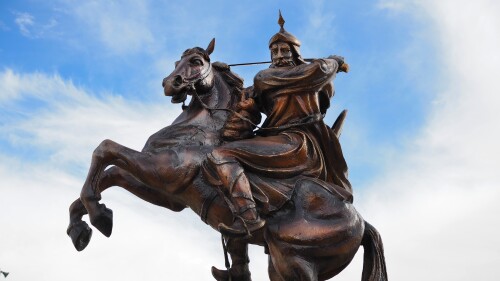 After Expelling Every Last Crusader from the Holy Land, Saladin’s ‘Retirement Dream’ Was to Invade and Wage Jihad on Christian Europe


Muslims in the US

-
 PHILADELPHIA – August 20, 2024 – A member of Maryland’s “Commission on Hate Crimes Response and Prevention” is out of a job. Ayman Nassar, the second Islamist commissioner to get tossed from the hate crimes board within three months, resigned on August 19 amid public outrage over his role in terror-linked organizations and his history of anti-American, antisemitic, and homophobic hate speech.
Nassar has accused Israel of harvesting the organs of living Palestinians and shared posts referring to Gaza as a “Holocaust.” He is chairman of the Aafia Foundation, a “terrorist support group” that seeks to free “Lady Al Qaeda” Aafia Siddiqui and other convicted terrorists from prison.


