

Ordinary Iranians Are Sensitive About Intervention by Outsiders, and Especially So About the U.S.

The Future of the War in Iran Is Increasingly Focused on Less than 9 Square Miles of Coral Outcrop in the Persian Gulf

Ahmad Vahidi Is the Key Cog in the Regime’s Chain of Command. He Is Also Wanted by Interpol in Connection with Terrorist Attacks

The Clarification Emphasizes That Facilities of Relevance to Tourists Are either Exempt from the Regulations or Will Be Subject to Further Consideration

Expert: False Flag Scenario Ludicrous

The Threat to Strike Anywhere U.S. Forces May Be ‘Hiding’ Comes as Trump Again Postponed Attacks on Iran’s Energy Infrastructure

If Iran or Its Proxies Attack a U.S. Embassy, the United States Should Destroy the Iranian Embassy in That Country

The Same Iranian Presence That Hides in Trafficking and Money Laundering Is Taking Visible Military Form in the Americas

Israel’s Current War on Two Fronts Shows Few Signs of Wrapping up Soon

Congress Must Pass an Emergency Supplemental Appropriations Bill That Includes Funding to Support the Iranian People in Their Pursuit of Regime Change

Until Europeans Grasp That Weakness Is Not a Virtue but a Slow Suicide, They Will Continue to Take Blows While Responding with Useless Diplomatic Notes

This Escalation Has Ignited a Regional Alarm That Reaches from Algiers to Cairo

The Regime Maintains Around Ten Major Missile Cities, Alongside at Least Seventeen Additional Missile Bases

Dubai Has Weathered Many Trials, Despite the Panic and Misperception That Colors Western Attitudes

The Islamic Republic’s Proxy Is Less Likely to Open a Major New Front than to Intensify Attritional Violence from the West Bank
Spotlight on War with Iran
The ceasefire still technically exists but negotiations seem stalled if not dead in the water. Traffic through the Strait of Hormuz got its first bump as two US-flagged vessels transited on May 3, 2026. President Trump says more will follow.
But Iran has fired on several other civilian tankers and it does not appear likely the war will end without some reignition of hostilities. The blockade has taken a heavy toll on Iran’s economy. The lack of oil revenue paired with the dwindling storage space for oil they pump seems the most potent leverage for any deal. MEF fellows and experts weigh in on all of this.
But Iran has fired on several other civilian tankers and it does not appear likely the war will end without some reignition of hostilities. The blockade has taken a heavy toll on Iran’s economy. The lack of oil revenue paired with the dwindling storage space for oil they pump seems the most potent leverage for any deal. MEF fellows and experts weigh in on all of this.

As unrest spreads across Iran, the regime and the opposition both face narrowing choices.

The Strait’s Closure Disrupts the Flow of More than 20 Percent of the World’s Oil and Gas Supplies

The Choice Facing the U.S. Is to Intensify and Escalate the Pressure, or to Accept a Face-Saving Deal Likely to Leave the Regime’s Regional Project Intact

Iran’s Energy Weakness Could Become Its Strategic Breaking Point

The Lebanese Government Will Not Risk Pushing Hezbollah Into Using Violence Against It by Trying to Disarm It

Spotlight on Oil and Energy
The kinetic action has mostly stopped but the maneuvering for power, which means energy, in the region has gotten even more heated. The oil and natural gas from the Middle East constitutes 25% of the world’s energy supply.
The UAE has left OPEC and may be in a position to increase that percentage and also ease the current supply shortage. The Strait of Hormuz and the Bab al Mandeb Strait have historically been chokepoints. But pipelines are making threats to those less powerful. These issues and more are getting the attention of Middle East Forum authors.
The UAE has left OPEC and may be in a position to increase that percentage and also ease the current supply shortage. The Strait of Hormuz and the Bab al Mandeb Strait have historically been chokepoints. But pipelines are making threats to those less powerful. These issues and more are getting the attention of Middle East Forum authors.

Bitter About Being Caught off Guard by the U.S. Attack on Iran and the End of Its Mediator Role, Oman Now Chooses Iran’s Side

The Most Significant Implication May Be What It Reveals About the Broader Collapse of the Gulf Hedging Architecture

Iranian Authorities Continue to Project Defiance but the Economy Appears to Have Limited Remaining Resilience

The Pipeline Would Cost Billions of Dollars, Take Years to Build, and Would Cross Multiple Jurisdictions, Not All of Them Reliable

The Decision Sends a Signal That National Priorities Now Outweigh Collective Discipline

Recovery Will Not Be Simply a Return to the Old Model, Now That Gulf States Are Diversifying Their Energy and Economies
Middle East Quarterly - Current Issue
Founded in 1994 by Daniel Pipes, MEQ is the Middle East Forum’s journal intended for both scholars and the educated public. Policymakers, opinion-makers, academics, and journalists write for and read the Quarterly, which is known for exclusive interviews, in-depth historical articles, and book reviews on subjects ranging from archaeology to politics and on countries from Morocco to Iran.
Spring 2026 Volume 33: Number 2
Spring 2026 Volume 33: Number 2


-
 U.S. Taxpayer Money Was Being Funneled to Organizations with Ties to Hamas, Al-Qaeda and Other Terror Groups
 -
 MEF Executive Director Delivered Blockbuster Testimony to the DOGE Subcommittee
 -
 Moving the Palestinians to Egypt and Jordan Would Be a Massive Undertaking
 -
 U.S. President Donald Trump Engages in a Double Pander, Giving Both His Pro-Israel and His Islamist Constituencies What They Most Want


-
 A Joint Podcast Series by the Middle East Forum and the American Jewish University
 -
 A Joint Podcast Series by the Middle East Forum and the American Jewish University on the Middle East’s Influence on Contemporary America
 -
 A Joint Podcast Series by the Middle East Forum and the American Jewish University
 -
 A Joint Podcast Series by the Middle East Forum and the American Jewish University


Middle East Forum Observer
Founded in 2024, the Observer provides rapid analysis on leading Middle East developments, from Marrakech to Mashhad and the Bab el-Mandeb to the Black Sea.


Launched in 2006, Islamist Watch is a project of the Middle East Forum. We work to combat the ideas and institutions of lawful Islamism in the United States and throughout the West. Arguing that “radical Islam is the problem, moderate Islam is the solution,” we seek to expose the Islamist organizations that currently dominate the debate, while identifying and promoting the work of moderate Muslims.

CAMPUS WATCH, a project of the Middle East Forum, reviews and critiques Middle East studies in North America with an aim to improving them. The project mainly addresses five problems: analytical failures, the mixing of politics with scholarship, intolerance of alternative views, apologetics, and the abuse of power over students. Campus Watch fully respects the freedom of speech of those it debates while insisting on its own freedom to comment on their words and deeds.


Gaza

-
 If Hamas Survives to Fight Another Day, Hundreds of Thousands More May Die in the Coming Decades
 -
 From an Israeli Point of View, the Plan Appears to Offer Much That Israel Has Sought in Its Prosecution of the War, Though Not Without Cost
 -
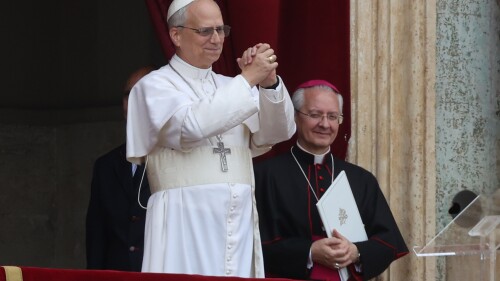 Neither the Vatican nor Any Other Diplomatic Entity Can Evaluate Excessiveness or Judge What Is Considered a Military Advantage
 -
 Political and Moral Boundaries in This Conflict Are More Confused than the Narratives the Mainstream Media and Western Activists Present


