

Faces Pressures from the Naval Blockade, Which Affects Its Imports of Essential Goods and Export of Oil

This Year the Silence Had to Reach Further than It Has Ever Reached Before

The Balance Between Clerical Authority and Military Power May No Longer Be What It Once Was

Terrorist Groups Are Poised to Exploit the Prevailing Insecurity Across the Region, Especially in Weak States like Syria


U.S. Africa Command Is Right to Choose Sirte as a Secondary Location

The U.N. Economic and Social Council Has Just Appointed Iran to the Committee for Programme and Coordination

Ayta Ash Shab, Where the 162nd Division Hosted Journalists This Week, Was Once a Stronghold of Hezbollah’s Presence Along the Border

Iran’s Energy Weakness Could Become Its Strategic Breaking Point

Barrack Supports Pragmatic Engagement with Existing Power Structures, Rather than Grassroots Democratic Movements

Several Radical Figures Continue to Promote Hardline, Anti-American Positions That Undercut Diplomatic Signaling

The Regime Deliberately Unravels Nation-States from Within, To Reassemble According to Loyalties That Answer to Tehran

Most Iraqis Were Born After Saddam’s Ouster and Value Clean Governance and Normalcy over Sectarianism

Iran’s Hardliners Have Accused the Negotiating Team of Treason for Reportedly Agreeing to Some U.S. Demands

The United Nations Security Council Adopted a New Resolution This Week Extending and Tightening the International Sanctions Regime on Libya
Spotlight on a Deal with Iran
There have been many claims of an imminent deal between the United States and Iran recently. No deal has emerged and many versions have been floated as both sides jockey for an advantage in negotiations. The regime seems as recalcitrant as ever.
The most recent version on May 28th is purported to simply be awaiting signatures from the leaders of both countries. Is there a deal to be made that is worth doing or is the regime simply too much of an impediment to the security in the region? MEF fellows and experts weigh in on all of this.
The most recent version on May 28th is purported to simply be awaiting signatures from the leaders of both countries. Is there a deal to be made that is worth doing or is the regime simply too much of an impediment to the security in the region? MEF fellows and experts weigh in on all of this.

As unrest spreads across Iran, the regime and the opposition both face narrowing choices.

Military Officials May Believe the Civilian Governing Structure Is Too Fragmented and Indecisive to Manage the Country

Why the Newly Revealed American-Israeli Plan Never Stood a Chance

Once Trump Has a Credible Partner, He Should Dictate the Terms

Iran’s Competing Power Centers Are Shaping Negotiations, Escalation Risks, and Regional Strategic Decisions

Spotlight on the Gulf States
The combined US and Israeli war against Iran also drew in a number of the Gulf States. Iran’s decision to attack them immediately after Operation Epic Fury began was meant to split them away. In perhaps the most fatal mistake for its survival, it ended up bringing them closer and creating a counter-Iran alliance.
The Abraham Accords are back under discussion and an idea of what type of power structure will replace Iran and its proxies has begin to emerge. That must survive the usual rivalries between the Gulf States themselves, but it seems to be a positive development.
The Abraham Accords are back under discussion and an idea of what type of power structure will replace Iran and its proxies has begin to emerge. That must survive the usual rivalries between the Gulf States themselves, but it seems to be a positive development.

Iran’s Broader Objective Appears to Be the Gradual Decoupling of Arab Oil Producers of the Persian Gulf from the U.S. Security Umbrella

A Consequential Fault Line in the Middle East Runs Not Just Between Riyadh and Tehran but Between Riyadh and Abu Dhabi

How a Coordinated International Campaign Is Targeting the United Arab Emirates

The Pipeline Would Cost Billions of Dollars, Take Years to Build, and Would Cross Multiple Jurisdictions, Not All of Them Reliable

The Decision Sends a Signal That National Priorities Now Outweigh Collective Discipline

Recovery Will Not Be Simply a Return to the Old Model, Now That Gulf States Are Diversifying Their Energy and Economies
Middle East Quarterly - Summer 2026
Founded in 1994 by Daniel Pipes, MEQ is the Middle East Forum’s journal intended for both scholars and the educated public. Policymakers, opinion-makers, academics, and journalists write for and read the Quarterly, which is known for exclusive interviews, in-depth historical articles, and book reviews on subjects ranging from archaeology to politics and on countries from Morocco to Iran.
Summer 2026 Volume 33: Number 3
Summer 2026 Volume 33: Number 3


-
 PHILADELPHIA – August 20, 2024 – A member of Maryland’s “Commission on Hate Crimes Response and Prevention” is out of a job. Ayman Nassar, the second Islamist commissioner to get tossed from the hate crimes board within three months, resigned on August 19 amid public outrage over his role in terror-linked organizations and his history of anti-American, antisemitic, and homophobic hate speech.
Nassar has accused Israel of harvesting the organs of living Palestinians and shared posts referring to Gaza as a “Holocaust.” He is chairman of the Aafia Foundation, a “terrorist support group” that seeks to free “Lady Al Qaeda” Aafia Siddiqui and other convicted terrorists from prison. -
 PHILADELPHIA – July 31, 2024 – Hours after Israel assassinated two leading figures of designated terrorist organizations, Middle East Forum (MEF) experts took to major media outlets to explain what the killings mean for Israel and the region.
Israeli forces killed Hezbollah leader Fouad Shukur in Beirut on Tuesday, while Hamas leader Ismail Haniyeh died Wednesday from an Israeli strike in Tehran. Both men caused the deaths of innocent civilians as well as Israeli and American soldiers.
Writing today for the Wall Street Journal, MEF president Daniel Pipes argued that since Hamas’s Oct. 7 attacks, Israel has unfortunately followed “two opposite policies” simultaneously: “destroy the organization and make a deal with it.” -
 JERUSALEM, July 25, 2024 – In an event sponsored by the Middle East Forum-organized Israel Victory Caucus (IVC) of Israel’s parliament (the Knesset), multiple speakers argued that Israel’s security requires turning the tables on Iran by creating proxies to undermine the Islamic Republic (video).
Participants included Israeli cabinet ministers, members of Knesset (MKs) from both coalition and opposition, senior military figures, family members of the fallen and kidnapped, and other prominent decision makers and opinion shapers.


Middle East Forum Observer
Founded in 2024, the Observer provides rapid analysis on leading Middle East developments, from Marrakech to Mashhad and the Bab el-Mandeb to the Black Sea.


Launched in 2006, Islamist Watch is a project of the Middle East Forum. We work to combat the ideas and institutions of lawful Islamism in the United States and throughout the West. Arguing that “radical Islam is the problem, moderate Islam is the solution,” we seek to expose the Islamist organizations that currently dominate the debate, while identifying and promoting the work of moderate Muslims.

CAMPUS WATCH, a project of the Middle East Forum, reviews and critiques Middle East studies in North America with an aim to improving them. The project mainly addresses five problems: analytical failures, the mixing of politics with scholarship, intolerance of alternative views, apologetics, and the abuse of power over students. Campus Watch fully respects the freedom of speech of those it debates while insisting on its own freedom to comment on their words and deeds.
Antisemitism

-
 Rife with Antisemitic Tropes, the Books Omit References to Hamas’s Slaughter of Israelis, the Holocaust, and Jordan’s Peace Treaty with Israel
 -
 From Their Support for the Boycott Divest Sanction (BDS) Movement, to Hosting Terrorists, to Accepting Terrorist Tainted Funding, Some of the Nation’s Top Universities Have Become Part of the Palestinian Resistance
 -
 From Their Support for the Boycott Divest Sanction (BDS) Movement, to Hosting Terrorists, to Accepting Terrorist Tainted Funding, Some of the Nation’s Top Universities Have Become Part of the Palestinian Resistance
 -
 Moroccan Journalist Interrogated over Israeli Passport Stamps, Held 32 Hours without Food or Water in Calculated Act of Authoritarian Harassment


Gaza

-
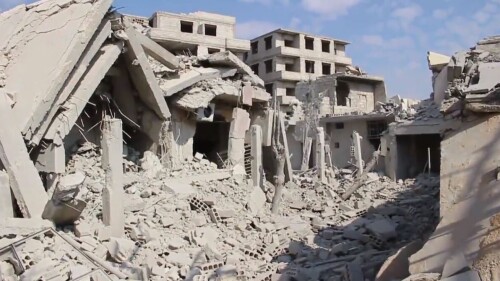 From Assad’s Palace Perched on Mount Mezzeh, He Could See East Ghouta, a Sprawling Suburb of Multistory Apartment Buildings, and a Slum Which More than a Million Sunni Arabs Called Home
 -
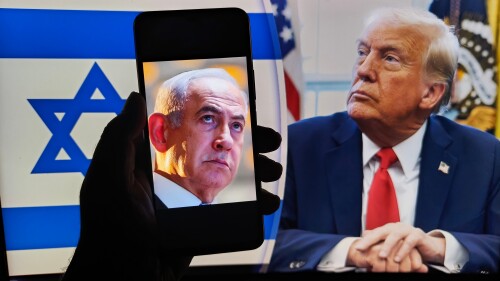 The Real Opportunity Lies in Engaging Saudi Arabia, Indonesia, and Other Arab and Muslim Nations Open to Reconciliation with Israel and the West
 -
 The Broad Framework, Based on past Peace Efforts, Would Grow Trade Relations and Create Joint Security Arrangements
 -
 Hamas Seems Determined to Show That It Controls Events on the Ground


