

Recognition of Somaliland Shatters Ankara’s Maritime Dominance and Redraws the Strategic Map of the Horn of Africa

More than 150,000 Kurds, Arabs, and Christians Are Once Again Under Siege, as Turkish-Backed Forces Block Aid, Gas, and Food

Damascus’s Absorption of the Syrian Democratic Forces Marks the End of a Secular Buffer and a Win for Ankara’s Regional Strategy

The Islamic Republic Might Be a Dictatorship, but Removing the Dictator Alone Will Not Be Enough

Texas Schools Eligible for Public Funding Include Institutions Tied to Hostile Foreign Regimes and Designated Extremists, and Teachers Who Promote Terrorist Groups and Spread Overt Antisemitism

Despite Vast Reserves and State Investment, Ankara Struggles to Translate Geological Wealth into Industrial Capability

The New Regime Seeks to Crush a U.S.-Backed Kurdish Force

For Protesters Who Have Already Paid in Blood, Symbolic Deterrence Offers Little Protection

Courage Emerges in Iran Where Fear No Longer Has Any Power

Israel’s Prime Minister Is Accepting a Risky Phase Two That Could Leave Hamas Armed and Entrenched

Gaza’s Proposed Transition Risks Freezing the War Rather Than Ending It

The Central Issue Is Why Sustained Unrest Has Not Yet Fractured the Regime—and the Answer Is That the Islamic Republic Was Built That Way

Why the Proposed Gaza Framework Points to a Power-Based Realignment That Bypasses Existing Global Institutions

Why the Collapse of Clerical Rule Would Trigger a Struggle Over Power, Not an Instant Transition to Democracy

How a Sweeping New Parties Law Turns Participation Into a Tool of Coercion Ahead of the June 2026 Vote
Spotlight on War with Iran
A ceasefire is in effect, somewhat. Negotiations are starting soon in Pakistan about a full deal. There seem to be many obstacles to fulfilling the announced goals of the United States as the Iranians are circulating an entirely different plan.
The Strait of Hormuz was opened and then closed. Israel hit Hezbollah very hard the day after the ceasefire was announced. The future is very uncertain but the bombing has stopped and the talks will begin. MEF fellows and experts weigh in on all of this.
The Strait of Hormuz was opened and then closed. Israel hit Hezbollah very hard the day after the ceasefire was announced. The future is very uncertain but the bombing has stopped and the talks will begin. MEF fellows and experts weigh in on all of this.

As unrest spreads across Iran, the regime and the opposition both face narrowing choices.

Tehran Appears to Be Moving Toward Conditional Access, While Retaining the Ability to Disrupt Maritime Traffic

The Abrupt Announcement of a Two-Week Ceasefire in the War Between the U.S., Israel, and Iran Resolves None of the Issues Which Caused the Conflict

The Tactical Triumph and Strategic Uncertainty of Operation Epic Fury

While Legal Scholars Seek to Promote and Reinforce International Humanitarian Law, Their Subjectivity and Political Agendas Now Undermine It

The Iranian News Media Have Not Fully Reported the Reverberation of the War on the Iranian Economy
Spotlight on the Middle East
The entire region is affected by the conflict with Iran, but there are many other vital issues being covered by MEF. Political change in Iraq, Corruption in Turkey, and Islamists exerting their influence online and politically.
India and the UAE are deepening ties and tough words from Israel’s Chief Rabbinate to the Pope. The war has caused many problems for security and commerce, but it has also created opportunities. These issues and more are getting the attention of Middle East Forum authors.
India and the UAE are deepening ties and tough words from Israel’s Chief Rabbinate to the Pope. The war has caused many problems for security and commerce, but it has also created opportunities. These issues and more are getting the attention of Middle East Forum authors.

Iraq’s Crisis Is a Problem of Not Only Armed Factions but Also the Political Order That Preserved and Protected Them

Group that Affirmed Hamas’s October 7 Attack Defends Terrorists in India

Experts Warn of Radicalization Persisting at ‘Precariously High Levels’

Vatican Maintains Formal Ties with Top Iranian University Despite Theocratic Regime’s Massacre of Thousands

The Emirates Remains a Stabilizing Actor with Strong Ties to Israel, the United States, and Other Key Regional Players

Explosive Claims Point to Coordinated Pressure Campaign Targeting Wealthy Individuals
Middle East Quarterly - Current Issue
Founded in 1994 by Daniel Pipes, MEQ is the Middle East Forum’s journal intended for both scholars and the educated public. Policymakers, opinion-makers, academics, and journalists write for and read the Quarterly, which is known for exclusive interviews, in-depth historical articles, and book reviews on subjects ranging from archaeology to politics and on countries from Morocco to Iran.
Spring 2026 Volume 33: Number 2
Spring 2026 Volume 33: Number 2


Middle East Forum Observer
Founded in 2024, the Observer provides rapid analysis on leading Middle East developments, from Marrakech to Mashhad and the Bab el-Mandeb to the Black Sea.


Launched in 2006, Islamist Watch is a project of the Middle East Forum. We work to combat the ideas and institutions of lawful Islamism in the United States and throughout the West. Arguing that “radical Islam is the problem, moderate Islam is the solution,” we seek to expose the Islamist organizations that currently dominate the debate, while identifying and promoting the work of moderate Muslims.

CAMPUS WATCH, a project of the Middle East Forum, reviews and critiques Middle East studies in North America with an aim to improving them. The project mainly addresses five problems: analytical failures, the mixing of politics with scholarship, intolerance of alternative views, apologetics, and the abuse of power over students. Campus Watch fully respects the freedom of speech of those it debates while insisting on its own freedom to comment on their words and deeds.


Gaza

-
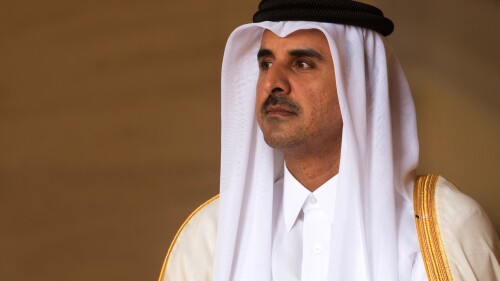 What Mechanisms Can Be Implemented to Stop Qatari Money from Being Poured Into Hamas’s Arsenal?
 -
 Fawzia Sido’s Decadelong Captivity Illustrates the Connections Between ISIS, Hamas and Other Jihadists
 -
 This War on the ‘Villa in the Jungle’ Was Launched to Test a Thesis; It Has Been Disproven at a Very High Cost
 -
 Israel and Its Sunni Arab Allies Must Take the Lead to Implement Programs to Contain Radicalism


