

Will Local Religious and Political Leaders Respond?

570 ‘Muslim Sectarian’ Candidates Backing Islamist Agenda Emerge Victorious

The Central Bank Can Raise Rates, but Cannot Produce Cheap Energy, Calm the Persian Gulf, or Fully Repair Public Trust

Most European States Cannot Fight. They Excel at Military Law but Not at Combat Maneuver Warfare

Incumbent Prime Minister Edi Rama Has Taken the Country’s Criminality to a New Level

The Regime Presents Even Symbolic Contacts with Major Western Leaders as Evidence That Powerful Countries Are Appealing to It

Ankara’s New Legislative Initiative May Appear Technical or Bureaucratic, but It Represents a Calculated Escalation by Erdoğan

Al-Sharaa’s Regime Wants to Exploit the Balance of Power, Which Favors Damascus, to Alter the Kurdish Region

The Nation That Invented the Rights of Man and Secularism Is Turning Itself Halal Without Even the Modesty of an Explicit Conversion

The Emerging Evidence Suggests That This Organization Is a Front for Elements Operating on Behalf of the Iranian Regime

A New Report Examines How the United States and Israel Must Design the Successor Framework to U.S. Military Aid

Trump Could Act as the New Supreme Leader, Refereeing by Drone and Tomahawk Disputes Within the Islamic Republic

Supporting an Assyrian Region Would Bring Justice and Could Offer Washington a Dependable Partner in Iraq

For Years, the Muslim Brotherhood’s Presence Within Libya’s Tripoli-Based Government Was an Open Secret That Western Diplomats Preferred to Ignore

Sharaa’s Closest Associates from His Days as Leader of Hay’at Tahrir Al-Sham Still Control the Most Important Portfolios in Government
Spotlight on a Deal with Iran
There have been many claims of an imminent deal between the United States and Iran recently. No deal has emerged and many versions have been floated as both sides jockey for an advantage in negotiations. The regime seems as recalcitrant as ever.
The most recent version on May 28th is purported to simply be awaiting signatures from the leaders of both countries. Is there a deal to be made that is worth doing or is the regime simply too much of an impediment to the security in the region? MEF fellows and experts weigh in on all of this.
The most recent version on May 28th is purported to simply be awaiting signatures from the leaders of both countries. Is there a deal to be made that is worth doing or is the regime simply too much of an impediment to the security in the region? MEF fellows and experts weigh in on all of this.

As unrest spreads across Iran, the regime and the opposition both face narrowing choices.

Military Officials May Believe the Civilian Governing Structure Is Too Fragmented and Indecisive to Manage the Country

Why the Newly Revealed American-Israeli Plan Never Stood a Chance

Once Trump Has a Credible Partner, He Should Dictate the Terms

Iran’s Competing Power Centers Are Shaping Negotiations, Escalation Risks, and Regional Strategic Decisions

Spotlight on the Gulf States
The combined US and Israeli war against Iran also drew in a number of the Gulf States. Iran’s decision to attack them immediately after Operation Epic Fury began was meant to split them away. In perhaps the most fatal mistake for its survival, it ended up bringing them closer and creating a counter-Iran alliance.
The Abraham Accords are back under discussion and an idea of what type of power structure will replace Iran and its proxies has begin to emerge. That must survive the usual rivalries between the Gulf States themselves, but it seems to be a positive development.
The Abraham Accords are back under discussion and an idea of what type of power structure will replace Iran and its proxies has begin to emerge. That must survive the usual rivalries between the Gulf States themselves, but it seems to be a positive development.

Iran’s Broader Objective Appears to Be the Gradual Decoupling of Arab Oil Producers of the Persian Gulf from the U.S. Security Umbrella

A Consequential Fault Line in the Middle East Runs Not Just Between Riyadh and Tehran but Between Riyadh and Abu Dhabi

How a Coordinated International Campaign Is Targeting the United Arab Emirates

The Pipeline Would Cost Billions of Dollars, Take Years to Build, and Would Cross Multiple Jurisdictions, Not All of Them Reliable

The Decision Sends a Signal That National Priorities Now Outweigh Collective Discipline

Recovery Will Not Be Simply a Return to the Old Model, Now That Gulf States Are Diversifying Their Energy and Economies
Middle East Quarterly - Summer 2026
Founded in 1994 by Daniel Pipes, MEQ is the Middle East Forum’s journal intended for both scholars and the educated public. Policymakers, opinion-makers, academics, and journalists write for and read the Quarterly, which is known for exclusive interviews, in-depth historical articles, and book reviews on subjects ranging from archaeology to politics and on countries from Morocco to Iran.
Summer 2026 Volume 33: Number 3
Summer 2026 Volume 33: Number 3


-
 Qatar’s Strategic Investments in the U.S. Include Critical Infrastructure in Oil and Gas, Higher Education, Trophy Properties, and Political Access
 -
 A Dossier Based on Six Years of Clandestine Intelligence Gathering Reveals a Chemical Weapons Program Far More Sophisticated than Previously Known
 -
 Turkey Poses a Direct and Immediate Threat to Regional Security


-
 The Regime Persists in Its Pronounced Nuclear Goal of Eradicating the Jewish State
 -
 Historically Iran Included a Significant Number of Minorities
 -
 For More than Two Decades, King Abdullah Has Ruled Jordan While Maintaining a Strong Relationship with the U.S.
 -
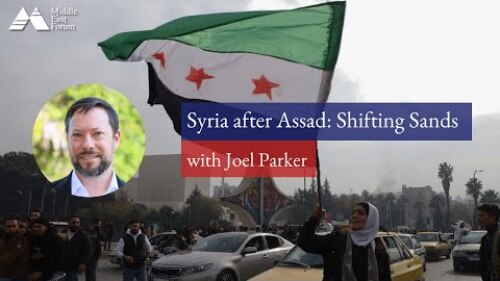 The American President Eyed Syria as a Potential Addition to the Abraham Accords with the Aim of Normalizing Relations with Israel


Middle East Forum Observer
Founded in 2024, the Observer provides rapid analysis on leading Middle East developments, from Marrakech to Mashhad and the Bab el-Mandeb to the Black Sea.


Launched in 2006, Islamist Watch is a project of the Middle East Forum. We work to combat the ideas and institutions of lawful Islamism in the United States and throughout the West. Arguing that “radical Islam is the problem, moderate Islam is the solution,” we seek to expose the Islamist organizations that currently dominate the debate, while identifying and promoting the work of moderate Muslims.

CAMPUS WATCH, a project of the Middle East Forum, reviews and critiques Middle East studies in North America with an aim to improving them. The project mainly addresses five problems: analytical failures, the mixing of politics with scholarship, intolerance of alternative views, apologetics, and the abuse of power over students. Campus Watch fully respects the freedom of speech of those it debates while insisting on its own freedom to comment on their words and deeds.
Antisemitism

-
 Australia Is the Canary in the Coal Mine, but the Real Explosion May Soon Come in Ireland, Norway, and Turkey
 -
 If Investigation Confirms Iranian Involvement in the Bondi Massacre, Canberra Must Sever Diplomatic Relations with Tehran
 -
 Canberra Once Aligned with the United States on Middle East Issues, Including Israel, but Prime Minister Albanese Has Hewn a Different Path
 -
 Where Are the U.N. Officials Who Argue They Cannot Be Part of an Organization That Increasingly Fuels Blood Libel and One of the World’s Oldest Hatreds?


Gaza

-
 Washington’s Push for an International Force in Gaza Risks Importing the Same Coalition Failures That Empowered the Taliban and Hezbollah
 -
 Accounts Falsely Presented Themselves as Civilians in Gaza, Posting Emotive Casualty Claims and Siege Narratives
 -
 Arab Communities in the West Bank and Gaza Need to Be Decentralized Arab Emirates with Internal Autonomy, Under Overarching Israeli Control
 -
 Reports from the Hamas-Controlled Area Indicate That the Terror Group Has Fully Reimposed Its Will on the Population There


Islam

-
 Former Nun Karen Armstrong’s Revisionist History Whitewashes Centuries of Muslim Conquests
 -
 White Women Were and Continue to Be Seen as Sexually Promiscuous by Nature — Essentially ‘Provoking’ Muslim Men Into Lusting After and Raping Them
 -
 The Student Newspaper Has Not Published a Story About the Firing of an Islamic Studies Professor Accused of Sexual Misconduct
 -
 Last Year’s Sequence of Events Has Substantially Shifted the Strategic Balance of the Region


Muslims in the US

-
 An Islamist who promotes an ideology similar to the teachings of the Islamic State—the organization that murdered and raped its way across vast sections of the Middle East and beyond— has set up shop in El Paso, Texas.
 -
 The Muslim Justice League Took a Page Out of the KKK’s Playbook and Deployed Masked Thugs to Harass a Reporter at Its Rally in Downtown Boston
 -
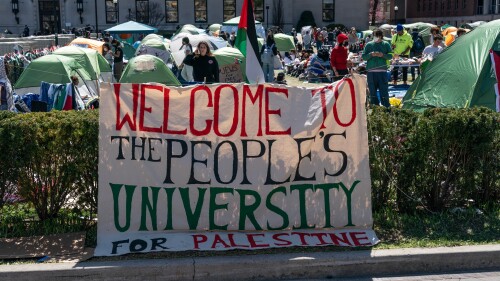 Columbia, Not Just a Campus Anymore, Has Turned into a Caliphate; Sinwar Could Make the Dean’s List
 -
 Progressives Have Done a Better Job Advocating for Hamas than Many Islamist Organizations in the United States


