

Conspiracy Theorists Ignore the Facts and Blame Jewish Tourists Rather than Drought or Funding Shortfalls to Fight Fires

An Emerging Militant Alternative to Hamas Speaks Out on War, Governance, and Peace.

A Buffer Zone Is Not a Strategy; It Is a Geography

Direct U.S.-Brokered Talks Between Israeli and Lebanese Representatives Are Set to Take Place in Washington This Week

The Blockage Would Cut Roughly $280 Million a Day in Iran’s Export Revenues and Disrupt Another $160 Million in Imports

If the Parliament Nominates an Official Known for Corruption, the Entire System Could Collapse

Hezbollah Has Infiltrated Political and Security Institutions, Making It Difficult for the Government to Assert Control

Iraq Is in the Hands of Bodies and Individuals Answerable to Tehran

Libya’s Oil and Gas Infrastructure, Already Chronically Vulnerable, Now Sits Squarely in the Crosshairs of Gray-Zone Operations

The Objective Is to Reshape How the Bases Function in Practice, Particularly During Regional Instability

Turkey’s Presence Is Part of a Deliberate Strategy to Dominate Energy Corridors, Migration Routes, and Maritime Claims

The Delegation Itself Has Become a Visible Expression of Internal Fragmentation

The Death Toll of Christians Massacred on Palm Sunday in Nigeria Rises to 53: Just Background Noise in the Global Media Chaos

The Palestinian Leader Shocked Clinton at Camp David by Refusing to Accept a Deal to Which His Own Negotiators Had Agreed

None of the Partners Professing to Seek Peace Is Sincere, and the TRIPP Serves No Economic Purpose
Spotlight on a Deal with Iran
There have been many claims of an imminent deal between the United States and Iran recently. No deal has emerged and many versions have been floated as both sides jockey for an advantage in negotiations. The regime seems as recalcitrant as ever.
The most recent version on May 28th is purported to simply be awaiting signatures from the leaders of both countries. Is there a deal to be made that is worth doing or is the regime simply too much of an impediment to the security in the region? MEF fellows and experts weigh in on all of this.
The most recent version on May 28th is purported to simply be awaiting signatures from the leaders of both countries. Is there a deal to be made that is worth doing or is the regime simply too much of an impediment to the security in the region? MEF fellows and experts weigh in on all of this.

As unrest spreads across Iran, the regime and the opposition both face narrowing choices.

Military Officials May Believe the Civilian Governing Structure Is Too Fragmented and Indecisive to Manage the Country

Why the Newly Revealed American-Israeli Plan Never Stood a Chance

Once Trump Has a Credible Partner, He Should Dictate the Terms

Iran’s Competing Power Centers Are Shaping Negotiations, Escalation Risks, and Regional Strategic Decisions

Spotlight on the Gulf States
The combined US and Israeli war against Iran also drew in a number of the Gulf States. Iran’s decision to attack them immediately after Operation Epic Fury began was meant to split them away. In perhaps the most fatal mistake for its survival, it ended up bringing them closer and creating a counter-Iran alliance.
The Abraham Accords are back under discussion and an idea of what type of power structure will replace Iran and its proxies has begin to emerge. That must survive the usual rivalries between the Gulf States themselves, but it seems to be a positive development.
The Abraham Accords are back under discussion and an idea of what type of power structure will replace Iran and its proxies has begin to emerge. That must survive the usual rivalries between the Gulf States themselves, but it seems to be a positive development.

Iran’s Broader Objective Appears to Be the Gradual Decoupling of Arab Oil Producers of the Persian Gulf from the U.S. Security Umbrella

A Consequential Fault Line in the Middle East Runs Not Just Between Riyadh and Tehran but Between Riyadh and Abu Dhabi

How a Coordinated International Campaign Is Targeting the United Arab Emirates

The Pipeline Would Cost Billions of Dollars, Take Years to Build, and Would Cross Multiple Jurisdictions, Not All of Them Reliable

The Decision Sends a Signal That National Priorities Now Outweigh Collective Discipline

Recovery Will Not Be Simply a Return to the Old Model, Now That Gulf States Are Diversifying Their Energy and Economies
Middle East Quarterly - Summer 2026
Founded in 1994 by Daniel Pipes, MEQ is the Middle East Forum’s journal intended for both scholars and the educated public. Policymakers, opinion-makers, academics, and journalists write for and read the Quarterly, which is known for exclusive interviews, in-depth historical articles, and book reviews on subjects ranging from archaeology to politics and on countries from Morocco to Iran.
Summer 2026 Volume 33: Number 3
Summer 2026 Volume 33: Number 3


-
 MEF Chief Editor Jim Hanson discussed Syria winners and losers on FOX.
 -
 MEF Chief Editor discusses the end of the Assad regime and how the actions of Russia, Iran and Turkey will affect the outcome with FOX News.
 -
 Plans to Shut Down Islamist Activity in America
 -
 MEF Chief Editor Jim Hanson discusses with FOX News what led to the signing of the ceasefire and what the likely effects will be for Israel, Hezbollah, Hamas and Iran.


Middle East Forum Observer
Founded in 2024, the Observer provides rapid analysis on leading Middle East developments, from Marrakech to Mashhad and the Bab el-Mandeb to the Black Sea.


Launched in 2006, Islamist Watch is a project of the Middle East Forum. We work to combat the ideas and institutions of lawful Islamism in the United States and throughout the West. Arguing that “radical Islam is the problem, moderate Islam is the solution,” we seek to expose the Islamist organizations that currently dominate the debate, while identifying and promoting the work of moderate Muslims.

CAMPUS WATCH, a project of the Middle East Forum, reviews and critiques Middle East studies in North America with an aim to improving them. The project mainly addresses five problems: analytical failures, the mixing of politics with scholarship, intolerance of alternative views, apologetics, and the abuse of power over students. Campus Watch fully respects the freedom of speech of those it debates while insisting on its own freedom to comment on their words and deeds.
Antisemitism

-
 Europe’s Silent Surrender to Antisemitism
 -
 The Turkish-Islamic Union for Religious Affairs Is Part of the Problem, Not the Solution
 -
 The Refusal to Criticize Tehran Is Likely Meant to Protect Germany’s Lucrative Trade with the Islamic Republic
 -
 Hamas Is a Conscious Adherence to Abomination


Gaza

-
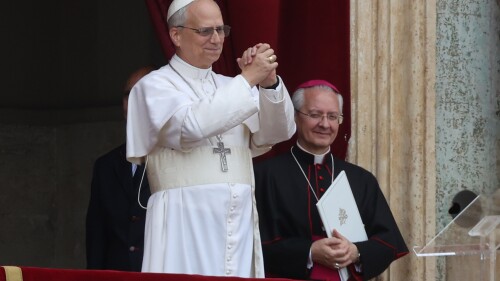 Neither the Vatican nor Any Other Diplomatic Entity Can Evaluate Excessiveness or Judge What Is Considered a Military Advantage
 -
 Political and Moral Boundaries in This Conflict Are More Confused than the Narratives the Mainstream Media and Western Activists Present
 -
 Statehood Is Not Compensation for Grievance—It Comes by Meeting Legal and Institutional Benchmarks


