
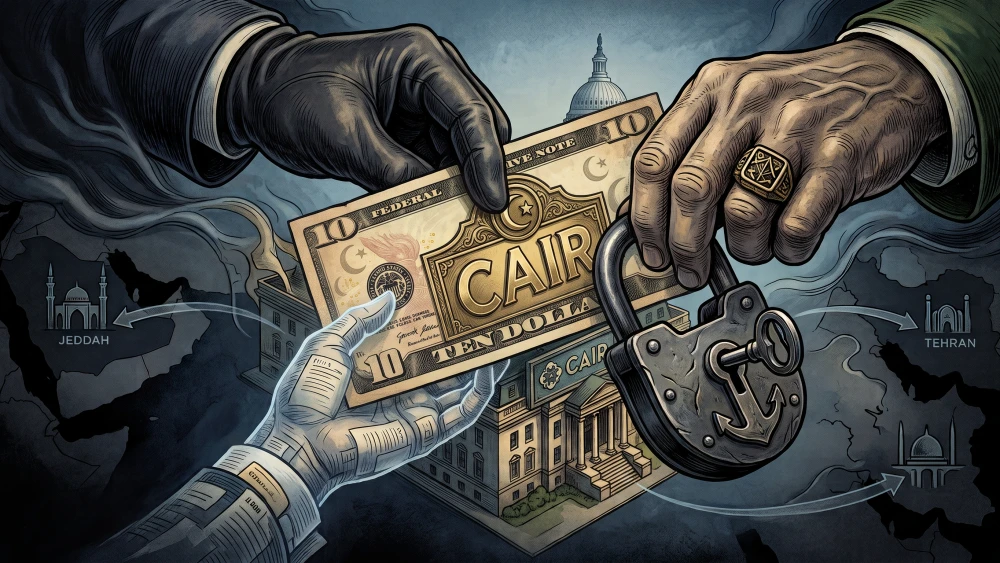
The Bargain a Charity Makes
American charity runs on a bargain. A 501(c)(3) pays no taxes, and its donors deduct their gifts, because the public gets something back: assets locked to a charitable purpose, boards that answer for them, and books anyone can read. The bargain has corollaries every nonprofit lawyer can recite. A charity’s principal asset is sold for real, stated value — or not at all. The buyer is independent of the seller’s own officers, or the conflict is disclosed and approved by disinterested directors. Property held for charity does not slip out from under its purpose without a court’s blessing. And the people who actually paid for the building — donors on the deductible dollar, taxpayers on the subsidy — are told what happened.
Why does the deal trace to a contract dated 107 days before that buyer legally existed?
This report does not assert that a law was broken. The record does not yet prove that, and where that matters, this report says so. What the record already proves is enough: this is not how a charity treats the assets its donors bought. Real price, independent buyer, disinterested approval, public accounting — every expectation in the charitable bargain went unmet, in the same seven weeks, on the same property.
Strip away the instruments and the purpose comes into focus. In seven weeks, the CAIR network moved the one asset every donor knows — the national headquarters they paid for — out of every CAIR-named entity, out of CAIR’s unilateral control, and into the perpetual Islamic waqf system, for a recited $10 and behind a shell whose beneficial owner no one can name. The result is a headquarters that can no longer be sold, financed, or seized without the consent of a trust the government once named beside CAIR in a Hamas-financing case — and that any future federal asset freeze would struggle to reach. Whether the restructuring was built to outrun such a freeze is an inference, and this report labels it as one; that the building would now survive one is not.
What follows is the paper trail. All of it is public.
The Morning It Ended
At 11:27 a.m. on February 13, 2026, the District of Columbia’s Recorder of Deeds accepted two filings for the property at 453 New Jersey Avenue SE, a short walk from the Capitol. No press release followed. No newspaper noticed. The Council on American-Islamic Relations, which occupies that building and calls it its national headquarters, said nothing at all.
Start with the second document, Instrument No. 2026014278, because it contains the sentence that matters. Sage Foundation — the building’s new owner of seven weeks — “shall not sell, convey, hypothecate, finance, encumber or otherwise dispose of” its interest in the property “without the prior written consent of NAIT.”
How does a national organization’s headquarters end up like that? Run the film backward. The paper trail is 27 years long, and every frame of it is public.
The first document, Instrument No. 2026014277, explains who NAIT is in this story: the North American Islamic Trust, which that morning took an undivided 45 percent of CAIR’s headquarters for a stated $4,000,000 — certified on the deed, under penalties of perjury, as “the actual consideration paid or to be paid.” Four million dollars is more than the District values the entire parcel.
So by lunchtime on February 13, the building that houses America’s loudest Muslim “civil-rights organization” belonged 45 percent to an Islamic trust named alongside CAIR in the largest terrorism-financing prosecution in American history, and 55 percent to a months-old entity that had just signed away, in writing and forever, its right to sell, borrow against, or mortgage its own majority stake without that trust’s permission.
How does a national organization’s headquarters end up like that? Run the film backward. The paper trail is 27 years long, and every frame of it is public.
A Building Born of Foreign Finance
The story of 453 New Jersey Avenue SE opens in 1999, and it opens abroad. In 2003, a Senate Judiciary subcommittee entered into the record that — according to the Saudi government’s own embassy website — CAIR had received $250,000 from the Jeddah-based Islamic Development Bank in 1999 toward a Washington headquarters. The D.C. land records show the machinery that followed. In June 1999, The United Bank of Kuwait, PLC took title to the property and, acting expressly “as trustee,” recorded a lease-to-own arrangement with CAIR — roughly $2.1 million in financing reflected in the recorded instruments — signed for CAIR by its executive director, Nihad Awad. CAIR held “the right to receive the deed to the Property at any time” (Instruments 9900057663 and 9900057664). In September 2002, the Kuwaiti bank delivered that deed for a recited $978,031.34 (Instrument 2002105142).
One file number. Three names. No new corporation — the December 2025 deed itself would later identify the seller as “formerly known as the Council on American-Islamic Relations.”
Note the shape of the transaction, because it returns at the end of this story wearing different clothes: an Islamic-finance structure, title parked with a friendly foreign-linked institution, the occupant holding rights instead of deeds. In 2002 the structure unwound in CAIR’s favor. The trustee handed over the building, and for the next 23 years the corporation that owned 453 New Jersey Avenue SE was CAIR’s own.
Which corporation, exactly? Here the registry does the storytelling. The District’s CorpOnline record for File No. 942995 begins on September 15, 1994, with the incorporation of the Council on American-Islamic Relations, Inc. Its founding directors were Omar Ahmad and Rafeeq Jaber — both former presidents of the Islamic Association for Palestine, the Hamas-linked group at the center of the Holy Land case — and Nehad Hammad, certified by Nihad Awad — who is the same man. CAIR’s longtime executive director goes by Nihad Awad but has signed official filings, this 1994 charter among them, under the name Nehad Hammad; his own deposition is captioned Nihad Awad Hammad. The founding document of an organization this report will follow through three corporate names begins, fittingly, with its own incorporator under two. In 2007 the same file changed its name to CAIR Action Network. In 2013 it changed again to Washington Trust Foundation. One file number. Three names. No new corporation — the December 2025 deed itself would later identify the seller as “formerly known as the Council on American-Islamic Relations.” Today that registry entry carries a cair.com email, CAIR National’s general counsel Lena Masri as registered agent, and a single stated purpose: supporting CAIR-Foundation, Inc. — which, on its own sworn Schedule R, declares that it controls Washington Trust.
The Quiet Shell and the Loud Balance Sheet
For a decade, Washington Trust was the dullest nonprofit in Washington. Its tax returns from FY2013 through FY2019 describe a property shell in hibernation: no employees, revenue almost entirely rent from its related organizations, net assets parked near $6 million, exactly two grants in 12 years — both to CAIR Foundation.
Then the balance sheet woke up. Between FY2020 and FY2024, total assets tripled, from $6.65 million to $21,162,467. Net assets barely moved. The growth was debt — liabilities exploding from $228,936 to $14,926,176 — and the FY2024 Schedule D names the engine in a single accounting label: “CONST PROJECT 2ANDK CAIR,” carried at $17,388,028, against liabilities including $8,940,978 for the “2nd and K Project,” $3,887,300 owed to CAIR Foundation, and $1,000,000 from a lender identified only as “American Enterprise.”
The denials speak of donations, and of the entity called CAIR. The Islamic Development Bank does not donate; it finances.
What was 2ANDK? The tax returns never say. The lender does. As this Forum reported yesterday, the Islamic Development Bank — a multilateral institution whose shareholders include the governments of Iran, Qatar, Turkey, and Saudi Arabia — approved the project in 2013 through its Awqaf Properties Investment Fund: a $30.6 million development “opposite the main train station” in Washington, financed with an $11 million bank line and $5 million from the waqf fund itself, its objective stated in the bank’s own words — to “provide income for the Council of American Islamic Relations (CAIR).” The bank’s current report names the beneficiary — Washington Trust Foundation — the mode of finance, istisna’a, and the sum disbursed: $7.77 million, marked 100 percent accomplished. District tax records put the land under Greater Washington LLC of Delaware, Washington Trust’s wholly-owned subsidiary. The developer’s page advertises the result — “CAIR Plaza,” 49 apartments and retail, $18.5 million, “being developed for a non-profit foundation” it declines to name.
Set that against what CAIR tells its donors. Its FAQ page states, in the present tense: “CAIR does not receive funding from foreign organizations or governments.” Its rumor-response page, updated as recently as September 2025, adds: “CAIR does not accept donations from foreign governments.” Parse the language, because the language is doing work. The denials speak of donations, and of the entity called CAIR. The Islamic Development Bank does not donate; it finances. And the financing does not run to the entity called CAIR; it runs to the supporting organization CAIR Foundation controls, and to the Delaware LLC beneath it. Anonymous liability labels on one return, a categorical denial on the website, and $7.77 million of foreign government-backed credit in between. In 2008 there was not even a buffer: the bank’s own news release records a $100,000 grant “for the Upgrading of the Leadership Training Center for the Council of American-Islamic Relations (CAIR)” — approved at a board session convened in Tehran.
The donor rolls reward the same scrutiny. Washington Trust’s contributors are withheld from public view on Schedule B — but grantor-side filings are not, and the Forum’s preliminary review of them identified among its funders the Altalib Foundation of Hisham Altalib, a founder of the International Institute of Islamic Thought and a veteran of the SAAR network, both subjects of the 2002 federal terror-finance raids — investigations that produced no charges against him. The point is not guilt by donation. The point is the smallness of the world: development-bank credit on one side of the ledger, SAAR-adjacent philanthropy on the other, and the same few names signing everything in between.
A Contract With a Ghost
Now the film reaches the part no one was meant to see, and the record turns strange.
On January 26, 2025, somebody executed a Purchase and Sale and Leaseback Agreement concerning CAIR’s headquarters. We know the agreement exists for exactly one reason: the February 2026 memorandum recorded against the property refers to it. The agreement itself has never been filed anywhere. And it carries a problem no drafting error can easily explain: its counterparty, Sage Foundation, would not exist for another 107 days.
So the only human the District was told stands behind the entity now holding CAIR’s headquarters appears to be an outside lawyer, listed at his firm.
Sage was incorporated on May 13, 2025 — and its birth certificate reads like a CAIR staff directory. Incorporator: Eyas Abdeen, CAIR Foundation’s treasurer and a Washington Trust director. Registered agent: Lena Masri, CAIR’s general counsel, on a cair.com email. Address: the headquarters parcel itself. And one name from outside the directory — the registry lists Sage’s beneficial owner as Malik Conn, at 4151 Chain Bridge Road in Fairfax. That address is not a home; it is the office of NOVA Business Law Group, a Virginia firm where a Malik Conn works as a corporate and nonprofit transactional attorney. So the only human the District was told stands behind the entity now holding CAIR’s headquarters appears to be an outside lawyer, listed at his firm — which points not to a hidden principal but to something emptier still: no filing names anyone with an actual ownership stake in Sage at all. That is the finding.
As of this writing, Sage has no known federal tax determination, no filed Form 990, no stated charitable purpose, and a District status of “Active – Not in Good Standing” — it never filed its first required report. This is the entity that was about to own the headquarters of a national organization.
Eight Days in November
On November 18, 2025, the governor of Texas designated CAIR a foreign terrorist organization and transnational criminal organization under state law — a designation CAIR disputes and is fighting in federal court, where the litigation continues.
Eight days later, on November 26, Eyas Abdeen signed the deed.
It conveyed the entire headquarters — the building his organization’s donors believe they paid for — from Washington Trust to Sage, for a recited “Ten Dollars ($10.00) and other good and valuable consideration” (Instrument No. 2025124502, recorded December 23, 2025). The deed does not say Sage paid $10. It says the parties preferred that you not know the number. The District, for its part, indexed the transfer at its full $3,700,450 assessment and collected $107,343.06 in taxes — paid in full, no exemption claimed. Whatever the real price was, no public document discloses it, and only the closing file ever will.
Seven weeks later came the February morning where this story began: the same signature, this time for Sage, splitting the building 45–55 with the North American Islamic Trust and recording NAIT’s veto over the rest. A Florida online notary witnessed it remotely. The professionals were first-rate — the memorandum was prepared by NAIT’s counsel at Vedder Price in Chicago. Nothing about the paperwork is amateur. That is rather the point.
What a Waqf Is For
To understand what CAIR’s headquarters has become, read NAIT’s own literature. The trust describes itself as a waqf — “the historical Islamic equivalent of an American trust or endowment” — holding title to Islamic institutions in 42 states. Waqf property, NAIT explains, “become[s] restricted on a perpetual basis.” It “must not be sold or inherited or given away.”
That is not an accident of nomenclature. That is a network reassembling around its real estate, on instruments its own officers signed.
Now reread the covenant recorded at 11:27 that morning: Sage shall not sell, convey, hypothecate, finance, encumber, or otherwise dispose of the property without NAIT’s written consent. The doctrine and the deed are the same sentence in two vocabularies. And the fund that financed CAIR Plaza two blocks away is literally named the Awqaf Properties Investment Fund — awqaf being the plural of waqf. The building was acquired through Islamic finance in 1999, and in 2026 it passed into the waqf system itself — this time with no purchase right, no unwinding clause, and no path back. In 2002 the structure delivered the deed to CAIR. In 2026 it took the deed away.
There is a lawful reading of all this, and honesty requires stating it plainly: a professionally papered sale-leaseback refinancing that raised $4 million of waqf capital against the building, with CAIR entities remaining in occupancy. The record neither confirms nor excludes it. What the record does establish is that the one asset every CAIR donor knows — the national headquarters — no longer sits in any CAIR-named entity, cannot be sold or financed without NAIT’s consent, and got there through a shell whose beneficial owner no one can identify, for a price no one will state.
The Names That Reappear
The pairing of names on that February deed carries a history, and the history is documented on all sides. In the Holy Land Foundation prosecution — 2008 convictions for routing more than $12 million to Hamas — federal prosecutors filed Attachment A, naming both the “Council on American Islamic Relations” and the “North American Islamic Trust” as unindicted co-conspirators, along with CAIR founding director Omar Ahmad. The trial court found “ample evidence” of CAIR’s, ISNA’s, and NAIT’s associations with HLF, the Islamic Association for Palestine, and Hamas. The FBI suspended formal contacts with CAIR over that evidence.
State the other column with the same discipline, because the record does. The Fifth Circuit held that publicly filing the co-conspirator list violated NAIT’s due-process rights. Neither organization was ever charged. The FBI’s own letter cautioned it was rendering “not a wholesale judgment.” NAIT appears on no federal terrorism list and no OFAC sanctions list — both checked this week — and transacting with it violates no law. The UAE designated CAIR in 2014; Texas followed in 2025; both designations are contested, and designations are not adjudications.
But 19 years after a federal filing put CAIR and NAIT on the same page, a $10 deed and a perpetual veto have put them on the same title — to CAIR’s own headquarters — while the waqf system’s development bank finished financing CAIR’s tower two blocks away. That is not an accident of nomenclature. That is a network reassembling around its real estate, on instruments its own officers signed.
The Calendar Speaks
Whether the restructuring was built to outrun a freeze is an inference, and this report labels it as one — the January 2025 date shows the groundwork predates every designation.
Lay the deeds against the political calendar one more time, and label what follows precisely: chronology first, inference second. January 26, 2025: the leaseback agreement is dated — before any designation existed anywhere. November 18, 2025: Texas designates. November 26: the $10 deed. February 13, 2026: NAIT’s 45 percent and the veto go on record. April 9, 2026: Rep. Chip Roy introduces H.R. 8236, the Designating Hamas Affiliates in America Act, directing the Treasury to list CAIR and its chapter affiliates as Specially Designated Global Terrorists — freezing assets, barring transactions, revoking the tax exemption. June 9: a coalition of dozens of organizations, this Forum among them, urges Congress to pass it.
Whether the restructuring was built to outrun a freeze is an inference, and this report labels it as one — the January 2025 date shows the groundwork predates every designation. The consequence, however, is not an inference. It is on record. By the time any federal designation could land, the one asset every donor knows had already been moved beyond CAIR’s name, beyond its unilateral control, and beyond easy reach. Congress and the Treasury should ask, in the open, which reading is true. Only the closing file can answer.
What the Law Can Ask
We followed the deeds and pulled the registries. We matched the bank’s published reports against the sworn tax returns. No violation of law is asserted here — the record as it stands does not prove one, and this investigation says so before its critics can. What the record does is hand every open question a statute and an office empowered to ask it.
In the District: D.C. Code § 29-410.03 forbids diverting a charitable corporation’s property from charitable purposes without Superior Court approval — no such order appears in the record — and forbids any affiliate from taking a financial benefit from a disposition of substantially all assets, which is exactly what the $10 recital conceals or doesn’t. § 29-406.70 makes insider-conflicted transactions voidable absent informed, disinterested approval; the approving resolutions, if they exist, are not public. The D.C. Attorney General does not need them to be public — § 29-412.20 supplies subpoena power, receivership, and constructive-trust remedies.
A $10 deed bought CAIR’s silence. It should now buy CAIR the scrutiny of every regulator with the power to ask why.
In federal tax law: IRC § 4958 taxes insiders who take more than fair value from a public charity — 25 percent, then 200 percent — and because CAIR Foundation designates Washington Trust a Type I supporting organization, the statute’s automatic rule for payments to insiders waits on whatever the closing file shows. The divestiture also puts Washington Trust’s supporting-organization status in play; failure defaults it to private-foundation rules, where § 4941 flatly prohibits insider loans — and the network carries a $3.9 million one. And the ISDB thread exposes the hole Congress should close: foreign government-backed credit can sit inside a U.S. charity’s return as an anonymous liability line, because the Form 990 never asks the lender’s name.
The nearest deadline needs no subpoena at all. The headquarters was roughly 59 percent of Washington Trust’s net assets — more than double the threshold at which IRS Schedule N compels disclosure of a significant disposition, transferee identity and insider relationships included, on the FY2025 return due within months and public on arrival, with felony exposure for material falsity. Watch whether it names Sage and the people behind Sage. Watch whether it names the creditor the creditor’s own bank has already named. Watch whether the $500,000 discrepancy between the two organizations’ loan figures — $3,887,300 on one sworn return, $3,387,300 on the other — is at last reconciled.
Ten Dollars
Seven documents would end every question in this story: the January 2025 agreement and any assignment to Sage; the closing statement behind the $4 million; the board resolutions behind the December 2025 transfer; Sage’s governing documents and the identity of its beneficial owner; the loan reconciliation; the “American Enterprise” lender; and the complete ISDB istisna’a contract, repayment terms and cross-collateralization included. They all exist. They are all in drawers. The donors who supply 93 cents of every CAIR Foundation revenue dollar have standing to demand them; the IRS (Form 13909) and the D.C. Attorney General have the power to compel them.
CAIR tells America its money is American and its books are clean. The recorded price of its own headquarters was $10. Institutions with nothing to hide do not transact in $10 deeds, contracts that predate their own signatories, and foreign credit lines filed under labels no donor could decode. The deeds are recorded. The bank’s reports are published. The next return comes due in months.
A $10 deed bought CAIR’s silence. It should now buy CAIR the scrutiny of every regulator with the power to ask why.
Documents Cited
Sam Westrop, “Revealed: CAIR’s $7.7 Million of Foreign Financing,” Middle East Forum, Focus on Western Islamism (July 20, 2026); MEF press release.
Islamic Development Bank, Awqaf Properties Investment Fund: 2023 Annual Report (CAIR Plaza: beneficiary Washington Trust Foundation; istisna’a; U.S. $7.77M disbursed, 100 percent); 2013 Annual Report ($30.6M approval; “provide income for the Council of American Islamic Relations”); APIF program page; Feb. 2008 news release ($100,000 CAIR grant; board session in Tehran).
Washington Trust Foundation Inc. (EIN 52-1887951), Forms 990 FY2013–FY2024 incl. Schedules D and R, ProPublica Nonprofit Explorer.
CAIR Foundation Inc. (EIN 77-0646756), Form 990 FY2024 and Schedule R, ProPublica Nonprofit Explorer.
D.C. Recorder of Deeds, Official Records Search: Instruments 2025124502 (WTF→Sage, recorded Dec. 23, 2025); 2026014277 (Sage→NAIT 45 percent, Feb. 13, 2026); 2026014278 (Memorandum of Agreement, Feb. 13, 2026); 9900057663–9900057664 (1999 United Bank of Kuwait trustee/lease-purchase and the ~$2.1M financing); 2002105142 (UBK→CAIR, 2002).
D.C. property records: DC PropertyQuest (Square 693 Lot 83); MyTax DC (201 K St NE, Greater Washington LLC).
D.C. DLCP CorpOnline: File No. 942995 (Washington Trust Foundation, f/k/a Council on American-Islamic Relations); File No. N00008421502 (Sage Foundation).
Senate Judiciary Subcommittee, “Terrorism: Growing Wahhabi Influence in the United States,” S. Hrg. 108-267 (June 26, 2003).
North American Islamic Trust: “About NAIT”; “About Waqf”.
CAIR: “Frequently Asked Questions”; “Dispelling Rumors About CAIR”; Lena Masri biography.
Banneker Ventures, “201 K Street, NE”; PoPville, “What’s happening with 201 K Street NE?” (Dec. 2025).
U.S. v. Holy Land Foundation: Attachment A; July 1, 2009 Memorandum Opinion; 624 F.3d 685 (5th Cir. 2010); DOJ sentencing release; FBI letter to Sen. Kyl, 155 Cong. Rec. 14950.
Designations: Reuters (UAE, Nov. 2014); Texas Governor’s designation (Nov. 18, 2025) and proclamation; CAIR’s federal-court challenge is ongoing.
H.R. 8236, Designating Hamas Affiliates in America Act of 2026, 119th Cong. (introduced Apr. 9, 2026); coalition letter in support, June 9, 2026 (Middle East Forum et al.).
Middle East Forum, preliminary review of grantor-side filings to Washington Trust Foundation (2025, Forum research); press release on the HHS investigation of CAIR.
Deposition of Nihad Awad Hammad, Jan. 9, 2013, CAIR Action Network v. Gaubatz, No. 1:09-cv-02030 (D.D.C.), ECF 154-3.
Legal authorities: D.C. Code § 29-406.70; § 29-410.02; § 29-410.03; § 29-412.20; § 47-4106; IRC § 4958; § 509; § 4941; § 7206; 18 U.S.C. § 2339B; IRS Schedule N, Form 13909, referral process; State Dept. FTO list; OFAC sanctions search; D.C. OAG nonprofits.


