‘Ashura falls on 10 Muharram in an Islamic calendar year (this year from evening of 24 June until evening of 25 June) and is considered an occasion of mourning in Shia Islam because it is considered to have been the day when al-Husayn bin‘Ali, the second Shia imam and grandson of the Prophet Muhammad, was killed at the battle of Karbala’ in 680 CE. Practices associated with ‘Ashura take place in the ten days leading up to 10 Muharram and generally continue through to the day following ‘Ashura. This year, what has the occasion and the build-up to it been like for some Syrian Shia communities?
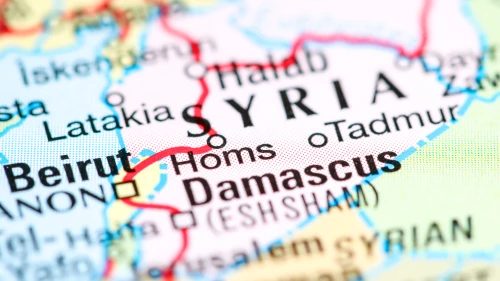
The Syrian Shia villages of Nubl and al-Zahara’ (about which I have written a study for the Middle East Quarterly) constitute an isolated pocket of Shiism in Aleppo governorate, surrounded to the east and south by Sunni Arab villages that were controlled by the rebels and suffered extensive damage during the war. Many of the people from these villages continue to resent Nubl and al-Zahara’ for having served as a bastion of support for the Assad regime, with Iran and Hezbollah having recruited locals to fight in auxiliary formations for theregime. They also claim that there has not been real accountability for violations committed by people from Nubl and al-Zahara’ against the surrounding villages. In addition, the new Syrian government is generally Sunni-centric in its orientation, and relations with Iran continue to be marked by hostility.
The result of all this is that there are still restrictions on public displays and practices of Shia religious occasions in Nubl and al-Zahara’, continuing last year’s trend. The local inhabitants are free to hold ‘councils’ (meetings for readings about the events of Husayn’s death and recitation of the Qur’an) in their homes and in the mosques, and engage in practices like distributing food to neighbours’ homes and offering drinks for people in the streets. Further, on Friday morning and afternoon, most shops and businesses in Nubl and al-Zahara’ were closed in keeping with general custom following the day of ‘Ashura, in contrast to Sunni localities. Men and women could also be observed wearing black clothing, symbolising mourning for Imam al-Husayn. Samples of these observations can be seen in the photos I took below.


Conversely though, there were no processions or banners on display in the streets or on buildings to commemorate ‘Ashura or anything associated with Shia Islam. This is in very marked contrast to Baghdad (which I also recently visited and likely has a decisive Shia majority today) where displays for ‘Ashurawere highly visible in the streets.


While ‘civil peace’ (Arabic: al-salm al-ahli) remains one of the Syrian government’s slogans in terms of promoting outward harmony between sects, it is clear here that the authorities are still far from truly realising that, and there has been no real reconciliation between Nubl and al-Zahara’ and the surrounding villages. Real ‘civil peace’ does not take the form of restrictions on religious practices for fear of ‘provoking’ the anger of neighbours of the majority sect. Recently also the government opened a new court for the ‘Nubl district’, which encompasses a number of nearby Sunni localities. At least some people from the surrounding Sunni localities are angry about the idea of having to go to Nubl to conduct certain transactions, with demands to remove government offices from Nubl.
Post on the opening of the new court in Nubl district: “Our respected government, it’s true that work has to be done on civil peace, but civil peace, not civil humiliation or civil submission. The blood has not yet dried. We condemn the continuation of tying the fate of the villages that rose up in Aleppo’s northern countryside and suffered greatly because of Nubl and al-Zahara’…we demand to remove the state offices from Nubl to a second locality.”The true mark of reconciliation and ‘civil peace’ will only come about when issues like public display of Shia religious practices and the existence of government offices in Nubl are no longer deemed controversial, and there is no longer a need for checkpoints to the entrances of Nubl and al-Zahara’ to defend them against possible attacks by Islamic State or others seeking sectarian revenge and reprisal.
Published originally on June 27, 2026.