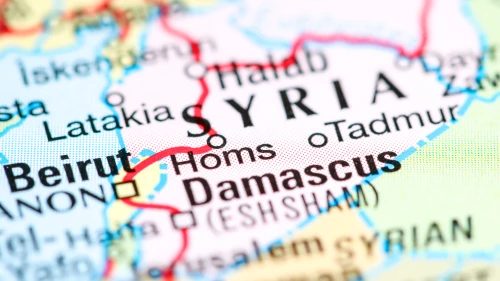
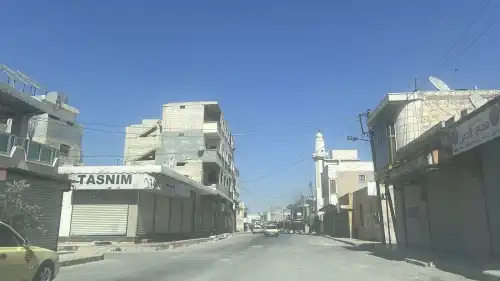
Recently, pro-‘resistance’ outlets—most notably al-Akhbar in Lebanon and The Cradle—circulated claims that Israelis with non-Israeli nationalities have been purchasing agricultural lands in areas of southern Syria along the border with the Israeli-controlled Golan Heights, such as the Yarmouk Basin region in the southwest corner of Deraa province.
Is there any truth to these claims?

In a word: No.
The first is that the purchase of real estate by foreigners in Syria is subject to legal regulations. Notably, legislation on the matter was passed in March 2011 by the Syrian parliament. Article 1a of that legislation requires that a foreigner purchasing real estate in Syria could only purchase one residential unit intended for a family to reside in, with the foreigner needing to have legal residence in Syria. The real estate in this case had to be a building with proper documentation and no less than 140m2 in area. In early 2021, the parliament approved modifications to the legislation that removed some of the restrictions: namely, the foreigner no longer had to have a family, nor did the real estate have to be a minimum size. However, the foreigner was still only limited to one purchase of real estate that constituted a building, and had to be legally resident in Syria. At the time, pro-opposition outlets speculated that these restrictions might allow foreign military personnel or militiamen (most notably Iranian personnel and client militiamen) resident in Syria to purchase real estate and bring about ‘demographic change.’
Leaving aside the legal obstacles, more credible sources on both sides deny these supposed land purchases.
Conversely, there is nothing in Syrian law that would allow a foreigner to purchase agricultural land as part of any settlement enterprise. Of course, it is possible for a foreigner to do an informal sales transaction with someone in Syria for a piece of real estate, but the transaction would have to be registered in a court in order to obtain formal recognition. A foreigner attempting to purchase Syrian agricultural land in his/her own name for a settlement enterprise would simply be unable to get the transaction recognised by the state. The transaction would rather have to be registered in the name of a local Syrian- something that makes no sense in this context.
Leaving aside the legal obstacles, more credible sources on both sides deny these supposed land purchases. The Cradle specifically claims that the ‘Pioneers of Bashan’ movement (which seeks to establish Jewish settlements in southern Syria, as I have documented in an interview with the group) is a key party involved in the supposed land purchases. Of course, the ‘Pioneers of Bashan’ movement makes no secret of what its goals are, and so I asked its board member Amos Azaria whether there was any truth to these claims of his movement being involved in land purchases. He denied them, telling me: ‘No. It is unrelated to us (if true).’
Similarly, sources of mine in the Yarmouk Basin denied the claims. For example, one person from al-Shajra (whom I have known for many years and who participated in the rebellion against Assad) said: ‘Denied. The people of al-Suwayda’ are spreading this claim.’ The head of the Syrian government-affiliated local council in Koaiya (another Yarmouk Basin locality) similarly denied the rumours. Finally, a friend who is a beekeeper in the Yarmouk Basin locality of ‘Abidin, and who has previously discussed with me the issue of Israeli incursions in the area and the problems they have generated, told me that these rumours were totally untrue.
In short, do not lend any credibility to the reports of The Cradle or al-Akhbar—another example of these outlets’ shoddy reporting on Syria.
Published originally on May 5, 2026, under the title “Israelis Buying Land in Southern Syria?”