

Abstract
This article examines how Pakistan’s Hindu minority has been steadily marginalized since the country’s creation in 1947. Before Partition, Hindus constituted approximately 13.5–15 percent of the population in the territory that is now Pakistan. According to Pakistan’s 2023 census, Hindus now make up only 1.61 percent of the country’s population. While much of the initial demographic decline resulted from Partition, this article argues that the experiences of the remaining Hindu community over the past eight decades reveal a broader pattern of institutional discrimination and social exclusion that has reinforced insecurity and encouraged continued emigration. It examines constitutional and legal discrimination, forced conversions and marriages of Hindu girls, land dispossession, employment discrimination, attacks on temples, inadequate access to justice, and the limited protection afforded to religious minorities. Furthermore, it examines the gradual erosion of Pakistan’s Hindu identity through the neglect and destruction of religious heritage, the post-Partition renaming of numerous localities and streets associated with Hindu, Sikh, and Jain communities, and the fading visibility of Pakistan’s pre-Partition pluralistic past. Finally, it assesses Pakistan’s international advocacy on minority rights against the documented conditions faced by its own Hindu minority.
Drawing on census data, Pakistani government records, reports by international human rights organizations, academic research, and documented case studies, the article uses neo-dhimmitude as an analytical framework to examine whether patterns historically associated with religious subordination—such as unequal status, religious vulnerability, coercion, restrictions on religious life, and the erosion of communal identity—have appeared in contemporary forms in Pakistan.
Historical Dhimmitude and the Emergence of Neo-Dhimmitude
The condition of Pakistan’s Hindu minority reflects a long and complex history of religious marginalization, discrimination, and social exclusion. Historically, dhimmitude referred to the legal and social status of non-Muslim communities protected under Islamic rule but placed in a subordinate position. Bat Ye’or, a writer known for her work on the historical experiences of Jews and Christians under Muslim rule, in The Dhimmi: Jews and Christians Under Islam, documents restrictions imposed at different times and places on Jews and Christians, including limitations concerning religious institutions, public life, taxation, employment, and political status. [1] Her later work, The Decline of Eastern Christianity Under Islam: From Jihad to Dhimmitude, examines the experiences of Christian communities across the Middle East and Anatolia, including episodes of discrimination, persecution, forced conversion, displacement, and restrictions on Christian religious life.[2]
Hindus constituted approximately 15–17 percent of the population in the territories that now form Pakistan [in 1947]. Today, they constitute around 1.61 percent.
The historical concept, however, requires an important qualification in the Pakistani context. Hindus were not historically classified as dhimmis in precisely the same manner as Jews and Christians, whose protected status received a more established place in classical Islamic jurisprudence. The status of Hindus and other non-Abrahamic communities varied across Muslim-ruled societies and historical periods. Anver M. Emon, a Professor of Law and Canada Research Chair in Islamic Law and History at the University of Toronto, in Religious Pluralism and Islamic Law: Dhimmis and Others in the Empire of Law, demonstrates that the historical dhimma was itself a complex legal framework whose application varied according to time, place, political circumstances, and interpretation.[3]
The concept of neo-dhimmitude therefore does not suggest that Pakistan has simply reproduced the medieval dhimma system. The issue is not whether Hindus are technically dhimmis, but whether they experience unequal religious status through constitutional restrictions, limited political and economic opportunities, occupational segregation, restrictions on religious institutions, forced conversions, vulnerability to blasphemy accusations, and inadequate state protection. The comparison in this article is therefore structural rather than historical or juridical: it does not claim that Pakistan’s Hindus occupy the same legal status as classical dhimmis, but that certain patterns of religious inequality, vulnerability, discrimination, and institutional subordination bear analytical similarities to conditions historically associated with dhimmitude. Neo-dhimmitude is thus used as a framework for examining how formal citizenship can coexist with substantive religious inequality and how legal, social, ideological, and institutional factors may combine to reproduce patterns of minority subordination in a modern state.
These patterns are also reflected in the demographic and social position of Pakistan’s religious minorities. Minorities in Pakistan, especially Hindus, Sikhs, and others, are facing serious human rights violations and harsh conditions. At the time of the Partition of India in 1947, Hindus constituted approximately 15–17 percent of the population in the territories that now form Pakistan. According to Pakistan’s 2023 Census, Hindus now constitute around 1.61 percent of the country’s population, numbering approximately 3.87 million, reflecting a dramatic decline from their pre-Partition demographic presence. [4] While this demographic change was partly shaped by the large-scale migration during Partition, the continued marginalization and decline in their proportion over the decades reflect the discrimination, insecurity, and challenges faced by the community.
Against this background, this article examines the condition of religious minorities in Pakistan, with a particular focus on the Hindu community, and explores the political, constitutional, social, and ideological factors that have contributed to their marginalization since Partition. It uses neo-dhimmitude as an analytical framework to assess the contemporary experience of Pakistan’s Hindu minority and the extent to which historical patterns of religious subordination have appeared in modern forms.
Jinnah’s Death and the Early Signs of Sectarian Intolerance

After the creation of Pakistan on the basis of the Two-Nation Theory, the country’s founding father, Muhammad Ali Jinnah, declared that everyone would be free to profess, practise and propagate their own religion and to live according to their own wishes.[5] In his historic address to the Constituent Assembly on August 11, 1947, Jinnah proclaimed, “You are free; you are free to go to your temples. You are free to go to your mosques or any other places of worship in this State of Pakistan,” adding, “Every one of you, no matter what his colour or creed, is first, second, and last a citizen of the State, with equal rights, privileges, and obligations.” Jinnah went so far as to declare, “You will find that in course of time Hindus would cease to be Hindus and Muslims would cease to be Muslims, not in the religious sense, because that is the personal faith of each individual, but in the political sense as citizens of the State.”[6]
However, the opposite has happened. Instead of building this vision of equal citizenship, successive governments codified religious discrimination directly into the Constitution, failing to treat religious minorities equally and subjecting them to persistent discrimination.
Moreover, this contradiction became visible immediately upon Jinnah’s death on September 11, 1948. Although he was born into an Ismaili Shia family and later adhered to Twelver Shia practices—requiring a private Shia funderal prayer (Namaz-e-Janaza) led by cleric Syed Anis al-Husayni at his official residence—his public state funeral was conducted according to Sunni traditions under the prominent Deobandi scholar Maulana Shabbir Ahmad Usmani. To secure his estate under more flexible Shia inheritance laws, his sister Fatima Jinnah and Prime Minister Liaquat Ali Khanfiled a joint affidavit declaring him a Shia.[7] This dual identity forced upon Jinnah himself—a head of state, no less—reflected the immediate pressure to conform to majoritarian Sunni sectarianism, exposing the deep intolerance and structural contradictions that existed at Pakistan’s founding.
Beyond these early contradictions, the marginalization of religious minorities gradually became embedded within the social, political, and institutional structures of the Pakistani state itself. Because of the human rights violations they endure, religious minorities such as Hindus have been reduced to second-class citizens, their lives made worse and many basic rights effectively denied.They are systematically discriminated against in every walk of life, including housing, employment, access to government welfare, and the equal enjoyment of fundamental rights. This systematic discrimination is particularly evident in the sphere of public employment, where state institutions have long reinforced occupational segregation on religious grounds. Under explicit municipal recruitment directives and long-standing labor policies—reflected in official advertisements issued by the Pakistan Rangers, public hospitals, and municipal corporations—manual sanitation and sewerage cleaning jobs have routinely been reserved exclusively for “non-Muslims only,” consigning many of them to the most degrading occupations.[8] Hindus and other minorities face systemic oppression, legal challenges, administrative injustice, and many other forms of discrimination, including exclusion from state welfare distributed through the Zakat fund, which legally excludes non-Muslim beneficiaries.[9] Even when they report cases of oppression, they often fail to receive justice and instead face further legal and administrative obstacles.
For example, the Constitution of Pakistan theoretically guarantees religious freedom to all its citizens under Articles 20–22. However, the Hudood Ordinances of 1979, Ordinance XX of 1984, and other laws introduced under the military regime of General Zia-ul-Haq imposed regulations and constitutional injunctions that deny equal protection and religious freedom to non-Muslims.[10] Additionally, Article 41(2) of the Constitution of Pakistan explicitly states that only a Muslim can become the President of the country, and holders of certain high public offices must take an oath invoking Islamic principles, thereby reflecting institutionalized state discrimination against religious minorities and reinforcing the privileged constitutional status of Islam.[11]
There is a whole ecosystem that supports this. It includes administrative institutions, the judiciary, and sections of society, making it extremely difficult for Hindus and other religious minorities to enjoy equal rights, secure equal status, or obtain justice.
Erasure of Hindu Heritage and Cultural Marginalization
The marginalization and exploitation of Hindus also extends to their heritage. Their places of worship, including temples, gurdwaras, and other sacred and historical sites, have faced destruction and prolonged neglect. While informal regional estimates suggest that thousands of local places of worship historically existed in what is now Pakistan, a 2014 survey by the All Pakistan Hindu Rights Movement (PHRM) found that, of the 428 historical minority places of worship formally registered at the time of Partition, a staggering 408 had been repurposed for commercial, residential, or governmental use, leaving only 20 operational.[12] Today, only a small number of temples and other places of worship remain, reflecting the widespread destruction of religious heritage and the systematic erasure of Pakistan’s Hindu identity.
Even those that remain often stand in poor condition. Many have fallen into ruins, with dilapidated walls, crumbling floors, and devastated structures. A damning report by a Supreme Court-appointed One-Man Commission headed by Dr. Shoaib Suddle officially confirmed that out of 365 temples theoretically under the control of the Evacuee Trust Property Board (ETPB), the state body had completely abandoned 287 of them to land mafias, actively managing only 13 active sites.[13] There are reports that some of these sites have deliberately been left in such a condition that they naturally collapse over time and are eventually destroyed. Prominent ancient landmarks, like the Sri Narasimha Temple at Prahladpuri in Multan and the historical Aditya Sun Temple, sit in absolute structural decay, while the state’s continued administrative failure to remove illegal encroachments allows weathering and neglect to silently erase the architectural remnants of the region’s pre-Partition pluralistic heritage. [14]
Of the 428 historical minority places of worship formally registered at the time of Partition, a staggering 408 had been repurposed for commercial, residential, or governmental use — leaving only 20 operational.
Repeated attacks have targeted temples, pilgrimage sites, other religious places, and religious leaders. The government has done little to prevent such attacks or protect these sacred places and the people associated with them. It is important to understand that cultural and religious heritage forms an essential part of the identity of any religious community. If that heritage is destroyed, no one can genuinely claim that the rights of that community are being protected.
Many examples demonstrate the extent of disrespect shown towards these minority religious institutions. This disrespect can be gauged from the fact that several temples and other places of worship have been converted into public facilities such as latrines. For example, in Lahore, the ancient Basuli Hanuman Mandir was shockingly repurposed and desecrated into a public toilet facility, sparking massive outrage. Similarly, the historic Prahladpuri Temple in Multan has frequently seen its surrounding ruins used by neighboring populations as an open dump and public restroom. Moreover, recently in July 2026, the 125-year-old historic Gurdwara Sri Guru Singh Sabha Sahib in Farooqabad was illegally targeted and completely demolished by a local businessman, exposing the state’s continued failure to safeguard its non-Muslim civilizational heritage.[15]
Similarly, in July 2020, radicals destroyed the partially built boundary wall of what would have been the Shri Krishna Mandir—the first Hindu temple complex in Islamabad. Similar instances include mobs torching the historic Mata Rani Bhatiyani Mandir in Sindh and attacking the century-old Shri Paramhans Ji Maharaj Samadhi temple in Karak with sledgehammers. In a society where sections of the population regard the destruction of such institutions as a moral duty, an ideological narrative that weaponizes religion can further fuel such actions, while public pressure repeatedly forces the administrative machinery to capitulate to extremist demands.[16]
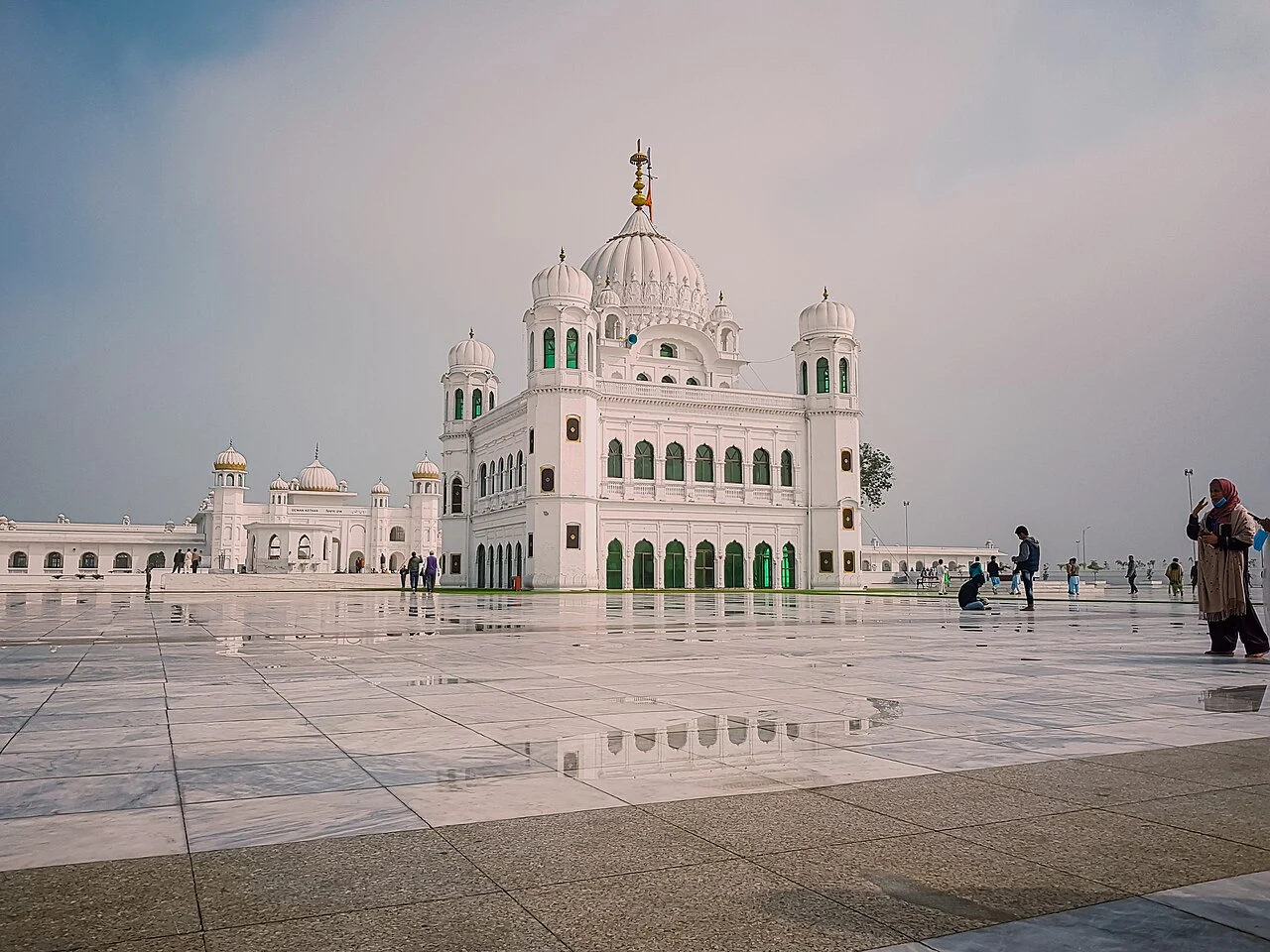
Pakistan did open the Kartarpur Corridor in 2019, a visa-free pilgrimage corridor connecting Dera Baba Nanak in India’s Punjab with Gurdwara Darbar Sahib Kartarpur in Pakistan’s Narowal district. The corridor was inaugurated on the occasion of the 550th birth anniversary of Guru Nanak Dev Ji and allows Sikh pilgrims from India and around the world to visit one of the holiest sites in Sikhism, where Guru Nanak Dev Ji spent the final years of his life.[17] Even after periods of closure due to India-Pakistan tensions and the COVID-19 pandemic, Pakistan has maintained and promoted the corridor. However, this does not absolve the Pakistani state of responsibility for the destruction of a large number of Hindu places of worship, including temples, gurdwaras, and other religious sites. Many human rights groups and international organizations have also criticized Pakistan for failing to ensure the security and preservation of these religious places and other minority institutions.
Moreover, in an apparent attempt to erase their religious and cultural identity, Pakistan has changed the names of many Hindu religious sites. If one looks at the names of places today, there are hardly any that reflect Hindu heritage, indicating a systematic removal of that identity. Recently, there was a proposal by the Punjab provincial government—driven by the Lahore Heritage Areas Revival (LHAR) initiative under Maryam Nawaz—to restore some of these original pre-partition names. However, following strong backlash from extremist elements, conservative groups, and right-wing social media vloggers who accused the state of promoting Hindu culture, the proposal was completely deferred and withdrawn, once again reflecting the prevailing mindset within sections of society.[18]
A whole system supports this. Although the Constitution provides safeguards for minorities, poor implementation continues to undermine them. Moreover, judges often struggle to make independent decisions because of the pressure and intimidation they face.
Blasphemy Laws and the Systemic Vulnerability of Religious Minorities
Pakistan’s blasphemy laws and other legal provisions are widely viewed as discriminatory towards religious minorities. These laws are often misused to target individuals on the pretext that they have used offensive or derogatory language against Islam or the Prophet Muhammad (PBUH). However, in many cases, personal disputes, property conflicts, business rivalries, enmity, or religious prejudice have motivated the accusations, which later prove false.
For instance, in September 2019, a violent mob in the town of Ghotki, Sindh, attacked three Hindu temples—including the Sacho Satram Das Mandir—several shops, and the Sindh Public School after a Muslim pupil accused the Hindu principal, Notan Lal, of making blasphemous remarks about the Prophet Muhammad. Local investigations and rights reports later revealed the allegations were heavily amplified by extremist factions to settle local economic grievances, yet the institutional mechanisms immediately capitulated to the mob, leading to the principal being swiftly detained under Section 295-C while the perpetrators of the temple desecration faced zero meaningful legal accountability.[19]
The blasphemy provisions contained in Pakistan’s Penal Code (Sections 295-B, 295-C, and 298-A to 298-C) prescribe severe punishments for perceived insults to the Prophet Muhammad or the desecration of the Qu’ran.[20] Punishments range from three years’ imprisonment and a fine to life imprisonment and even the death penalty. The very existence of these laws creates fear among religious minorities. Because the evidentiary bar is structurally low and the laws lack provisions to penalize false accusers, they function as legal weapons that expose non-Muslims to immediate state arrest and extrajudicial street violence over basic, unverified declarations.
Blasphemy allegations often trigger mob lynching. When rumours are spread against a member of a religious minority, that individual is frequently attacked or lynched before any judicial process can take place. A prominent example is the December 3, 2021 lynching of Priyantha Kumara, a 48-year-old Buddhist Sri Lankan national who had worked in Pakistan for 11 years as the general manager of Rajco Industries, a sports equipment and garment factory in Sialkot, Punjab. Kumara was brutally tortured, beaten to death, and his body publicly burned on Wazirabad Road by a mob of hundreds after falsely being accused of blasphemy for removing religious stickers from a wall ahead of a routine factory cleanup and whitewash.[21] In such situations, there is often little effective recourse to the judiciary or other state institutions, as judges, lawyers, and others may also fear becoming targets themselves if they rule in favour of the accused.
Christian and Hindu girls remain particularly vulnerable to forced religious conversion, abduction, trafficking, child, early and forced marriage, domestic servitude, and sexual violence.
Even smaller Muslim sects are not safe in Pakistan, which reflects the broader nature of the problem. For example, the Ahmadiyya community, which has been declared non-Muslim under Pakistani law, has also faced violence, discrimination, and persecution under these blasphemy laws. The institutionalised repression has escalated to the point where even the state apparatus actively assists in their persecution; in early 2025, Punjab Police systematically raided and demolished the historical minarets and mehrabs of 120-year-old Ahmadi places of worship in areas like Hamraj Pura and Kot Rehmat Khan to satisfy local hardline clerics.[22]
These cases also illustrate the devastating human consequences of Pakistan’s blasphemy laws, under which many individuals have lost their lives or remained imprisoned following allegations. Many people have lost their lives because of allegations made under these laws. In 2019 alone, at least 84 individuals were formally imprisoned across various detention facilities on blasphemy charges, and at least 29 of them had received death sentences from lower courts, according to data documented by the U.S. Department of State’s International Religious Freedom report.[23]
Besides, if we examine the representation of Hindus in Pakistan’s national legislature, it remains extremely limited. Although religious minorities have reserved seats—specifically 10 seats in the National Assembly out of 336—their representatives are generally nominated by mainstream political parties through a proportional representation list system rather than directly elected by minority constituencies, limiting their independent political voice. Similarly, their representation in the higher civil administration, judiciary, police, and armed forces is also minimal. Even where a 5 percent quota for minorities exists in government employment, thousands of posts remain vacant across federal and provincial departments, while a large proportion of minority employees are concentrated in the lowest-paid positions, such as Grade 1 to 4 municipal sanitation and manual scavenging jobs. They face systemic discrimination that limits their recruitment and advancement. In addition to institutional barriers, they also encounter social discrimination that further restricts their opportunities.
Moreover, from the time a Hindu child is born, he or she faces various forms of discrimination, ranging from access to child welfare services and education to employment opportunities later in life. These inequalities place them at a disadvantage from the very beginning, making it difficult for them to compete on equal terms in society. They operate from a structurally weak position, which itself constitutes a major form of discrimination.
Even when opportunities are available, they often lack the social, economic, and institutional support needed to compete fairly. Systematic marginalization has left many living under constant fear and insecurity. Their living conditions are often extremely poor. This becomes evident in many Hindu localities, where substandard living conditions remain common. In rural districts like Tharparkar—home to a massive concentration of Pakistan’s Hindu population—the lack of basic public infrastructure is stark; over 90 percent of the local groundwater is brackish, highly saline, and unfit for human consumption according to World Health Organization (WHO) standards.[24] Many also lack access to basic necessities such as safe drinking water, healthcare, sanitation, and other essential public services.
Politics of Othering and Anti-Hindu Narratives
There is a system that perpetuates this discrimination, involving various institutions and society itself. The anti-Hindu sentiment cultivated by Pakistan’s military establishment since the country’s creation has helped it maintain its influence and power. The othering of Hindus has become a strategic project of the Pakistani military establishment, with anti-Hindu sentiment serving as a unifying factor.
This sentiment has spread across institutions and society through education and socialization, with successive governments and institutions reinforcing it over time. For example, recently its Army Chief, General Asim Munir, explicitly invoked this narrative by stating that Muslims and Hindus remain distinct in their religion, customs, and ambitions. Since Pakistan was created on the basis of the Two-Nation Theory—which argued that Hindus and Muslims are distinct nations that cannot live together—anti-Hindu attitudes have become deeply embedded in the ideological foundations of the Pakistani state.[25]
Moreover, anti-Hindu sentiment has often translated into anti-India sentiment, and vice versa. From its inception, Pakistan’s national identity has largely been defined in opposition to India, making hostility towards Hindus a recurring feature of its political narrative. The Pakistani military has consistently relied on this narrative since 1947, using it to strengthen its legitimacy within society. Hindus in Pakistan also carry the additional burden of being associated with India, which is perceived as Pakistan’s principal adversary. This further intensifies prejudice against them and reinforces narratives that contribute to radicalization against India.

This mindset was also reflected in a recent statement by Pakistan’s President Asif Ali Zardari. Referring to Pakistan’s Hindu minority, he stated: “We are Muslims. They are not. But we are Muslims of the mindset that we tolerate 3–4 percent Hindu population. They are as free, as good as anywhere else they were.[26] They would rather be with us than be with them.” Such language is significant because describing Hindus as a population that Muslims “tolerate” places the majority in the position of permitting or enduring the minority’s presence, rather than recognizing them simply as equal citizens.
Furthermore, the military–mullah nexus has, according to many critics, sustained pan-Islamic narratives, including references to Ghazwa-e-Hind by some extremist groups and clerics. Within such narratives, extremist groups and networks portray India as the principal adversary through their sermons and literature, including symbolic calls to unfurl their flag atop Delhi’s Lal Qila. Within these frameworks, anti-Hindu sentiment serves as a tool to reinforce religious polarization, marginalize minority communities, and sustain extremist narratives.[27]
Education, Ideological Indoctrination, and the Normalization of Hatred
Pakistan’s education system perpetuates hatred against Hindus. From the very beginning, when a child is born and begins the process of socialization, he or she is exposed to narratives and attitudes that contribute to the othering of Hindus. There is, therefore, a constant process of othering from an early age. History and other textbooks present material in ways that repeatedly reinforce hatred towards Hindus.
For instance, quotes from textbooks—such as a Class V Urdu lesson stating, “A Hindu has always been an enemy of Islam,” and a Class IV Social Studies text declaring, “The religion of the Hindus did not teach them good things”—illustrate this bias.[28] International rights monitors have consistently documented these narratives, highlighting how state curricula routinely frame Hindu culture as inherently oppressive and hostile. There are many other similar examples in which Hindus appear repeatedly as evil and as people who must be taught a lesson.
For example, historical figures who invaded India, looted its wealth, and destroyed its temples are celebrated as heroes in Pakistan. Muhammad Ghori, who attacked India and looted its wealth, is celebrated as a hero. Similarly, Mahmud of Ghazni, who attacked and plundered the famous Somnath Temple, is also celebrated as a hero.[29] Thus, many individuals who are regarded in India as invaders responsible for looting the country’s wealth, destroying its cultural heritage, and attacking its cities are instead glorified in Pakistan. This revisionism extends into modern historical texts, which systematically reduce the diverse historical identity of the region into a binary of religious conflict, ensuring that these historical figures appear exclusively as champions of faith rather than political conquerors.

Pakistan has also named some of its weapon systems, including missiles, after these historical invaders. For instance, its strategic ballistic missile arsenal includes the Ghauri, Ghaznavi, and Abdali series, named specifically to honor Muhammad of Ghor, Mahmud of Ghazni, and Ahmad Shah Abdali, thereby perpetuating a constant psychological hostility towards India.[30] In such an educational environment, children grow up with these narratives, which contribute to intolerance and anti-India sentiment. If one conducts an objective review of Pakistani school textbooks, it becomes easier to understand why such attitudes have developed.
Rajiv Thakur, Coordinator of Seva Welfare Trust Pakistan, states in this context: “When you promote hatred in schools, it results in creating hatred at a societal level. So this kind of mindset then permeates the whole society.”[31]
The complex situation in Pakistan can also be illustrated through another example. A video on TikTok showed a boy, around four or five years old, warning Prime Minister Imran Khan that if he allowed the construction of the Islamabad temple to proceed, he would kill a Hindu because he believed it was his duty. An even younger child cheered in the background, while the father stepped into the frame smiling and repeated his son’s threats against Pakistani Hindus. This incident illustrates how anti-Hindu hatred can become deeply ingrained and normalized within sections of society and transmitted across generations through family and socialization.[32] Instead of discouraging such behavior, the father openly reinforced it, leading the child to believe that hatred and even violence against Hindus were morally and religiously justified. In such an environment, these attitudes become normalized from an early age, leaving little space to challenge or correct them and perpetuating intolerance across generations.
Secondly, there is a vast madrasa network that, according to many critics, promotes radicalization and anti-India sentiment. It is here that ideological indoctrination is often completed. Through selective interpretations of Islamic texts, some extremist elements preach violence and jihad to advance their objectives. Pakistan has nearly 40,000 madrasas, and in some areas they outnumber public schools, particularly across southern Punjab and the Khyber Pakhtunkhwa province.[33]
According to these critics, religious teachings are manipulated to radicalize students, and some madrasas function as centers of indoctrination against Hindus, Christians, Jews, and other religious minorities. Religious clerics also play an influential role in this process. They use emotional language, glorify violence, and speak about the rewards of the hereafter, convincing followers that ultimate happiness lies there and, in some extremist narratives, portraying violence against Hindus as a religious duty.

Hafiz Saeed, the founder of Lashkar-e-Taiba.
(Nylequreshi263 via Wikimedia)
Terrorist figures have also contributed to this environment. For example, according to the U.S. Department of State’s International Religious Freedom Report, Hafiz Saeed, the founder of Lashkar-e-Taiba, publicly threatened Jews and Hindus and called for holy war against them during a major rally in Lahore.[34] Such statements, widely disseminated through organizational networks like Jamaat-ud-Dawa, help normalize hatred, leading many individuals to believe that discrimination against minorities is morally justified.
Normalization has a strong effect across institutions and society itself. Those who discriminate against or commit violence against Hindus often regard their actions as normal behaviour and do not believe they are doing anything wrong. On the contrary, they feel that their actions carry religious sanction and moral legitimacy. These narratives, propagated by extremist clerics and reinforced through socialization, manifest themselves in discrimination and violence. Over time, these factors combine to create a societal value system that is exclusionary, normalizes hatred towards Hindus, and makes such behaviour appear socially acceptable.
Systemic Vulnerability of Hindu Women and Girls in Pakistan
Besides, Hindus also face systemic oppression through forced marriages and religious conversions. Many women and girls have reportedly faced abduction, forced conversion, and marriage against their will. Their vulnerable socio-economic conditions make them easy targets for exploitation. Numerous reported cases demonstrate how young Hindu girls have faced kidnapping and forced marriage, with some also suffering sexual exploitation.
Approximately 1,000 Hindu and Christian girls in Pakistan are reportedly abducted and converted to Islam every year. In many cases, sexual violence and rape are used as instruments of power and domination.[35] Several international NGOs have documented such cases and highlighted the forced marriages of these girls. Poverty, social vulnerability, and religious prejudice further increase the risks faced by many Hindu families.
According to a report by the Pakistan National Commission for Human Rights (NCHR), these cases do not represent isolated incidents but form part of a recurring pattern in which perpetrators coerce vulnerable Hindu girls into embracing Islam and marrying Muslim men without their free and informed consent.. The report further notes that most victims are young Hindu girls from rural areas of Sindh and southern Punjab, where poverty, social exclusion, and limited access to education make them particularly vulnerable.
The report identifies “ideologically motivated sexual grooming” as one of the principal drivers behind these cases. Perpetrators deliberately target vulnerable girls facing poverty, family instability, or social discrimination through emotional manipulation, false promises of protection, or claims of love.[36]
This Commission has raised serious concerns over the growing pattern of “forced conversion through marriage” (FCM). Moreover, when parents or other family members approach the police to register complaints, cases are often not registered. In many instances, such conversions and marriages are even celebrated by sections of society.[37]
When victims seek justice, law enforcement authorities often give significant weight to conversion certificates and nikahnamas, which can result in the authorities pardoning or protecting the alleged abductors. In many cases, authorities and others portray the incidents as “love marriages,” allowing perpetrators to escape accountability.[38] There have also been instances in which religious clerics have issued rulings supporting the return of girls to the very individuals accused of abducting or sexually assaulting them.
For example, in February 2023, 14-year-old Meena Bhatt, a minor Hindu girl, was allegedly abducted by Syed Salim Shah, Mukhtiyar Shah, Aziz Rehman, and others. Her father, a poor laborer, lodged a First Information Report (FIR) with the police for kidnapping. Since the Sindh Child Marriages Restraint Act prohibits the marriage of individuals below the age of 18, the court ordered an age determination test. Although the family produced documentary school records explicitly showing that Meena was born on January 1, 2009, the court was not convinced.[39] The medical board appointed by the court assessed her age to be between 17 and 18 years, overriding the physical documentation. On that basis, the court ordered that Meena be handed over to her alleged abductor.

Activists from the Pakistan Hindu Council protest against the abduction and forced conversion of Hindu girls in 2019.
(By Banksboomer via Wikimedia)
Intersection of Religious Extremism and Feudal Exploitation
Moreover, whenever attempts have sought to introduce laws to address these issues, sections of the local population have often resisted them. For example, the Sindh government, where most of Pakistan’s Hindu population resides, twice attempted to outlaw forced conversions and forced marriages by introducing guidelines for the judicial process through the Protection of Minorities Bill. The bill proposed setting the minimum age for religious conversions at 18 years and sought to strengthen due process.
In 2016, the bill was unanimously passed by the Sindh Assembly. However, religious parties objected to the proposed age limit for conversions and threatened to besiege the assembly if the bill received the governor’s approval. As a result, the governor refused to sign the bill into law.
In 2019, the government introduced a revised version of the bill, but religious parties once again organized protests, but religious parties once again organized protests. Pir Mian Abdul Khaliq (Mian Mithu), a political and religious leader associated with numerous cases involving the alleged forced conversion of underage Hindu girls in Sindh, led a sit-in. He and his supporters argued that the girls were not being forced but had willingly converted to Islam after falling in love with Muslim men.[40]
As United Nations experts have stated, “Christian and Hindu girls remain particularly vulnerable to forced religious conversion, abduction, trafficking, child, early and forced marriage, domestic servitude, and sexual violence.”[41]
United Nations experts have also strongly urged Pakistani authorities to take effective measures to address these issues.[42]
The Pakistani authorities must enact and rigorously enforce laws to ensure that marriages are contracted only with the free and full consent of the intended spouses, and that the minimum age for marriage is raised to 18, including for girls,” the experts stated, adding that all “women and girls must be treated without discrimination, including those belonging to the Christian and Hindu communities.
Pakistan has been criticized for failing to comply fully with its international obligations under treaties like the International Covenant on Civil and Political Rights (ICCPR) and the Convention on the Elimination of All Forms of Discrimination against Women (CEDAW) to protect non-Muslim women and girls from exploitation by powerful groups and criminal elements.[43]
Moreover, the problem extends beyond the use of religion as a tool against minorities; the nature of society itself also shapes how minorities experience discrimination and exploitation. Pakistan continues to retain a deeply feudal social structure, and the values, attitudes, and power relations associated with this system significantly influence the treatment of vulnerable communities. Many Hindus are employed as bonded laborers by large feudal landlords, who often exploit them and keep them trapped in conditions resembling modern slavery for their entire lives. Numerous civil society groups and NGOs have worked to rescue such individuals. However, given the deeply entrenched feudal structure of society, it is often difficult to persuade local power holders or secure justice for the victims.
In many cases, powerful actors also forcibly take their land, leaving victims with little or no legal recourse to recover it. Pakistan continues to retain strong feudal characteristics, and these feudal values create additional challenges for Hindu minorities. When these feudal practices combine with religious extremism, they create an especially oppressive environment for religious minorities.
For instance, one family described how “the entire family had decided to convert to Islam when Naeem, the cleric, offered to free them from the bonded labor in which they were trapped, living and working as indentured servants because of unpaid debt. Ali is originally from the Bheel caste, one of the lowest castes in Hinduism.[44] This case illustrates how economic vulnerability and religious pressure can intersect, particularly in areas where bonded labor and unequal power relations remain deeply entrenched.
Weaponizing Minority Narratives While Ignoring Domestic Realities
Pakistan also engages in extensive propaganda whenever incidents involving religious issues occur outside the country. It frequently comments on the treatment of religious minorities and the status of religious institutions and heritage abroad, using such narratives to advance its broader political and strategic objectives. However, it rarely acknowledges the systematic destruction of Hindu cultural and religious heritage within Pakistan or the demographic changes that have taken place there.
Pakistan’s Defense Minister, Khawaja Asif, explicitly stated on the floor of the National Assembly that minorities face ‘targeted violence in the name of religion’ and that no religious minority is safe, acknowledging it as a matter of global embarrassment.
Moreover, such narratives can contribute to radicalization within Pakistan. Claims that Muslims are being mistreated or that their religious heritage is under threat in other countries, especially in India, are often used by radical elements to reinforce religious grievances and hostility towards perceived external adversaries. Pakistani leaders have repeatedly raised minority-related issues at international forums, making them part of a broader political and diplomatic narrative. At the same time, persistent concerns regarding the rights and security of Pakistan’s own religious minorities remain largely unresolved.[45]
Moreover, Pakistan often invokes the narratives of victimhood and Islamophobia whenever allegations regarding the treatment of its religious minorities are raised.[46] It has frequently used these narratives at international forums, particularly through the United Nations and the Organization of Islamic Cooperation (OIC), to shift attention towards the condition of Muslims globally and deflect criticism of its own record on protecting religious minorities.[47] By portraying itself as a leading advocate against Islamophobia, Pakistan has sought to shield itself from responsibility for addressing the persistent challenges faced by its own religious minorities.
Pakistan’s media has also played a significant role in shaping victimhood narratives and negative perceptions of minorities. Through selective reporting, propaganda, and sustained narrative-building, sections of the media have contributed to reinforcing religious prejudices and normalizing hostility towards Hindus within Pakistani society. Major television networks and vernacular newspapers often give extensive attention to religious disputes outside Pakistan while comparatively limited attention is given to the abduction and forced conversion of minority girls at home. Furthermore, some entertainment media and patriotic productions have portrayed Hindu characters through negative stereotypes, contributing to perceptions of suspicion and mistrust. Such narratives can further marginalize the local Hindu minority and obscure the distinction between Pakistan’s Hindu citizens and political developments beyond its borders.

Although some Pakistani leaders have, on occasion, acknowledged the ill-treatment of minorities, meaningful action has rarely followed. For example, Pakistan’s Defense Minister, Khawaja Asif, explicitly stated on the floor of the National Assembly that minorities face “targeted violence in the name of religion” and that no religious minority is safe, acknowledging it as a matter of global embarrassment.[48]
The Persistence of Neo-Dhimmitude and the Need for Structural Reform
Pakistan frequently criticizes other countries whenever attacks on religious places or issues concerning religious minorities arise. While concerns about the treatment of religious minorities elsewhere are legitimate, the same principle of minority protection must also be applied to Pakistan’s own record. The systematic destruction of Hindu cultural and religious heritage, continuing discrimination against religious minorities, and repeated concerns raised by international human rights organizations raise serious questions about the protection afforded to Pakistan’s Hindu minority.
The historical experiences of Christian communities under Muslim rule also provide a broader context for understanding how religious minorities can become vulnerable to coercion, forced conversion, displacement, violence, and the erosion of their religious and cultural institutions. The Ottoman devshirme, which involved the forcible recruitment and conversion of Christian boys, and the forced conversion and assimilation of Armenian women and children during the Armenian Genocide of 1915–16 provide specific historical examples. These experiences were not identical to the condition of Hindus in contemporary Pakistan, but they illustrate how prolonged discrimination, coercion, and other forms of pressure can weaken religious identity and communal institutions over time.
The cumulative evidence presented in this paper suggests that these long-term patterns constitute a contemporary form of neo-dhimmitude, characterized by institutional discrimination, social exclusion, and the gradual erosion of the rights, identity, and dignity of Pakistan’s Hindu minority. Pakistan must move beyond rhetoric and undertake genuine structural reforms by ensuring equal rights and equal protection for all citizens irrespective of religion, effectively implementing constitutional safeguards, reforming its education system to eliminate hatred and intolerance, dismantling extremist narratives, and protecting the cultural and religious heritage of its minorities. Unless these structural problems are addressed, the radicalization and hatred directed against religious minorities will not only continue to endanger those communities but will also pose an increasing threat to Pakistan’s own social cohesion, regional stability, and long-term security.
Notes
[1] Bat Ye’or, The Dhimmi: Jews & Christians Under Islam, trans. David Maisel, foreword by Jacques Ellul (Madison, NJ: Fairleigh Dickinson University Press, 1985).
[2] Bat Ye’or, The Decline of Eastern Christianity under Islam: From Jihad to Dhimmitude, Seventh–Twentieth Century, trans. Miriam Kochan and David Littman (Madison, NJ: Fairleigh Dickinson University Press, 1996).
[3] Anver M. Emon, Religious Pluralism and Islamic Law: Dhimmis and Others in the Empire of Law (Oxford: Oxford University Press, 2012).
[4] Minority Rights Group International, “Hindus in Pakistan,” updated December 2025, https://minorityrights.org/communities/hindus-2/.
[5] Shahzeb Jillani, “The Search for Jinnah’s Vision of Pakistan,” BBC News, September 11, 2013, https://www.bbc.com/news/world-asia-24034873.
[6] Muhammad Ali Jinnah, “Muhammad Ali Jinnah’s Presidential Address to the 1st Constituent Assembly of Pakistan (August 11, 1947),” Mahbub ul Haq Research Centre, Lahore University of Management Sciences, August 14, 2023, https://mhrc.lums.edu.pk/muhammad-ali-jinnahs-presidential-address-to-the-1st-constituent-assembly-of-pakistan-august-11-1947.
[7] Ibid.
[8] “Pak Army Ad Reserves Sanitation Jobs for ‘Non-Muslims Only,’ Sparks Row,” Times of India, September 1, 2018, https://timesofindia.indiatimes.com/world/pakistan/pak-army-ad-reserves-sanitation-jobs-for-non-muslims-only-sparks-row/articleshow/65639476.cms.
[9] Salman Ahmed Shaikh, Making the System of Zakat More Effective and Impactful for Social Protection, Policy Brief PB-2023-XXII-AT (Islamabad: Institute of Policy Studies, August 7, 2023), https://www.ips.org.pk/wp-content/uploads/2023/08/22-Making-the-System-of-Zakat-more-Effective-and-Impactful.pdf. (ips.org.pk)
[10] I. A. Rehman, Discrimination against Religious Minorities in Pakistan: An Analysis of Federal and Provincial Laws (All-Party Parliamentary Group for International Freedom of Religion or Belief, 2011), https://appgfreedomofreligionorbelief.org/media/RESEARCH-DOCUMENT-1-discrimination-against-religious-minorities.-Analysis.pdf.
[11] Ibid.
[12] Zahid Gishkori, “95% of Worship Places Put to Commercial Use: Survey,” The Express Tribune, March 25, 2014, https://tribune.com.pk/story/686952/95-of-worship-places-put-to-commercial-use-survey.
[13] Kalbe Ali, “Hindus’ Holy Sites a Picture of Neglect, Says Commission,” Dawn, February 8, 2021, https://www.dawn.com/news/1606143.
[14] Arjun Kumar, “Multan’s Lost Prahladpuri Temple: Tracing Holi’s Origins and a City’s Hindu Past,” Firstpost, March 8, 2026, https://www.firstpost.com/opinion/multan-prahladpuri-temple-holi-origins-hindu-heritage-13987317.html.
[15] Harpreet Bajwa, “125-Year-Old Gurdwara Demolished in Pakistan; MEA Condemns Act, Sikh Groups Seek Intervention,” The New Indian Express, July 2, 2026, https://www.newindianexpress.com/world/2026/Jul/02/125-year-old-gurdwara-demolished-in-pakistan-mea-condemns-act-sikh-groups-seek-intervention.
[16] Maria Abi-Habib, “Islamists Block Construction of First Hindu Temple in Islamabad,” New York Times, July 8, 2020, https://www.nytimes.com/2020/07/08/world/asia/hindu-temple-islamabad-islamists-pakistan.html.
[17] Government of India, Ministry of Home Affairs, “Pilgrimage to Sri Kartarpur Sahib,” accessed September 17, 2026, https://prakashpurb550.mha.gov.in/kpr/.
[18] Avinash Kateel, “Pakistani Extremists Prevent Lahore from Returning to Original Hindu, Sikh Names,” India Today, May 26, 2026, https://www.indiatoday.in/world/story/pakistan-news-maryam-nawaz-sharif-lahore-land-renaming-extreme-elements-backlash-2917460-2026-05-26.
[19] Mohammad Hussain Khan, “‘Ghotki Attacks on Hindu Community Conspiracy to Foment Communal Unrest,’ Probe Finds,” Dawn, September 28, 2019, https://www.dawn.com/news/1507673.
[20] “Pakistan ‘Disco Mullah’ Faces Blasphemy Probe,” Al Jazeera, December 4, 2014, https://www.aljazeera.com/news/2014/12/4/pakistan-disco-mullah-faces-blasphemy-probe.
[21] Mubasher Bukhari and Asif Shahzad, “Lynching of Sri Lankan Manager by Pakistani Mob Was Anti-Islam, Court Says,” Reuters, April 19, 2022, https://www.reuters.com/world/asia-pacific/lynching-sri-lankan-manager-by-pakistani-mob-was-anti-islam-court-2022-04-19/.
[22] Press Trust of India, “Police Demolish Minarets of Ahmadi Worship Places in Pakistan’s Punjab Province,” The Hindu, April 11, 2025, https://www.thehindu.com/news/international/police-demolish-minarets-of-ahmadi-worship-places-in-pakistans-punjab-province/article69440706.ece. (theweek.in)
[23] U.S. Department of State, 2019 Report on International Religious Freedom: Pakistan (Washington, DC: U.S. Department of State, 2020).
[24] Rabia Azfar Nizami, “The Plight of Water-Scarce Tharparkar,” The Express Tribune, June 6, 2021, https://tribune.com.pk/story/2303833/the-plight-of-water-scarce-tharparkar.
[25] Press Trust of India, “Pak Army Chief Gen Munir Highlights Two-Nation Theory Again,” The New Indian Express, April 26, 2025, https://www.newindianexpress.com/world/2025/Apr/26/pak-army-chief-gen-munir-highlights-two-nation-theory-again-2. (newindianexpress.com)
[26] “‘We Tolerate 4% Hindus’: Zardari’s Comment Exposes Pakistan’s Troubled Minority Record,” Firstpost, August 14, 2026, https://www.firstpost.com/world/we-tolerate-4-hindus-zardaris-comment-exposes-pakistans-troubled-minority-record-14038478.html.
[27] Adil Rasheed, “The Irreligious, Inauthentic Narrative of ‘Ghazwa-e-Hind,’” Issue Brief, Manohar Parrikar Institute for Defence Studies and Analyses, August 18, 2023, https://policycommons.net/artifacts/4773131/the-irreligious-inauthentic-narrative-of-ghazwa-e-hind/5609361/.
[28] U.S. Commission on International Religious Freedom, Teaching Intolerance in Pakistan: Religious Bias in Public School Textbooks (Washington, DC: U.S. Commission on International Religious Freedom, 2016), https://www.uscirf.gov/publications/teaching-intolerance-pakistan-religious-bias-public-school-textbooks.
[29] NDTV News Desk, “How Gujarat’s Somnath Temple Was Attacked and Rebuilt Over Centuries,” NDTV, January 11, 2026, https://www.ndtv.com/india-news/how-gujarats-somnath-temple-was-attacked-and-rebuilt-over-centuries-10652527.
[30] Bhumi Jain, “When Pakistan Names Its Missiles after Invaders of Its Own Land, It’s Rewriting History for War,” Moneycontrol, July 8, 2025, https://www.moneycontrol.com/news/opinion/when-pakistan-names-its-missiles-after-invaders-of-its-own-land-it-s-rewriting-history-for-war-13241061.html.
[31] Shiraz Hassan, “Hindu Citizens Looking for Jinnah’s Pakistan,” Dawn, October 26, 2014, https://www.dawn.com/news/1140459.
[32] Haroon Khalid, “Putting the Attacks on Islamabad’s First Hindu Temple in Context,” Al Jazeera, July 23, 2020, https://www.aljazeera.com/opinions/2020/7/23/putting-the-attacks-on-islamabads-first-hindu-temple-in-context.
[33] Peter Jacob, ed., Quality Education vs. Fanatic Literacy: An Analysis of Textbooks, Curriculum and Policies in Pakistan (Lahore: Centre for Social Justice, 2020), https://csjpak.org/publications/Quality_Education_Vs_Fanatic_Literacy.pdf.
[34] Bill Roggio, “Lashkar-e-Taiba Dominates Anti-US Rally in Lahore,” FDD’s Long War Journal, December 18, 2011, https://www.longwarjournal.org/archives/2011/12/lashkar-e-taiba_dominates_anti.php.
[35] Mike Thomson, “Abducted, Shackled and Forced to Marry at 12,” BBC News, March 10, 2021, https://www.bbc.com/news/stories-56337182.
[36] Yudhvir Rana, “Forced Conversions, a Growing Threat to Pak’s Hindu Girls: Rights Body,” Times of India, July 11, 2026, https://timesofindia.indiatimes.com/city/chandigarh/forced-conversions-a-growing-threat-to-paks-hindu-girls-rights-body/articleshow/132319480.cms.
[37] Ibid.
[38] Office of the United Nations High Commissioner for Human Rights, “UN Experts Concerned by Forced Conversion through Marriage in Pakistan,” April 2026, https://www.ohchr.org/en/press-releases/2026/04/un-experts-concerned-forced-conversion-through-marriage-pakistan.
[39] “Minor Hindu Girl Meena Bhatt (14) Declared ‘Adult’ by Medical Board, Handed Over to Her Abductor: Sindh, Pakistan,” Vishwa Hindu Parishad–Thailand, February 27, 2023, https://vhpthailand.org/2023/02/27/minor-hindu-girl-meena-bhatt-14-declared-adult-by-medical-board-handed-over-to-her-abductor-sindh-pakistan/.
[40] The Newspaper’s Staff Reporter, “Sindh Assembly Urged to Reject Forced Conversion Bill,” Dawn, April 30, 2019, https://www.dawn.com/news/1479291.
[41] Office of the United Nations High Commissioner for Human Rights, “Pakistan: UN Experts Alarmed by Lack of Protection for Minority Girls from Forced Religious Conversions and Forced Marriage,” April 11, 2024, https://www.ohchr.org/en/press-releases/2024/04/pakistan-un-experts-alarmed-lack-protection-minority-girls-forced-religious.
[42] Ibid.
[43] International Commission of Jurists, Violations of the Right to Freedom of Religion or Belief in Pakistan: A Briefing Paper (Geneva: International Commission of Jurists, July 2021), https://www.icj.org/wp-content/uploads/2021/07/Pakistan-FoRB-Advocacy-Analysis-biref-2021-ENG.pdf.
[44] Maria Abi-Habib and Zia ur-Rehman, “Poor and Desperate, Pakistani Hindus Accept Islam to Get By,” New York Times, August 4, 2020, https://www.nytimes.com/2020/08/04/world/asia/pakistan-hindu-conversion.html.
[45] Stephanie Kramer, “Population Growth and Religious Composition,” in Religious Composition of India, Pew Research Center, September 21, 2021, https://www.pewresearch.org/religion/2021/09/21/population-growth-and-religious-composition/.
[46] Kashif Imran, “At UN, Pakistan Urges Resolute Global Action against Rising Islamophobia,” Arab News Pakistan, June 19, 2026, https://www.arabnews.pk/pakistan/at-un-pakistan-urges-resolute-global-action-against-rising-islamophobia-2647781.
[47] Ashali Varma, “Pakistan’s Religious Card Will Implode It,” Times of India, October 27, 2021, https://timesofindia.indiatimes.com/blogs/no-free-lunch/pakistans-religious-card-will-implode-it/.
[48] Genocide Watch, “Pakistan Minister Admits Minorities Face Persistent Violence,” September 19, 2024, updated September 23, 2024, https://www.genocidewatch.com/single-post/pakistan-defence-minister-admits-minorities-hindus-sikhs-smaller-muslim-sects-face-persistent.
Works Cited
Abi-Habib, Maria. “Islamists Block Construction of First Hindu Temple in Islamabad.” New York Times, July 8, 2020. https://www.nytimes.com/2020/07/08/world/asia/hindu-temple-islamabad-islamists-pakistan.html.
Abi-Habib, Maria, and Zia ur-Rehman. “Poor and Desperate, Pakistani Hindus Accept Islam to Get By.” New York Times, August 4, 2020. https://www.nytimes.com/2020/08/04/world/asia/pakistan-hindu-conversion.html.
Ali, Kalbe. “Hindus’ Holy Sites a Picture of Neglect, Says Commission.” Dawn, February 8, 2021. https://www.dawn.com/news/1606143.
Bajwa, Harpreet. “125-Year-Old Gurdwara Demolished in Pakistan; MEA Condemns Act, Sikh Groups Seek Intervention.” The New Indian Express, July 2, 2026. https://www.newindianexpress.com/world/2026/Jul/02/125-year-old-gurdwara-demolished-in-pakistan-mea-condemns-act-sikh-groups-seek-intervention.
Bukhari, Mubasher, and Asif Shahzad. “Lynching of Sri Lankan Manager by Pakistani Mob Was Anti-Islam, Court Says.” Reuters, April 19, 2022. https://www.reuters.com/world/asia-pacific/lynching-sri-lankan-manager-by-pakistani-mob-was-anti-islam-court-2022-04-19/.
Gishkori, Zahid. “95% of Worship Places Put to Commercial Use: Survey.” The Express Tribune, March 25, 2014. https://tribune.com.pk/story/686952/95-of-worship-places-put-to-commercial-use-survey.
Government of India, Ministry of Home Affairs. “Pilgrimage to Sri Kartarpur Sahib.” Accessed September 17, 2026. https://prakashpurb550.mha.gov.in/kpr/.
Hassan, Shiraz. “Hindu Citizens Looking for Jinnah’s Pakistan.” Dawn, October 26, 2014. https://www.dawn.com/news/1140459.
Imran, Kashif. “At UN, Pakistan Urges Resolute Global Action against Rising Islamophobia.” Arab News Pakistan, June 19, 2026. https://www.arabnews.pk/pakistan/at-un-pakistan-urges-resolute-global-action-against-rising-islamophobia-2647781.
International Commission of Jurists. Violations of the Right to Freedom of Religion or Belief in Pakistan: A Briefing Paper. Geneva: International Commission of Jurists, July 2021. https://www.icj.org/wp-content/uploads/2021/07/Pakistan-FoRB-Advocacy-Analysis-biref-2021-ENG.pdf.
Jacob, Peter, ed. Quality Education vs. Fanatic Literacy: An Analysis of Textbooks, Curriculum and Policies in Pakistan. Lahore: Centre for Social Justice, 2020. https://csjpak.org/publications/Quality_Education_Vs_Fanatic_Literacy.pdf.
Jain, Bhumi. “When Pakistan Names Its Missiles after Invaders of Its Own Land, It’s Rewriting History for War.” Moneycontrol, July 8, 2025. https://www.moneycontrol.com/news/opinion/when-pakistan-names-its-missiles-after-invaders-of-its-own-land-it-s-rewriting-history-for-war-13241061.html.
Jillani, Shahzeb. “The Search for Jinnah’s Vision of Pakistan.” BBC News, September 11, 2013. https://www.bbc.com/news/world-asia-24034873.
Jinnah, Muhammad Ali. “Muhammad Ali Jinnah’s Presidential Address to the 1st Constituent Assembly of Pakistan (August 11, 1947).” Mahbub ul Haq Research Centre, Lahore University of Management Sciences. August 14, 2023. https://mhrc.lums.edu.pk/muhammad-ali-jinnahs-presidential-address-to-the-1st-constituent-assembly-of-pakistan-august-11-1947.
Kateel, Avinash. “Pakistani Extremists Prevent Lahore from Returning to Original Hindu, Sikh Names.” India Today, May 26, 2026. https://www.indiatoday.in/world/story/pakistan-news-maryam-nawaz-sharif-lahore-land-renaming-extreme-elements-backlash-2917460-2026-05-26.
Khalid, Haroon. “Putting the Attacks on Islamabad’s First Hindu Temple in Context.” Al Jazeera, July 23, 2020. https://www.aljazeera.com/opinions/2020/7/23/putting-the-attacks-on-islamabads-first-hindu-temple-in-context.
Khan, Mohammad Hussain. “‘Ghotki Attacks on Hindu Community Conspiracy to Foment Communal Unrest,’ Probe Finds.” Dawn, September 28, 2019. https://www.dawn.com/news/1507673.
Kramer, Stephanie. “Population Growth and Religious Composition.” In Religious Composition of India. Pew Research Center, September 21, 2021. https://www.pewresearch.org/religion/2021/09/21/population-growth-and-religious-composition/.
Kumar, Arjun. “Multan’s Lost Prahladpuri Temple: Tracing Holi’s Origins and a City’s Hindu Past.” Firstpost, March 8, 2026. https://www.firstpost.com/opinion/multan-prahladpuri-temple-holi-origins-hindu-heritage-13987317.html.
Minority Rights Group International. “Hindus in Pakistan.” Updated December 2025. https://minorityrights.org/communities/hindus-2/.
“Minor Hindu Girl Meena Bhatt (14) Declared ‘Adult’ by Medical Board, Handed Over to Her Abductor: Sindh, Pakistan.” Vishwa Hindu Parishad–Thailand, February 27, 2023. https://vhpthailand.org/2023/02/27/minor-hindu-girl-meena-bhatt-14-declared-adult-by-medical-board-handed-over-to-her-abductor-sindh-pakistan/.
NDTV News Desk. “How Gujarat’s Somnath Temple Was Attacked and Rebuilt Over Centuries.” NDTV, January 11, 2026. https://www.ndtv.com/india-news/how-gujarats-somnath-temple-was-attacked-and-rebuilt-over-centuries-10652527.
Nizami, Rabia Azfar. “The Plight of Water-Scarce Tharparkar.” The Express Tribune, June 6, 2021. https://tribune.com.pk/story/2303833/the-plight-of-water-scarce-tharparkar.
Office of the United Nations High Commissioner for Human Rights. “Pakistan: UN Experts Alarmed by Lack of Protection for Minority Girls from Forced Religious Conversions and Forced Marriage.” April 11, 2024. https://www.ohchr.org/en/press-releases/2024/04/pakistan-un-experts-alarmed-lack-protection-minority-girls-forced-religious.
Office of the United Nations High Commissioner for Human Rights. “UN Experts Concerned by Forced Conversion through Marriage in Pakistan.” April 2026. https://www.ohchr.org/en/press-releases/2026/04/un-experts-concerned-forced-conversion-through-marriage-pakistan.
“Pak Army Ad Reserves Sanitation Jobs for ‘Non-Muslims Only,’ Sparks Row.” Times of India, September 1, 2018. https://timesofindia.indiatimes.com/world/pakistan/pak-army-ad-reserves-sanitation-jobs-for-non-muslims-only-sparks-row/articleshow/65639476.cms.
“Pakistan ‘Disco Mullah’ Faces Blasphemy Probe.” Al Jazeera, December 4, 2014. https://www.aljazeera.com/news/2014/12/4/pakistan-disco-mullah-faces-blasphemy-probe.
Press Trust of India. “Pak Army Chief Gen Munir Highlights Two-Nation Theory Again.” The New Indian Express, April 26, 2025. https://www.newindianexpress.com/world/2025/Apr/26/pak-army-chief-gen-munir-highlights-two-nation-theory-again-2.
Press Trust of India. “Police Demolish Minarets of Ahmadi Worship Places in Pakistan’s Punjab Province.” The Hindu, April 11, 2025. https://www.thehindu.com/news/international/police-demolish-minarets-of-ahmadi-worship-places-in-pakistans-punjab-province/article69440706.ece.
Rana, Yudhvir. “Forced Conversions, a Growing Threat to Pak’s Hindu Girls: Rights Body.” Times of India, July 11, 2026. https://timesofindia.indiatimes.com/city/chandigarh/forced-conversions-a-growing-threat-to-paks-hindu-girls-rights-body/articleshow/132319480.cms.
Rasheed, Adil. “The Irreligious, Inauthentic Narrative of ‘Ghazwa-e-Hind.’” Issue Brief. Manohar Parrikar Institute for Defence Studies and Analyses, August 18, 2023. https://policycommons.net/artifacts/4773131/the-irreligious-inauthentic-narrative-of-ghazwa-e-hind/5609361/.
Rehman, I. A. Discrimination against Religious Minorities in Pakistan: An Analysis of Federal and Provincial Laws. All-Party Parliamentary Group for International Freedom of Religion or Belief, 2011. https://appgfreedomofreligionorbelief.org/media/RESEARCH-DOCUMENT-1-discrimination-against-religious-minorities.-Analysis.pdf.
Roggio, Bill. “Lashkar-e-Taiba Dominates Anti-US Rally in Lahore.” FDD’s Long War Journal, December 18, 2011. https://www.longwarjournal.org/archives/2011/12/lashkar-e-taiba_dominates_anti.php.
Shaikh, Salman Ahmed. Making the System of Zakat More Effective and Impactful for Social Protection. Policy Brief PB-2023-XXII-AT. Islamabad: Institute of Policy Studies, August 7, 2023. https://www.ips.org.pk/wp-content/uploads/2023/08/22-Making-the-System-of-Zakat-more-Effective-and-Impactful.pdf.
The Newspaper’s Staff Reporter. “Sindh Assembly Urged to Reject Forced Conversion Bill.” Dawn, April 30, 2019. https://www.dawn.com/news/1479291.
Thomson, Mike. “Abducted, Shackled and Forced to Marry at 12.” BBC News, March 10, 2021. https://www.bbc.com/news/stories-56337182.
U.S. Commission on International Religious Freedom. Teaching Intolerance in Pakistan: Religious Bias in Public School Textbooks. Washington, DC: U.S. Commission on International Religious Freedom, 2016. https://www.uscirf.gov/publications/teaching-intolerance-pakistan-religious-bias-public-school-textbooks.
U.S. Department of State. 2019 Report on International Religious Freedom: Pakistan. Washington, DC: U.S. Department of State, 2020. https://www.state.gov/reports/2019-report-on-international-religious-freedom/pakistan.
Varma, Ashali. “Pakistan’s Religious Card Will Implode It.” Times of India, October 27, 2021. https://timesofindia.indiatimes.com/blogs/no-free-lunch/pakistans-religious-card-will-implode-it/.
“‘We Tolerate 4% Hindus’: Zardari’s Comment Exposes Pakistan’s Troubled Minority Record.” Firstpost, August 14, 2026. https://www.firstpost.com/world/we-tolerate-4-hindus-zardaris-comment-exposes-pakistans-troubled-minority-record-14038478.html.
Ye’or, Bat. The Decline of Eastern Christianity under Islam: From Jihad to Dhimmitude, Seventh–Twentieth Century. Translated by Miriam Kochan and David Littman. Madison, NJ: Fairleigh Dickinson University Press, 1996.
Ye’or, Bat. The Dhimmi: Jews & Christians Under Islam. Translated by David Maisel. Foreword by Jacques Ellul. Madison, NJ: Fairleigh Dickinson University Press, 1985.


