Amid the recent rift between Saudi Arabia and the United Arab Emirates (UAE), which has played out most dramatically in Yemen with the Saudi sidelining of the Emirati-backed Southern Transitional Council that aspired to recreate an independent South Yemen, some commentators- especially those sympathetic to the UAE- have suggested that Saudi Arabia is somehow undergoing an ‘Islamist’ turn. Pushback against this notion has come from some Saudicommentators and some non-Saudi scholars like Bernard Haykel and Michael Ratney (the latter a former U.S. ambassador to Saudi Arabia).
Whatever one’s personal sympathies in the dispute between Saudi Arabia and the UAE, the reality sides with the arguments of the skeptics here. It is not reasonable to speak of an ‘Islamist turn,’ which conflicts with what is happening on the domestic scene within the country and is an unconvincing explanation for the kingdom’s foreign policy.
Talk of an ‘Islamist turn’ is an unconvincing explanation for the kingdom’s foreign policy.
An ‘Islamist turn’, in the broadest sense, should mean a trend of growing Islamisation at the level of society and government within the country. In fact, the trend for many years now has been one of social liberalisation that is at odds with an Islamist vision. For example, there are now fewer restrictions on women’s clothing, with the abaya and head covering no longer mandatory. Further, the committee for the promotion of virtue and prevention of vice has seen its powers greatly reduced since 2016. Further, there is now much greater openness to hosting forms of entertainment on Saudi Arabia that would once have been considered taboo or at least heavily restricted, such as pop music concerts and World Wrestling Entertainment events (most recently the ‘Royal Rumble’ event, held in Riyadh at the end of January). Finally, there has been a quiet expansion of the sale of alcohol to non-Muslim residents.
Together with these social reforms, Saudi Arabia has also been engaged in an exercise of historical revisionism in its establishment of a ‘Founding Day’ occasion that de-emphasises the classical Wahhabi heritage- a heritage that very much stressed hatred of idolaters and disbelievers (on this topic see Cole Bunzel’s book on Wahhabism).
It should of course be stressed that the social liberalisation in Saudi Arabia is relative and should not be equated with conventional social liberalism. For example, it is unlikely that we will soon see tolerance for homosexual behaviour, ‘blasphemy’ against Islam or freedom to apostasise from Islam. In addition, social liberalisation has not translated into political liberalisation, and if anything what was already an authoritarian environment is now even more politically repressive. There is virtually no tolerance for political dissent against the crown prince Muhammad bin Salman and his policies. However, this does not differ all that much from authoritarianism in other Gulf states, including the UAE.

The important point here is that there is no evidence that Saudi Arabia is going back on the earlier mentioned policies of social liberalisation. If the country were taking measures such as imposing mandatory hijab for women or cancelling music events on the grounds that they are supposedly contrary to Islam, that might afford some basis for speaking of a pivot back to an Islamist vision. But that is not what is happening.
The notion of an Islamist turn instead primarily depends on looking at Saudiforeign policy. But there are far more plausible explanations for the observed trends. It is certainly true that Saudi Arabia has distanced itself from Israel, but this is not because of a major ideological shift in the kingdom’s foreign policy. Rather, it is simply the case that notions of normalisation with Israel were already unpopular with Saudis prior to 7 October 2023 and have now become even more unpopular amid the widespread accusations that Israel has committed a genocide in Gaza, with the result being that Saudi Arabia has made it increasingly clear that there will be no normalisation with Israel without steps that actually lead to the establishment of a Palestinian state.
Dislike of Israel among Saudis is not somehow the preserve of Islamists. It also exists among Saudis whom one might deem to be relatively liberal in social terms. Consider the case of Aseel Omran. A Saudi model, singer and actress residing in the UAE, Aseel stood out for her Western-style appearance even before the social liberalisation brought about by Muhammad bin Salman (whom she supports). As a brand ambassador for cosmetics company L’Oréal Paris, Aseel has spoken openly about how she faced wider criticism for her career path on the basis that it did not conform with societal expectations about the role of women.

Clearly then, she is no Islamist. But one of the few political issues she does speak up about is the Palestinian cause, and she has made clear that she does not think Israel should exist in any form, as can be seen from her Instagram posts. For example, even prior to the Gaza war, she shared the following post (see below): ‘Teach your children that Palestine is occupied, that the al-Aqsa Mosque is held captive, that the Zionist entity is an enemy, that resistance is honourable, and that there is no state called Israel.’
The point then is that relative Saudi social liberalism does not necessarily correspond to a willingness to be more open to and understanding of Israel. Normalising relations with Israel- especially in the absence of a Palestinian state- is unpopular in both Saudi Arabia and the wider Arab world, and has become even more unpopular since 7 October 2023. In this regard, the Saudileadership has to have at least some regard for public opinion: while social liberalisation may be welcomed among many younger Saudis, normalisation would be a very tough sell indeed.

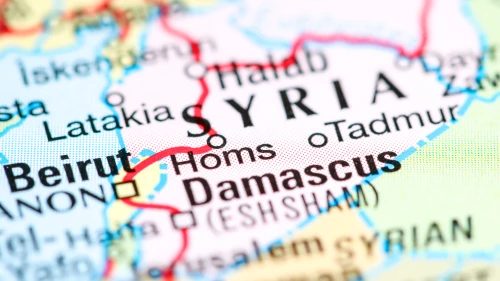
Other instances of Saudi foreign policy cited as evidence of a supposed Islamist pivot- primarily relating to Syria, Yemen and Sudan- are better explained as the result of preference for strong, centralised states and concerns about fragmentation, partition and chaos. This explains why, to borrow a Syrian term, Saudi Arabia engaged in takwi‘ (‘turning a corner’) in terms of its policy towards Syria. Not long before the Assad regime fell, Muhammad bin Salman was hosting Bashar al-Assad in Riyadh, but today Saudi Arabia is a leading regional supporter of the new Syrian government under Ahmad al-Sharaa. Before the regime fell, Saudi Arabia- like some other regional states- felt that the policy of isolating the regime was not productive and that Assad was here to stay, and thus it would be better for the sake of regional stability to engage with the regime. Muhammad bin Salman was certainly not hoping that the insurgents in the northwest would bring about a collapse of the Assad regime. Ultimately, however, the Assad regime collapsed so quickly that Saudi Arabia, like other powers (including Assad’s main allies Iran and Russia), concluded that no feasible intervention could stave off the inevitable. Since the regime’s collapse, the new Syrian government’s signalling of its desire to engage and cooperate with regional actors- plus its vision of a centralised state that seeks to prevent fragmentation and partition of Syria- has been appealing to Saudi Arabia.
In a similar vein, the Saudi intervention in Yemen against the UAE-backed Southern Transition Council was clearly intended to prevent the establishment of an independent South Yemen (an intention that was clear from the council’s announcement of a ‘constitutional declaration for the state of South Arabia’) and the possible formalisation of Yemen’s partition- an outcome that the kingdom deemed unacceptable. Likewise, in Sudan, Saudi Arabia prefers the Sudanese Armed Forces (SAF) as the internationally recognised government and sees the rival Rapid Support Forces, which faces widespread accusations of committing genocide, as an unpalatable rival militia that has brought chaos and division within Sudan. It is preferable, in Saudi Arabia’s eyes, for the SAF to reassert central government control over the country, even as the SAF enjoys support from many Sudanese Islamists. The same Saudi preference for order and fear of chaos also explains its current positioning on Iran: Saudi Arabia is happy to see an Iran that is too weak to project influence abroad that might threaten its stability, but it does fear the potential vacuum that might emerge if the Islamic Republic were to collapse.
None of the above should be taken as a defence or endorsement of Saudidomestic and foreign policy, or siding with it as a well-intentioned, ‘good’ actor against a supposedly malicious UAE. However, the characterisation of SaudiArabia as pivoting towards an Islamist vision is not supported by good evidence.
Published originally on February 20, 2026.