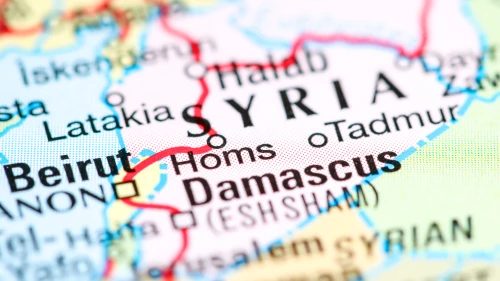
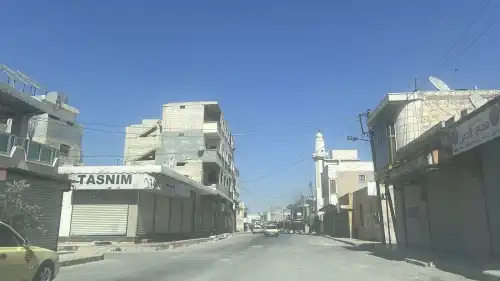
With the fall of the Assad regime, a considerable number of Syrian Shia ended up becoming displaced in Lebanon, primarily originating from areas of Homs governorate. Some of those displaced were working with Hezbollah as the regime collapsed and appear to have continued their relationship with the group after the regime fell. For example, one individual from the Homs locality of al-Diyabiya- Ridha Muhammad Assaf- was reported on 16 March to have been killed in fighting for Hezbollah in south Lebanon (see below, his nom de guerre being Fida’). His brother Abbas, who remained behind in Syria, was assassinated not long after the news of Ridha’s death was publicised.

The displaced Syrian Shia in Homs now find themselves caught between a rock and a hard place: afraid or unable to return home, and now facing Israeli airstrikes in Lebanon.
To discuss the Syrian Shia in Lebanon and their experiences of displacement, I conducted an interview with Husayn Masto, a Syrian Shiite originally from Homs governorate and now displaced in Lebanon. This interview was conducted on 21 March and is edited and condensed for clarity.
Q: Can you say what happened when the regime fell exactly? Were the insurgents advancing towards the Shia villages in Homs and the people fled before they got there? Or did the insurgents arrive and then displace the people of the villages? And which villages exactly?
A: The people of all the Shia villages left before the insurgents arrived, and then some of them returned and stayed for a month and then the insurgents came and expelled them from their homes without even letting them take anything with them. The insurgents took money from them, and in some cases they also took people’s cars. For example in east Homs countryside, the people left and returned. People from some of the villages were expelled, while no one approached others among them. In north Homs countryside, some returned and some were expelled. In central Homs—where my village is—some returned and were expelled, and their livelihood, wealth and cars were stolen. In west Homs countryside, every now and then there is an attack with killing, slaughter, displacement and theft.
Q: So which villages exactly had all their inhabitants displaced?
A: The village of al-Hazimiya, the village of al-Salihiya, the village of al-Najma and the village of al-Ashrafiya.
Q: And what happened in al-Abbasiya neighbourhood in Homs city exactly?
In central Homs—where my village is—some returned and were expelled, and their livelihood, wealth and cars were stolen.
A: I don’t know. There are inhabitants but not all of them. Most of the homes are empty and are being seized by al-Jowlani’s men. A week or more ago, in a house belonging to my cousin in the Sayyida Zaynab area where a family were staying, the man of the household went to Lebanon, and then someone from al-Jowlani’s group csame and expelled the people in the house and took up residence there.
Q: And all the Shia of Homs who were displaced have gone to Lebanon?
A: Yes. A good portion of them returned, but when they returned they were expelled from their homes, so they were forced either to go to other areas or return to Lebanon.
Q: Have you for example tried to return?
A: No. I won’t return to the country so long as the Bedouins are not expelled from Homs city and the government is not changed and the country’s affairs and circumstances are not put in order. This is the demand of all, not just my own.
Q: Were the displaced helped by the resistance and Iran in matters of residency and refuge in Lebanon?
A: Are you seriously asking that? When we came to Lebanon they had just finished a war that had ended a month ago or less, so they needed to secure residence for their own people first. But they did not fall short in providing us support and residency and they secured all necessities for us. Some time later each person began to rent a place for himself and secure work for himself.
Q: In your view why in contrast did the people of Nubl and al-Zahara’ [in north Aleppo] not face problems in their homes? They returned and in general no one encroached on their homes.
A: I will tell you why. When you want to expel an entire sect from an area or country, you become a racist, sectarian and Ikhwani person, but you might be compelled to leave some of the alone under the cover of politics and negotiations.
Q: What change of government do you want to see exactly? For example for there to be a secular democratic government?
A: Of course. Not like these savages who are present and have no lineage or intelligence: al-Shaybani and others besides him. You tell me where each one of them comes from. Do you know? All of them bore arms, murdered people and spilled blood, and finally they nominate themselves to lead a government and country.
Q: Of course there are people who accuse Assad of abandoning and betraying the Shia. What do you think of that?
Not like these savages who are present and have no lineage or intelligence: al-Shaybani and others besides him. You tell me where each one of them comes from. Do you know?
A: Assad was not helped by just one but by all the people. Go back and review all the elections. They all elected him with blood. And he did not betray anyone. Russia is the one that ruined the country and left.
Q: So Russia is the one that betrayed Syria?
A: Yes.
Q: Finally what is your message to the Shia of the world?
A: The Shia are the masters of this world. And in this war, we will be victorious by the permission of God, and expel America from the entire region. We are before days of epic battles, and decisive days for the destruction and loss of Israel and America before us.
As the Shia of Homs: our concern is that the people who have inhabited our homes should leave. We have no problem with them sitting in the home until they secure themselves, but those who have stayed an entire year in our homes until now, is it reasonable they have not found a place to dwell in? Secondly, where is the eye of the government and governorate on this issue, aren’t they supposed to be for co-existence and against violation of the rights of minorities?
We are among the minorities and are unable to return to our homes. If you come and ask for your home, they may point weapons at you and threaten you and expel you as they did before, when they expelled people under threat of arms, and in some cases took their cars and money.
Published originally on March 24, 2026.