On the night of September 14, 2019, the sound of explosions echoed through the oil fields of Saudi Arabia's state-owned oil company, Aramco. An attack by around 30 cruise missiles and drones evaded Saudi radar systems, struck...
Read More...
Iran, a nation embraced as a second home by Turkish President Recep Tayyip Erdogan, has become the leading country in the establishment of foreign-owned businesses in Turkey, a NATO ally. Primarily undertaken to circumvent...
Read More...
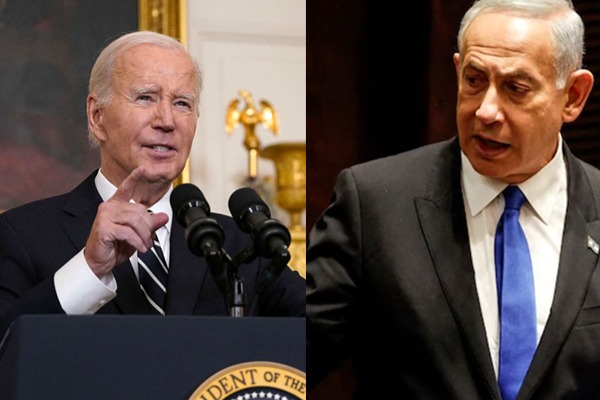
There was something perplexing about President Joe Biden's last "Don't" on Saturday, directed ostensibly at the Islamic Republic of Iran. At that point, President Biden and everyone around him knew that Iran was already...
Read More...
Remember the story about the frog and the boiling water? Once popularly cited in articles and columns, it alleged that a frog placed in boiling water would immediately jump out. By contrast, the legend alleged, a frog placed in...
Read More...
New York Congressman Ritchie Torres has defended his decision to secure over $1 million of federal funding for a hardline Islamist organization in the Bronx whose officials openly support Hamas and the October 7 attacks. In late...
Read More...
Last Tuesday, while I was having breakfast with a cappuccino overlooking the sea in Tel Aviv, there was no media outlet that did not mention predictions about the Iranian reaction to the elimination of half a dozen senior...
Read More...
In 1945, three years before Israel's founding, the Arab League passed a boycott of Jewish businesses in Mandatory Palestine. It was a move that hearkened directly to German precedents of the decade before. In 1976, the U.S...
Read More...
Last month, police were deployed to form a ring of steel around the statue of Winston Churchill in Parliament Square, London, to protect it from the hands of an irate pro-Palestinian mob. Needless to say, there is something of...
Read More...
|
Spotlight: The Looming Israel-Hezbollah War
|
On March 29, hours after Israel launched air strikes on a Hezbollah compound near Aleppo, Syria, killing seven of the Iran-backed Lebanese Shiite organization’s fighters and dozens of Syrian military personnel, Defense Minister Yoav Gallant declared that the Jewish state was "turning from defending to pursuing Hezbollah … wherever the organization operates, in Beirut, Damascus and in more distant places."
The one lesson nearly all Israelis have learned from the nearly 6-month-long war launched by Hamas is that a genocidal adversary cannot be allowed to build a massive paramilitary apparatus along their border. In virtually every respect, Hezbollah is a more formidable enemy than Hamas. Its fighters are more numerous, better armed, better trained, and more battle-hardened by years of operations in the Syrian civil war. It has a far larger and deadlier rocket and missile arsenal. It has a proven ability to launch mass casualty terror attacks worldwide and controls a vast transnational crime syndicate anchored in Lebanese Diaspora communities across the globe.
For more on Israel's looming showdown with Hezbollah, see the selections at right from MEF staff, writing fellows, and guest contributors.
To keep abreast of this and other issues, sign up to the Middle East Forum mailing list.
|
by Jonathan Spyer (Mar 5, 2024)
by Jonathan Spyer (Mar 2, 2024)
by Benjamin Weinthal (Feb 19, 2024)
by Gregg Roman (Feb 15, 2024)
by Amatzia Baram (Jan 25, 2024)
by Nave Dromi (Jan 15, 2024)
by Jonathan Spyer (Oct 20, 2023)
|
The Middle East Forum, a Philadelphia-based think tank, founded in 1994 by Daniel Pipes, promotes American interests in the Middle East and protects Western values from Middle Eastern threats.
In the Middle East, we focus on ways to defeat radical Islam; work for Palestinian acceptance of Israel; develop strategies to contain Iran; and deal with advancing anarchy. Domestically, the Forum emphasizes the danger of lawful Islamism; protects the freedoms of anti-Islamist authors and activists; and works to improve Middle East studies.
It achieves its goals in three main ways:
Operationally, exerting direct influence through its projects, each addressing a specific problem.
Intellectually, providing context, information, insights, and policy recommendations through the Middle East Quarterly, conference calls, staff and fellows writings, lectures, and media appearances — clearing a path to victory over opponents.
Philanthropically, distributing about $2 million annually in separately earmarked funds through our Education Fund, to about 75 groups and individuals working to promote the Forum's goals
 |
|